
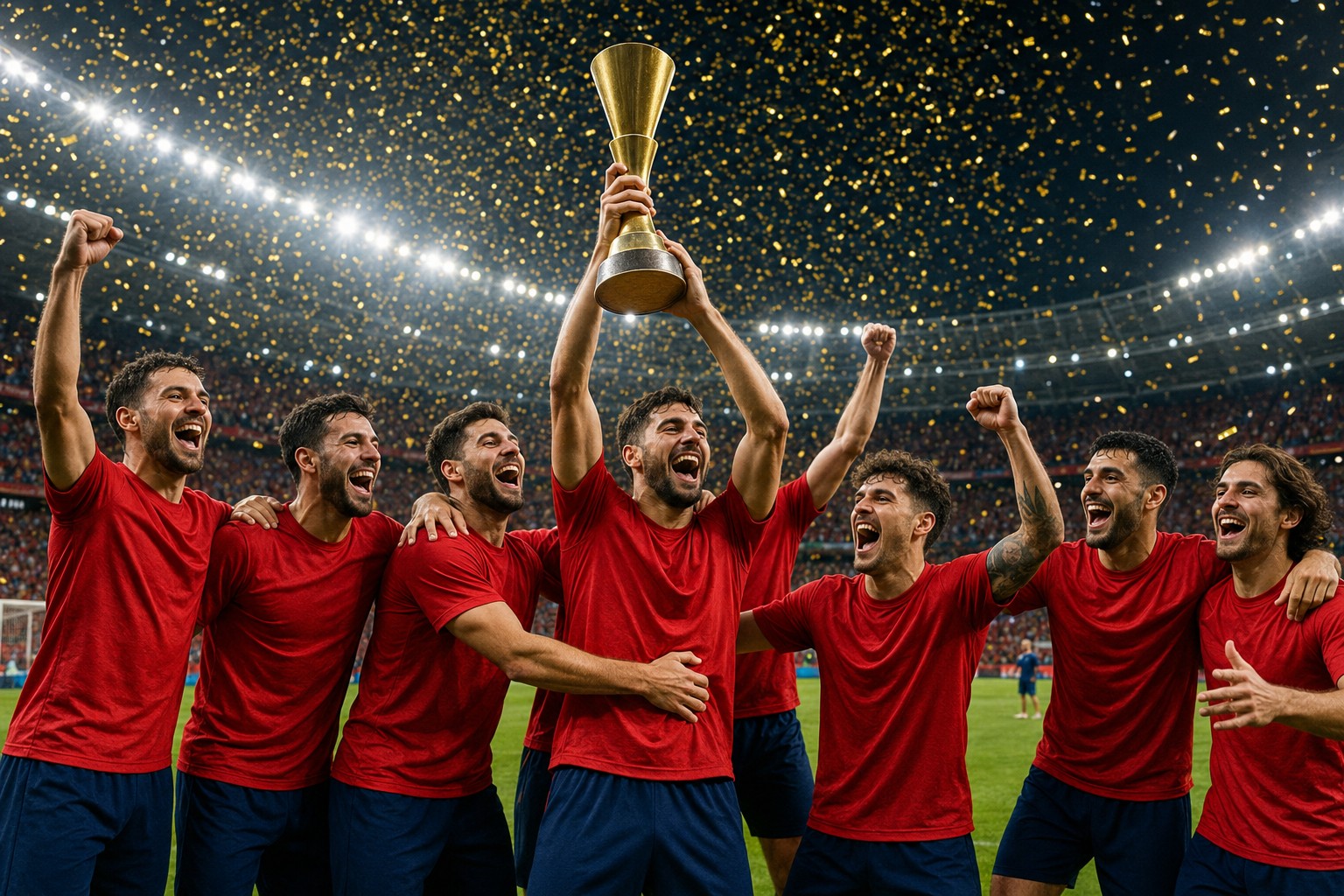
Spain have been crowned world champions for the second time after defeating defending champions Argentina 1–0 following extra time in the 2026 FIFA World Cup final. Ferran Torres scored the decisive goal in the 106th minute at the New York New Jersey Stadium, ending Argentina’s attempt to retain the trophy and bringing Spain its first global title since 2010.
Torres breaks the deadlock
The final remained goalless throughout the opening 90 minutes despite Spain controlling possession and producing the majority of the attacking opportunities. Argentina defended deeply and relied heavily on goalkeeper Emiliano Martínez, who made several important saves to keep his side in contention.
Spain eventually found the breakthrough during the second period of extra time. Pedro Porro delivered the ball into the penalty area, where Nico Williams helped keep the attack alive before substitute Torres converted the decisive opportunity.

The goal rewarded Spain’s sustained pressure and proved sufficient to secure the trophy. Argentina finished the match with 10 players after midfielder Enzo Fernández was dismissed following a second yellow card, making an already difficult task increasingly demanding.
Spain control the final
Luis de la Fuente’s side dominated much of the match but initially struggled to turn its possession into goals. Argentina became the first team in World Cup final history to complete the regulation 90 minutes without registering an attempt at goal, reflecting Spain’s control and the South American side’s cautious approach.
Neither Lionel Messi nor Spanish teenager Lamine Yamal was able to dictate the final in the manner many had anticipated. Instead, Spain’s depth became decisive, with Torres and Williams providing fresh energy from the bench as Argentina’s defensive organisation began to weaken.
Spain’s victory completed an impressive campaign in which the team combined technical control with tactical discipline. Having also won the European Championship in 2024, the country now holds both the European and world titles, confirming its return to the summit of international football.
A painful farewell for Messi
For Argentina, the defeat ended hopes of becoming the first country since Brazil in 1962 to win consecutive men’s World Cups. The defending champions had shown resilience throughout the tournament but were unable to reproduce the attacking fluency that carried them to victory in Qatar four years earlier.
The final was widely expected to be Messi’s last appearance at a World Cup. At 39, the Argentine captain was seeking a second successive title and another historic ending to his international career, but Spain’s defence kept him largely contained.
Argentina nevertheless reached a second consecutive final, underlining the continued strength of the team after its 2022 triumph. However, its limited attacking contribution in New Jersey left Spain as the deserving winner.
A second star for Spain
Spain’s first World Cup title came in South Africa in 2010, when Andrés Iniesta scored the extra-time winner against the Netherlands. Sixteen years later, Torres assumed the role of national hero by delivering another decisive goal on football’s greatest stage.
Captain Rodri received the Golden Ball as the tournament’s outstanding player, while De la Fuente completed a remarkable period of success after guiding Spain to both European and world glory. Celebrations began immediately across Madrid and other Spanish cities as supporters welcomed home a new generation of champions.
Newshub Editorial in North America – 20 July 2026

Ask NF GPT
If you have an account with ChatGPT you get deeper explanations,
background and context related to what you are reading.
Recent Comments