
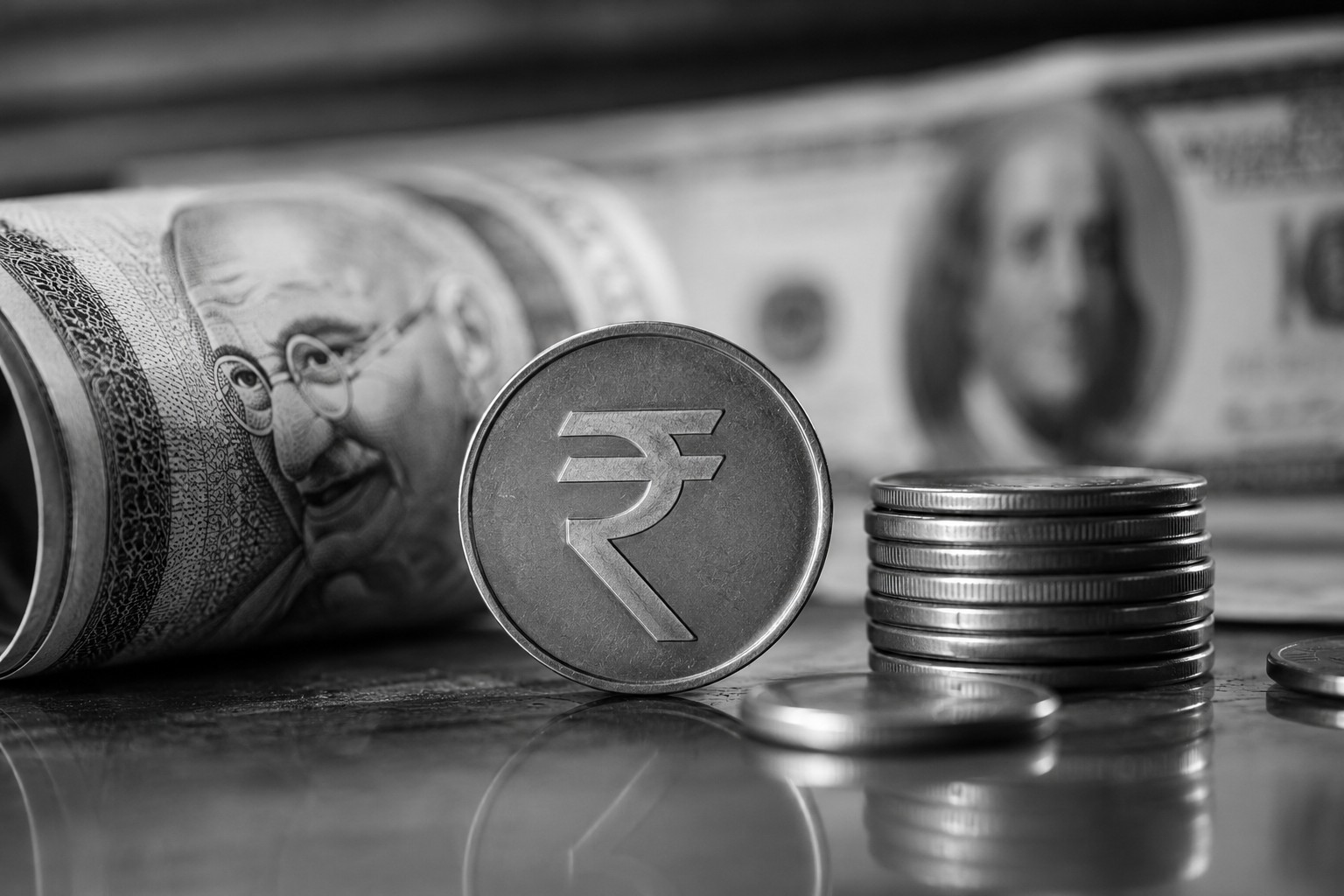
The Indian rupee opened significantly weaker on Tuesday, falling 48 paise to 96.16 against the U.S. dollar in early trading as investors reacted to surging crude oil prices, escalating geopolitical tensions in the Middle East and growing demand for safe-haven assets. The decline followed Monday’s 30-paise depreciation, when the currency closed at 95.68 against the dollar, extending a period of heightened volatility in India’s foreign exchange market.
Oil prices remain the dominant factor
The latest weakness comes as crude oil prices continue to climb following renewed military escalation between the United States and Iran and ongoing disruption around the Strait of Hormuz. For India, which imports more than 80 per cent of its crude oil requirements, higher energy prices place immediate pressure on the country’s trade balance and foreign exchange reserves.
A larger oil import bill increases demand for U.S. dollars among Indian refiners, reducing demand for the rupee and contributing to currency depreciation. The effect can be amplified when global investors simultaneously seek the relative safety of dollar-denominated assets during periods of geopolitical uncertainty.

Inflation concerns return
A weaker rupee also raises concerns about imported inflation. As the currency loses value against the dollar, imported goods—including crude oil, industrial machinery, electronics and fertilisers—become more expensive for Indian businesses and consumers.
This comes at a sensitive time for policymakers. India’s inflation has recently shown signs of accelerating again after a period of moderation, and sustained currency weakness could complicate the Reserve Bank of India’s efforts to maintain price stability while supporting economic growth.
The central bank continues to monitor foreign exchange markets closely and retains substantial reserves that can be used to smooth excessive volatility if necessary.
Financial markets react cautiously
Currency weakness weighed on investor sentiment across Indian financial markets during the opening session. Banking, automobile and consumer sectors are particularly sensitive to higher fuel costs and imported inflation, while export-oriented industries such as information technology and pharmaceuticals may benefit from a weaker rupee as overseas revenues become more valuable when converted into local currency.
Foreign institutional investors are also closely watching currency movements. Persistent depreciation can reduce returns on Indian assets when measured in dollars, potentially influencing capital flows into the country’s equity and bond markets.
Strong economic fundamentals remain
Despite the recent decline, economists note that India’s broader economic outlook remains relatively resilient compared with many other emerging markets. Robust domestic consumption, continued infrastructure investment and healthy long-term growth prospects continue to support investor confidence.
However, the near-term outlook for the rupee is likely to remain closely tied to developments in global energy markets. Any easing of tensions in the Middle East could reduce pressure on crude prices and provide support for the Indian currency, while further escalation may extend the current period of volatility.
For businesses, investors and policymakers alike, the rupee’s performance over the coming weeks will serve as an important indicator of how global geopolitical risks are filtering into one of the world’s fastest-growing major economies.
Newshub Editorial in Asia – July 14, 2026

Ask NF GPT
If you have an account with ChatGPT you get deeper explanations,
background and context related to what you are reading.
Recent Comments