
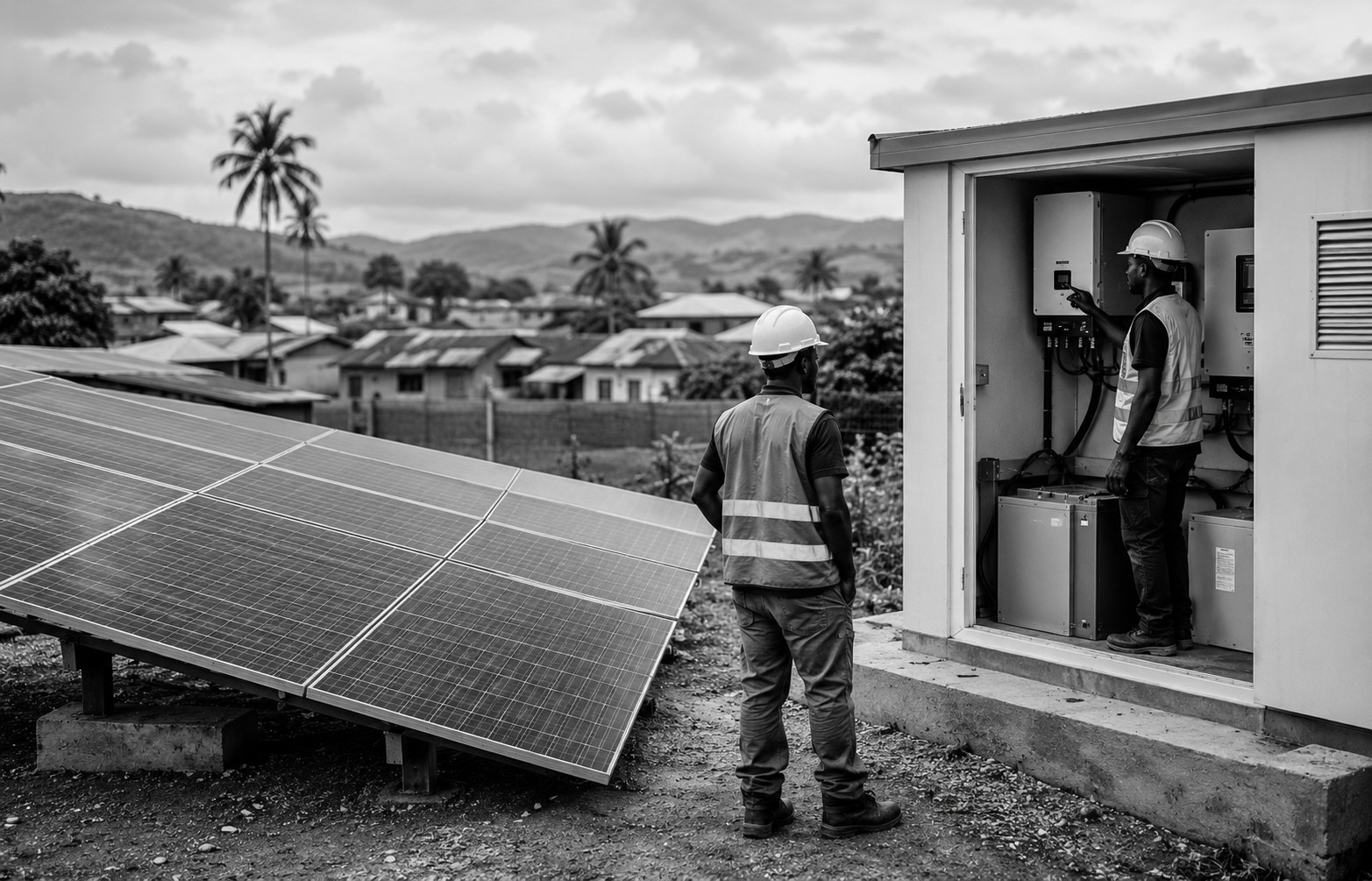
Nigeria has introduced new regulations designed to make it significantly easier for businesses, communities and private citizens to generate their own electricity through off-grid and mini-grid systems. The reforms are intended to reduce pressure on the country’s overstretched national grid while accelerating investment in renewable energy, improving electricity access and supporting economic growth across Africa’s largest economy.
A new approach to power generation
For decades, unreliable electricity has been one of Nigeria’s biggest obstacles to economic development. Frequent blackouts have forced millions of households and businesses to rely on diesel generators, increasing operating costs and limiting productivity.
Under the latest regulatory framework, individuals, commercial enterprises and local communities will face fewer administrative barriers when establishing independent electricity systems. The reforms encourage investment in mini-grids, rooftop solar installations, battery storage and other decentralised power solutions capable of supplying homes, factories, farms and commercial facilities.

Rather than depending solely on the national transmission network, communities will increasingly be able to generate and distribute electricity locally.
Reducing pressure on the national grid
Nigeria’s central electricity grid has long struggled to meet growing demand from a population now exceeding 230 million people. Transmission constraints, ageing infrastructure and limited generation capacity have contributed to repeated system failures and nationwide outages.
By allowing more consumers to generate electricity independently, policymakers hope to reduce demand on the national grid while improving reliability for those who continue to rely on it.
The reforms also reflect broader changes introduced under Nigeria’s Electricity Act, which grants greater authority to state governments and encourages private-sector participation in electricity generation and distribution.
Opportunities for business
The new regulations are expected to benefit manufacturers, commercial centres, agricultural businesses and technology companies that require stable electricity supplies to operate efficiently.
Reliable power can reduce production costs, minimise disruptions and improve competitiveness, particularly for small and medium-sized enterprises that have traditionally spent a significant share of their operating budgets on fuel for backup generators.
For renewable energy developers, the framework creates new opportunities to deploy solar mini-grids and hybrid energy systems in both urban and rural communities where conventional grid expansion remains uneconomic.
Supporting financial inclusion and development
Greater access to reliable electricity has implications well beyond the energy sector. Digital banking, telecommunications, healthcare, education and financial services all depend on stable power infrastructure.
Expanding decentralised electricity generation could therefore strengthen broader economic development by enabling more businesses to participate in the digital economy while improving access to essential public services.
International development institutions have consistently identified electricity access as one of the most important drivers of productivity and inclusive economic growth across emerging markets.
A model for African energy transformation
Nigeria’s reforms reflect a growing recognition that decentralised energy systems can complement, rather than replace, national electricity networks. Similar approaches are being adopted across several African countries seeking faster and more affordable ways to expand electricity access.
While challenges remain—including financing, technical standards and long-term maintenance—the regulatory changes provide greater certainty for investors and entrepreneurs looking to participate in Nigeria’s evolving energy market.
If successfully implemented, the new framework could accelerate investment in clean energy technologies while helping millions of Nigerians gain more reliable access to electricity. For businesses and households alike, the reforms represent an important step towards a more resilient, flexible and sustainable energy system.
Newshub Editorial in Africa – July 14, 2026

Ask NF GPT
If you have an account with ChatGPT you get deeper explanations,
background and context related to what you are reading.
Recent Comments