
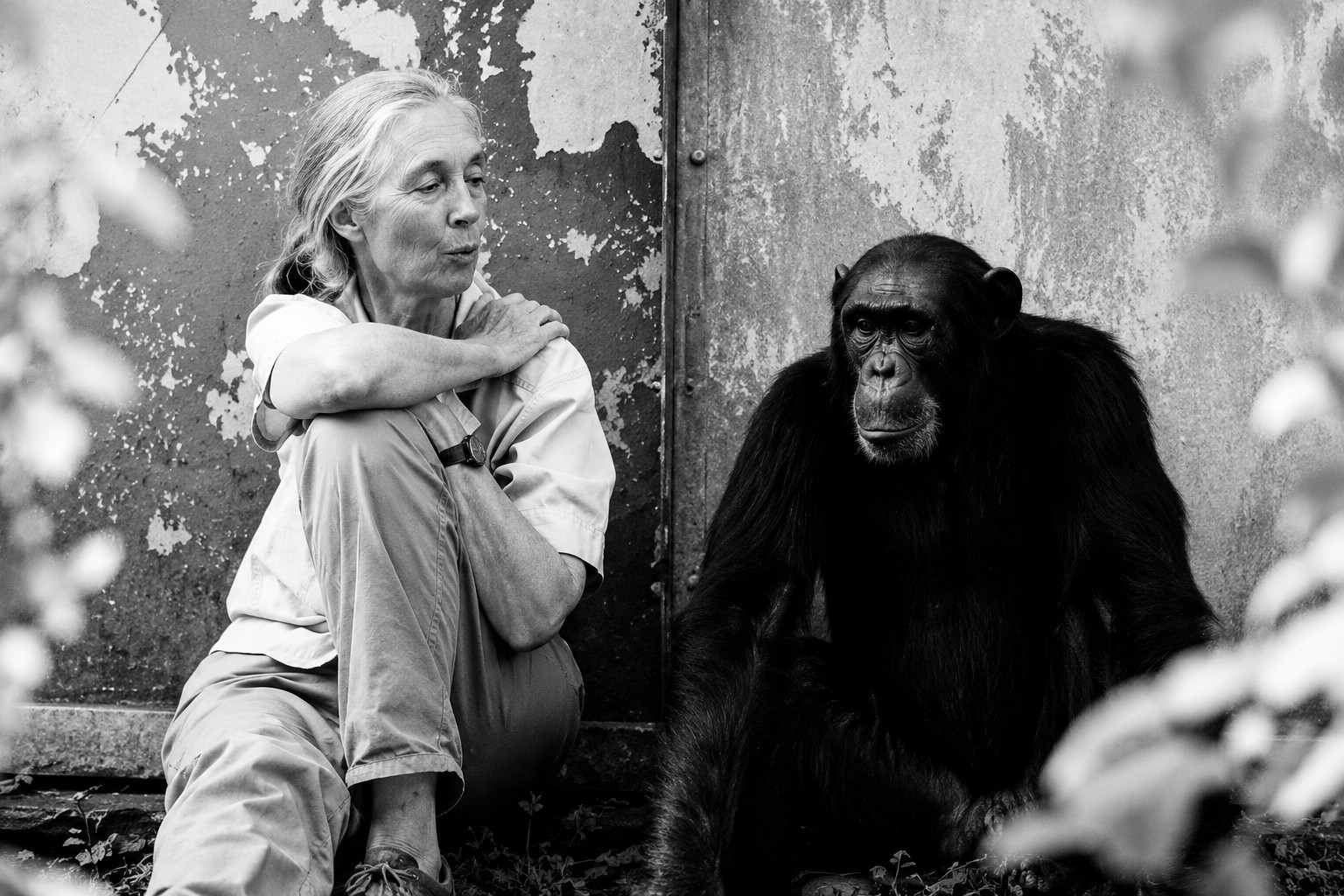
On this day in 1960, British ethologist Jane Goodall arrived at the remote shores of what would later become Gombe Stream National Park in western Tanzania, beginning one of the most influential scientific field studies in history. Her observations of wild chimpanzees transformed humanity’s understanding of animal behaviour, reshaped conservation efforts and inspired generations of researchers around the world.
A bold scientific experiment
At just 26 years old, Jane Goodall travelled to the forested hills along the eastern shore of Lake Tanganyika with little formal academic training but a deep fascination with wildlife. Encouraged by renowned anthropologist Louis Leakey, she began observing wild chimpanzees in their natural habitat, believing their behaviour could offer important clues about human evolution.
Working in challenging conditions and with minimal infrastructure, Goodall spent months patiently gaining the trust of the chimpanzee communities. Her persistence allowed her to document behaviours that had never before been observed in the wild.

Rewriting what scientists believed
Among Goodall’s most significant discoveries was evidence that chimpanzees manufacture and use tools. She famously watched individuals strip leaves from twigs before inserting them into termite mounds to extract insects for food.
At the time, tool-making had been regarded as a uniquely human trait. The discovery forced scientists to reconsider long-held assumptions about the distinction between humans and other animals.
Goodall also documented the complex social lives of chimpanzees, revealing emotional bonds, cooperation, competition, communication, territorial behaviour and even conflict. Her detailed observations demonstrated that chimpanzee societies were far more sophisticated than previously understood.
From research station to national park
The research site eventually became Gombe Stream National Park, Tanzania’s smallest national park but one of its most internationally recognised protected areas. The long-running Gombe chimpanzee study remains the world’s longest continuous field study of wild chimpanzees and continues to provide invaluable scientific data more than six decades after it began.
The project has helped researchers understand ageing, disease, social structures, reproduction and the long-term impacts of environmental change on great apes.
A global voice for conservation
Jane Goodall later shifted much of her attention from field research to conservation advocacy. Through the Jane Goodall Institute, she has promoted wildlife protection, habitat restoration, sustainable development and environmental education across dozens of countries.
Her message has consistently emphasised that protecting biodiversity and supporting local communities are inseparable goals. This philosophy has become increasingly influential as governments and conservation organisations seek more integrated approaches to environmental management.
An enduring legacy
Goodall’s arrival in western Tanzania marked the beginning of a scientific journey that fundamentally altered the study of animal behaviour and strengthened global conservation efforts. Her work demonstrated that patient observation can overturn established scientific thinking while highlighting the importance of preserving natural ecosystems before they disappear.
Today, as habitat loss and biodiversity decline remain pressing global challenges, the lessons first learned in the forests of Gombe continue to shape research, conservation policy and public awareness worldwide.
Newshub Editorial – Africa – July 14, 2026

Ask NF GPT
If you have an account with ChatGPT you get deeper explanations,
background and context related to what you are reading.
Recent Comments