
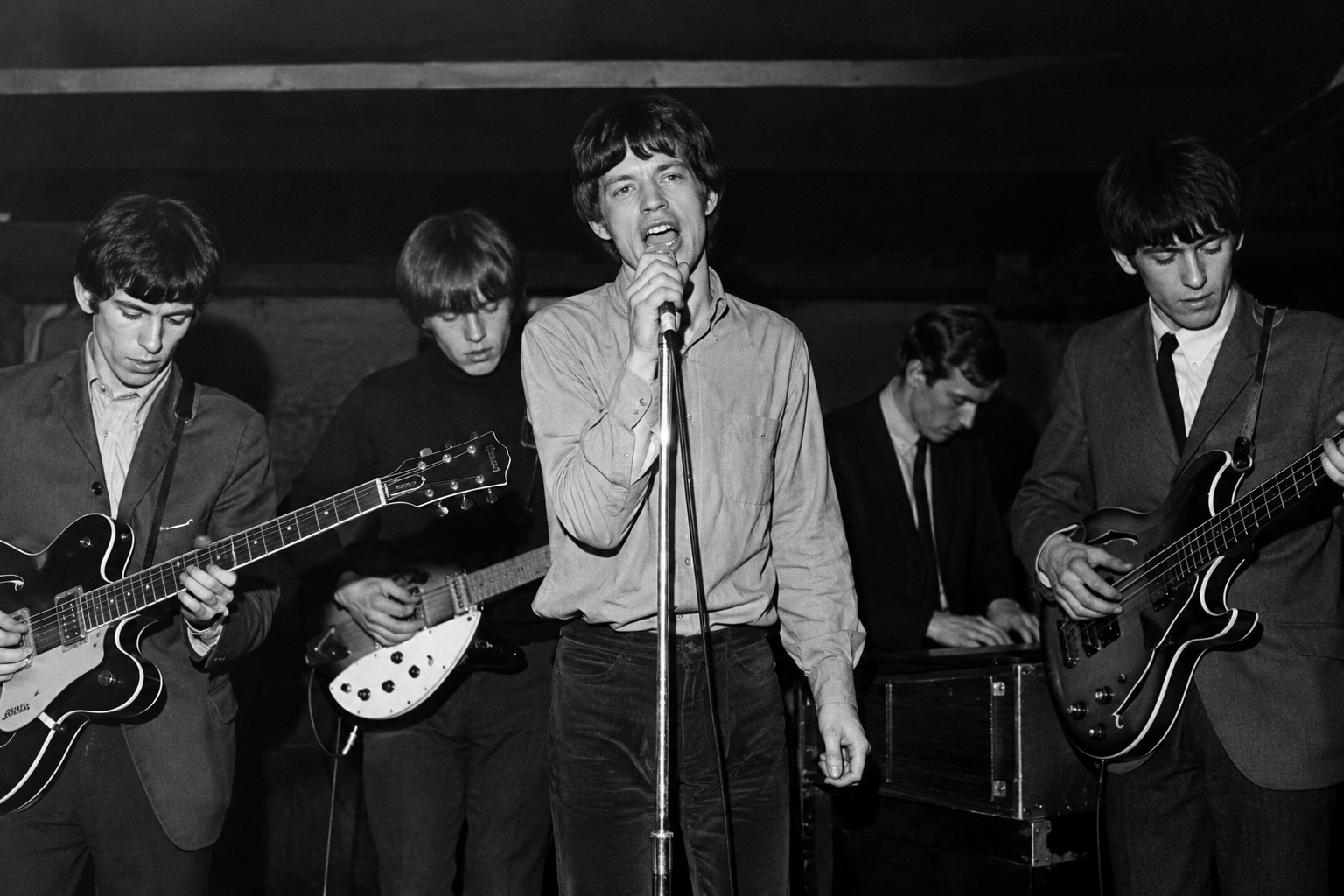
On 12 July 1962, a little-known British blues band stepped onto the stage at London’s Marquee Club for the first time under the name “The Rollin’ Stones”. Few in the audience could have imagined they were witnessing the beginning of one of the most influential and enduring careers in the history of popular music. More than six decades later, The Rolling Stones remain one of the world’s most successful and recognisable rock bands.
A night that changed music
The band’s debut performance took place at the Marquee Club on Oxford Street in London, where they appeared as the opening act for blues musician Long John Baldry and his Kansas City Blue Boys. The name “The Rollin’ Stones” had been inspired by Muddy Waters’ song Rollin’ Stone, reflecting the group’s deep admiration for American blues.
The original line-up that evening featured Mick Jagger on vocals, Keith Richards and Brian Jones on guitar, Ian Stewart on piano and Dick Taylor on bass. The identity of the drummer remains the subject of historical debate, with Tony Chapman most commonly credited, although contemporary reports have also mentioned other musicians. Bill Wyman and Charlie Watts, who would later complete the classic line-up, had not yet joined the band.

From blues enthusiasts to global icons
In their early years, The Rolling Stones were heavily influenced by Chicago blues artists such as Muddy Waters, Howlin’ Wolf and Chuck Berry. Rather than attempting to reinvent the genre immediately, the young musicians focused on faithfully performing the music they admired.
As their confidence grew, so did their songwriting. The creative partnership between Mick Jagger and Keith Richards became one of the most successful in modern music, producing classics including Satisfaction, Paint It Black, Jumpin’ Jack Flash, Gimme Shelter and Start Me Up.
Their rebellious image, energetic live performances and willingness to push musical boundaries helped distinguish them from many of their contemporaries, establishing the band as one of the defining acts of the British Invasion during the 1960s.
A legacy spanning generations
Few artists have demonstrated the longevity achieved by The Rolling Stones. Over more than sixty years, the band has sold an estimated 200 million records worldwide, released dozens of studio albums and completed some of the highest-grossing concert tours in music history.
While the line-up has evolved over the decades following the deaths of founder Brian Jones and drummer Charlie Watts, Mick Jagger and Keith Richards continue to represent one of rock’s most enduring creative partnerships.
The group’s influence extends far beyond record sales. Countless musicians across rock, blues, country and popular music cite The Rolling Stones as a major inspiration, while their live performances have become synonymous with stadium rock on a global scale.
The beginning of an extraordinary journey
Looking back, the modest performance at the Marquee Club on 12 July 1962 marked far more than the debut of another London blues band. It was the first chapter in a story that would redefine rock music, shape popular culture and create a catalogue of songs that continues to resonate with audiences around the world.
From a small stage in London to sold-out stadiums across every continent, the journey that began under the name “The Rollin’ Stones” remains one of the most remarkable success stories in music history.
Newshub Editorial in Europe – 12 July 2026

Ask NF GPT
If you have an account with ChatGPT you get deeper explanations,
background and context related to what you are reading.
Recent Comments