
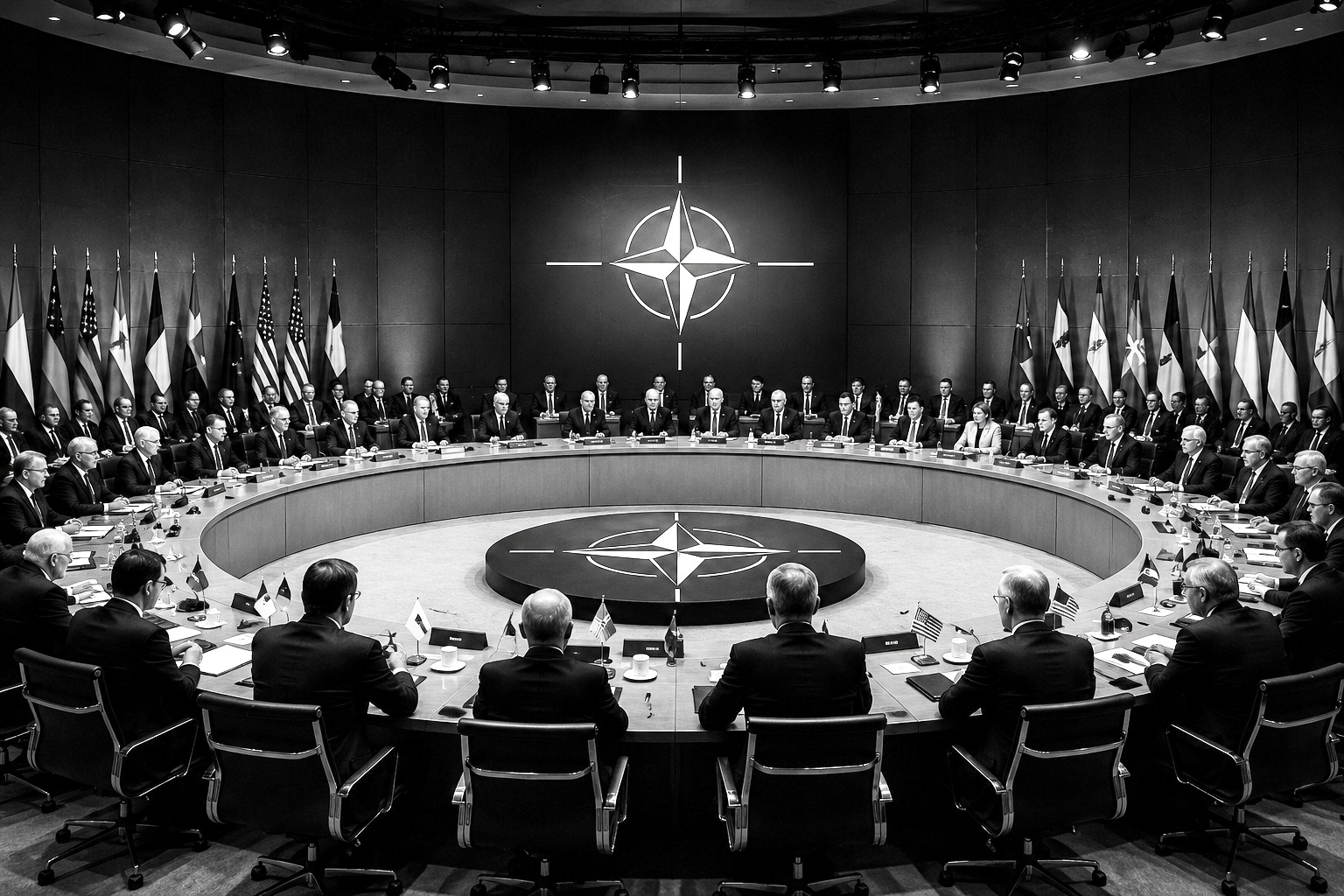
NATO leaders concluded their summit in Ankara with a renewed commitment to collective defence, a significant increase in defence cooperation and one of the largest military support packages yet announced for Ukraine. The meeting reaffirmed the Alliance’s determination to strengthen its deterrence posture while ensuring that Kyiv continues to receive the military assistance needed to defend itself against Russia’s ongoing invasion.
€70 billion pledged for Ukraine
The headline announcement from the summit was a commitment by NATO Allies to provide at least €70 billion in military equipment, training and assistance to Ukraine during 2026. Leaders also committed themselves to maintaining at least the same level of support in 2027, providing Kyiv with greater certainty over long-term military assistance. The package is intended to cover weapons, ammunition, air defence systems, training programmes and broader security assistance as Ukraine continues to resist Russian aggression.
NATO also welcomed the European Union’s decision to establish multi-year financing through the Ukraine Support Loan, reinforcing the financial framework behind continued military and economic assistance. While participation in specific contributions will remain a sovereign decision for each member state, the collective commitment represents one of the Alliance’s strongest demonstrations of long-term support since the war began.


Collective defence remains the cornerstone
Alliance leaders unanimously reaffirmed their commitment to Article 5 of the North Atlantic Treaty, underlining that an attack against one Ally remains an attack against all. The declaration sought to project unity despite political differences among member states and continuing debate over defence spending priorities.
Secretary General Mark Rutte described the summit as evidence that NATO is moving beyond setting targets towards delivering concrete military capability. European Allies and Canada have continued increasing defence expenditure, while the Alliance emphasised greater industrial cooperation, faster weapons production and stronger resilience against future threats.
Investment extends beyond Ukraine
The summit also produced several major defence initiatives aimed at strengthening NATO itself. Governments and defence companies announced more than €50 billion in new defence procurement agreements, while the Alliance launched “NATO Drone Edge”, a programme expected to invest approximately $40 billion in unmanned systems over the next five years.
In addition, NATO approved plans to modernise its fuel infrastructure through a €27 billion investment designed to improve logistics, storage facilities and pipeline networks across the eastern flank of the Alliance. Leaders also highlighted expanding cooperation in artificial intelligence, cyber defence and interoperable digital military systems as key priorities for NATO’s future capabilities.
A message to Moscow
Although the summit focused heavily on capability building rather than confrontation, its conclusions leave little doubt about NATO’s strategic direction. Russia remains identified as the Alliance’s principal long-term security challenge, while support for Ukraine is increasingly being framed as essential to European and transatlantic security.
For Kyiv, the outcome delivers both financial reassurance and political backing. For NATO, the summit represents another step towards a more integrated, better-funded and technologically advanced Alliance. Whether these commitments ultimately alter the balance on the battlefield will depend not only on the volume of funding pledged, but also on the speed with which equipment, training and industrial production can be translated into operational capability.
Newshub Editorial – Europe, 9 July 2026

Ask NF GPT
If you have an account with ChatGPT you get deeper explanations,
background and context related to what you are reading.
NATO leaders concluded their summit in Ankara with a renewed commitment to collective defence, a significant increase in defence cooperation and one of the largest military support packages yet announced for Ukraine. The meeting reaffirmed the Alliance's determination to strengthen its deterrence posture while ensuring that Kyiv continues to receive the military assistance needed to defend itself against Russia's ongoing invasion.
Recent Comments