
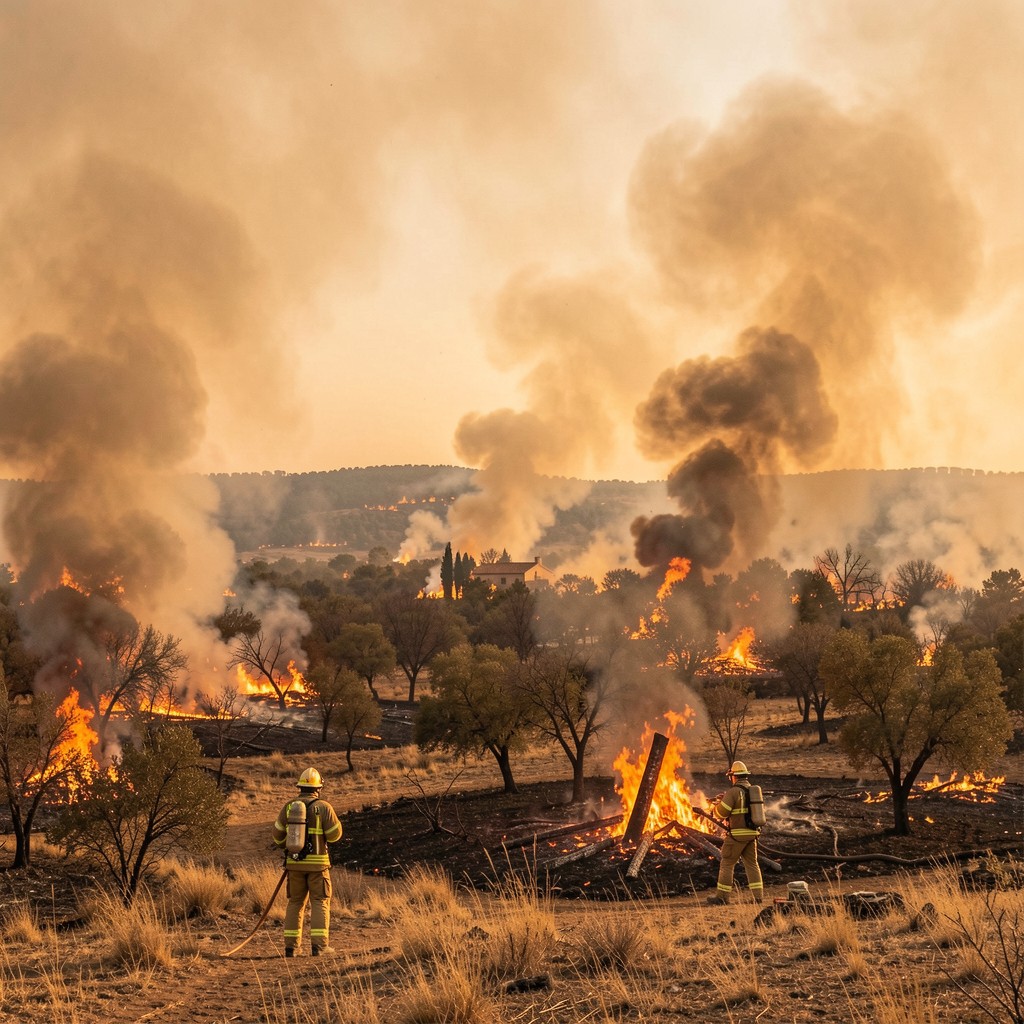
Thousands of people have been forced to evacuate their homes as fast-moving wildfires continue to sweep across southern Europe following an intense heatwave that has left forests and grasslands dangerously dry. Authorities in France, Spain, Portugal and Greece have warned that extreme temperatures, strong winds and prolonged drought have created a “powder keg” of conditions, with firefighters battling dozens of major blazes across the region.
France battles multiple fire fronts
France has deployed thousands of firefighters and aircraft to tackle wildfires burning across several southern regions. The blazes have destroyed homes, forced widespread evacuations and disrupted transport, with officials describing conditions as some of the most dangerous seen in recent years.
The ongoing fires have also affected the Tour de France. Race organisers introduced strict spectator restrictions in vulnerable areas after authorities warned that large crowds could increase fire risks or hinder emergency operations. Officials urged fans to follow local guidance and avoid entering restricted woodland areas. (theguardian.com)

Spain and Portugal remain on high alert
Spain continues to face severe wildfire conditions as temperatures remain well above seasonal averages. Fire crews have worked around the clock to protect communities threatened by rapidly spreading flames, while military emergency units have been mobilised to reinforce local firefighting teams.
Neighbouring Portugal is experiencing similar challenges, with authorities issuing the highest fire danger alerts across much of the country. Rural communities remain particularly vulnerable as dry vegetation and strong winds allow fires to spread quickly over difficult terrain.
Greece confronts another difficult summer
In Greece, firefighters are once again battling blazes near populated areas and popular tourist destinations. Emergency services have ordered precautionary evacuations in several locations as aircraft and ground crews attempt to contain multiple fires before stronger winds arrive.
The country has repeatedly faced destructive wildfire seasons in recent years, prompting continued investment in firefighting resources and early warning systems. Nevertheless, officials acknowledge that increasingly frequent heatwaves are making each summer more challenging.
Climate conditions intensify the threat
Meteorologists say the recent heatwave has left much of southern Europe exceptionally vulnerable. Weeks of high temperatures have dried forests and scrubland, while low humidity and gusting winds have created ideal conditions for rapidly expanding fires.
Experts warn that climate change is increasing both the frequency and intensity of extreme heat events across the Mediterranean basin. Longer fire seasons, combined with hotter and drier summers, are placing growing pressure on emergency services and local communities.
Communities face an uncertain summer
While firefighters have succeeded in protecting many towns and villages, officials warn that the wildfire season is far from over. Forecasts suggest that elevated temperatures could persist across large parts of southern Europe, maintaining the high fire risk throughout the coming weeks.
Authorities continue to urge residents and tourists to avoid activities that could ignite new fires, remain alert to evacuation orders and follow official safety advice. With thousands already displaced and significant areas of countryside burned, the coming weeks are expected to test Europe’s firefighting capabilities once again.
Newshub Editorial in Europe – 7 July 2026

Ask NF GPT
If you have an account with ChatGPT you get deeper explanations,
background and context related to what you are reading.
Open an account:
Recent Comments