
• Global
    • Africa
      • Burundi
      • Ghana
      • Gambia
      • Senegal
    • Asia
      • Indonesia
      • Laos
      • Malaysia
      • South Korea
    • Caribbean
      • Central America
    • Climate & energy
      • Climate
      • Carbon
      • Coal
      • Disruptive
      • Gas
      • Nuclear
      • Oil
      • Solar
      • Water
      • Waves
      • Wind
      • Renewable
      • South America
    • Lifestyle
      • Best chefs
      • Cocktail of the week
      • History
      • Influential women
      • Newshub long-read
    • US politics
      • Epstein
    • War
  • Finance
    • Africa finance
    • Australia
    • Asia finance
    • Banking
    • Business of the week
    • Central Banks
    • China
    • Commodities
    • Corporate
    • Europe
    • Investment
    • Japan
    • MSTRpay
    • Neobanking
    • South East Asia
    • UK
    • US
  • Fintech
    • Tech
    • AI
    • Blockchain
  • Financial inclusion
  • Editorial services
  • Press releases
Tuesday, July 7, 2026
  • Login
No Result
View All Result
Newshub Finance
  • Global
    • Africa
      • Burundi
      • Ghana
      • Gambia
      • Senegal
    • Asia
      • Indonesia
      • Laos
      • Malaysia
      • South Korea
    • Caribbean
      • Central America
    • Climate & energy
      • Climate
      • Carbon
      • Coal
      • Disruptive
      • Gas
      • Nuclear
      • Oil
      • Solar
      • Water
      • Waves
      • Wind
      • Renewable
      • South America
    • Lifestyle
      • Best chefs
      • Cocktail of the week
      • History
      • Influential women
      • Newshub long-read
    • US politics
      • Epstein
    • War
  • Finance
    • Africa finance
    • Australia
    • Asia finance
    • Banking
    • Business of the week
    • Central Banks
    • China
    • Commodities
    • Corporate
    • Europe
    • Investment
    • Japan
    • MSTRpay
    • Neobanking
    • South East Asia
    • UK
    • US
  • Fintech
    • Tech
    • AI
    • Blockchain
  • Financial inclusion
  • Editorial services
  • Press releases
  • Global
    • Africa
      • Burundi
      • Ghana
      • Gambia
      • Senegal
    • Asia
      • Indonesia
      • Laos
      • Malaysia
      • South Korea
    • Caribbean
      • Central America
    • Climate & energy
      • Climate
      • Carbon
      • Coal
      • Disruptive
      • Gas
      • Nuclear
      • Oil
      • Solar
      • Water
      • Waves
      • Wind
      • Renewable
      • South America
    • Lifestyle
      • Best chefs
      • Cocktail of the week
      • History
      • Influential women
      • Newshub long-read
    • US politics
      • Epstein
    • War
  • Finance
    • Africa finance
    • Australia
    • Asia finance
    • Banking
    • Business of the week
    • Central Banks
    • China
    • Commodities
    • Corporate
    • Europe
    • Investment
    • Japan
    • MSTRpay
    • Neobanking
    • South East Asia
    • UK
    • US
  • Fintech
    • Tech
    • AI
    • Blockchain
  • Financial inclusion
  • Editorial services
  • Press releases
No Result
View All Result
Newshub Finance
No Result
View All Result
Download MSTRpay app Download MSTRpay app Download MSTRpay app
ADVERTISEMENT

4. The invisible economy

The world's hardest-working entrepreneurs that the financial system cannot see

4. The invisible economy

The first three articles in this series examined what often goes wrong. Projects disappear. Money loses power before it reaches the ground. Good intentions struggle to become lasting development. But that is only half the story. The other half begins before sunrise.

Before sunrise
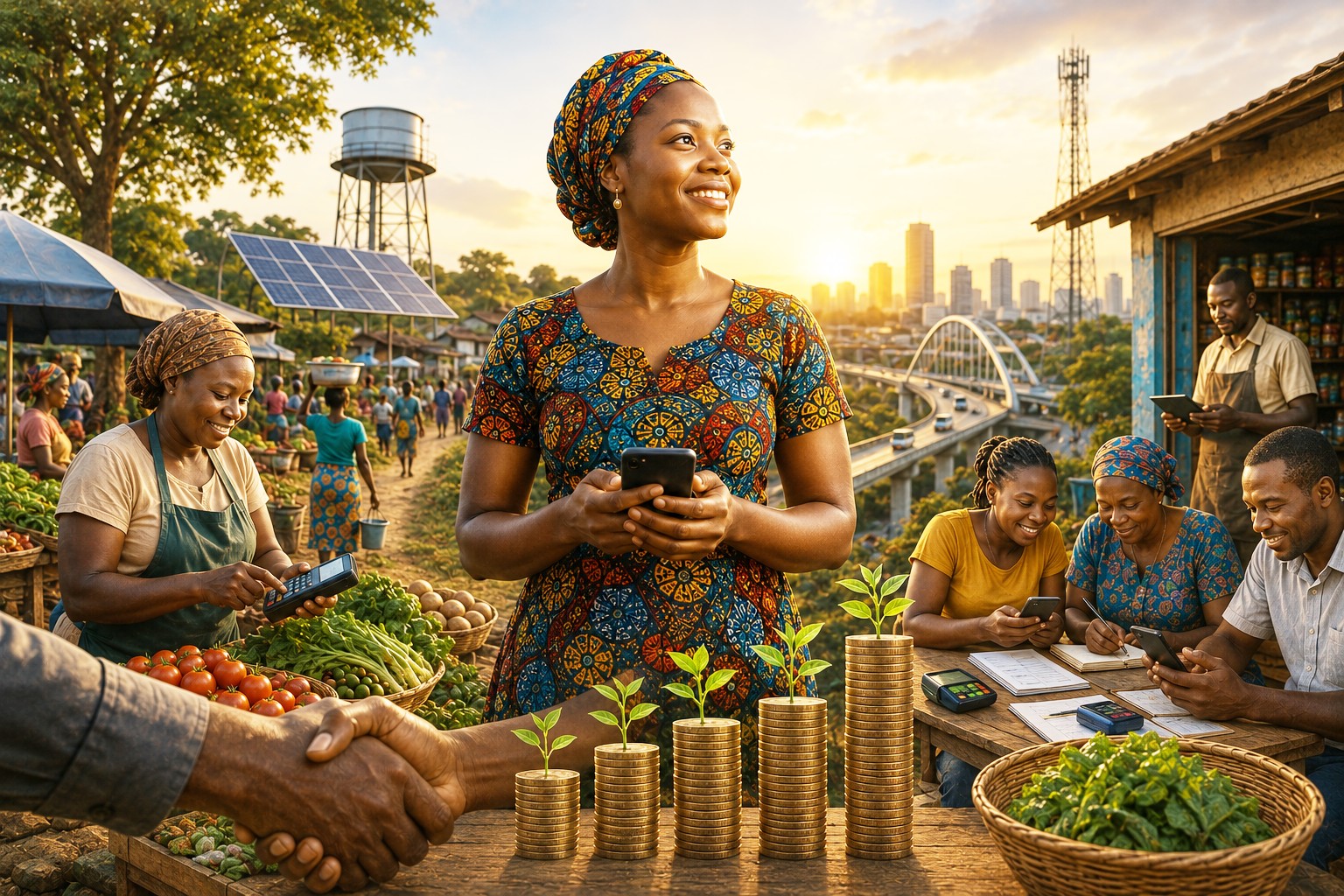
Across Africa, Asia and Latin America, markets are already coming to life. Women arrange vegetables on wooden tables. Fisherwomen prepare the morning’s catch. Tailors unlock tiny workshops. Food vendors light charcoal stoves. Mechanics begin repairing motorcycles. Farmers carry produce to roadside markets. Drivers load passengers. Shopkeepers sweep the dust from their entrances.

Before most development meetings begin development is already happening. Not inside conference rooms. But in markets. On farms. In workshops. On fishing boats. Along dusty roads.

Download the MSTRpay app Download the MSTRpay app Download the MSTRpay app

This is not the absence of an economy. It is an economy that the formal financial system has never fully learned to see.

Across much of the developing world, hundreds of millions of people earn their living outside formal employment. According to the International Labour Organization, informal work represents the majority of employment in many developing countries and the overwhelming majority across much of Africa.

These people are often described simply as poor. But that description misses something essential.

Many are producers. Traders. Employers. Craftsmen. Farmers. Service providers. Risk managers. Entrepreneurs.

They are not waiting for development to arrive. They are already creating it.

The problem is not a lack of work. The problem is that much of their work remains economically invisible.

This is especially true for women.

Across the developing world, women carry a remarkable share of household survival and local commerce. They cultivate fields. Process crops. Sell food. Cook meals. Sew clothing. Operate market stalls. Trade across borders. Manage family finances. Support extended families. Keep informal savings groups alive.

An invisible financial identity
Yet many remain invisible to the formal financial system. They may earn income every day. But have no regulated account. They may repay suppliers faithfully for years. But have no recognised credit history. They may support an entire family. But have no collateral. They may be trusted by every customer in the market. But remain unknown to the institutions that decide who can access finance.

This invisibility says nothing about their ability. It says much about the system surrounding them.

Around the world, approximately 1.4 billion adults still lack access to a regulated financial account. Well over 1 billion more are underbanked—people who have an account but cannot access the financial services they need, such as affordable credit, secure savings, insurance, or payment solutions. Together, they represent an estimated 2.5 to 3.0 billion people, equivalent to roughly one-third of the world’s adult population.

Women, rural populations and low-income households remain disproportionately represented among them.

Yet if a woman buys stock every morning. Negotiates prices. Pays suppliers. Supports children. Saves small amounts. Builds customer relationships and manages risk every day.

She is already managing a business. The system simply fails to recognise it.

That is the invisible economy.

Perhaps one of the largest untapped economic resources in the world.

The tragedy is not a lack of initiative. The tragedy is that initiative remains disconnected.

A market woman often knows exactly how to expand her business. She knows which supplier offers better prices. Which products sell fastest. Which seasons create demand. Which customers pay reliably. But without working capital, secure payments, savings, insurance and without recognized financial records growth becomes extraordinarily difficult.

Her knowledge, customers and business are all real.

Only her financial identity is missing.

From assistance to opportunity
This is where development thinking begins to change.

For decades, much of the development debate has focused on what poor people should receive. Training, equipment, grants and food.

Sometimes these interventions are essential. Sometimes they save lives.

But eventually another question emerges.

Not only what people should receive, but what could they build if the barriers around them disappeared?

Imagine a market woman whose daily sales automatically become part of a trusted financial record.

Imagine she can receive payments securely. Save safely. Borrow responsibly. Insure her business. Buy directly from suppliers. Expand gradually instead of merely surviving.

She has not changed. The opportunity around her has.

That distinction matters.

Why? Because assistance keeps people alive. Because opportunity allows people to move forward.

Financial inclusion is therefore not simply about opening bank accounts.

It is about connecting people to the systems that allow effort to become growth.

The systems must fit people’s realities. Low-cost payments. Secure savings. Responsible credit. Insurance designed for real risks. Products adapted to irregular incomes. Digital identities that protect rather than exploit.

Financial services should adapt to people’s lives. Not require people to adapt to financial systems designed without them.

This is especially important for women.

Building economic power
A financial product designed for someone with a monthly salary may have little relevance for a woman whose income changes every day.

A loan secured by land may exclude women who do not legally own land.

An account requiring expensive data or distant branches may exist in theory while remaining inaccessible in practice.

True inclusion is therefore not measured by how many accounts are opened. It is measured by whether those accounts create genuine economic power.

Can she control her money? Can she save securely? Can she borrow responsibly? Can she build a financial history that belongs to her?

These questions matter because financial inclusion is not merely technical. It changes relationships. Inside families. Inside communities. Inside markets.

When women gain greater control over their finances, families often become more resilient. Children benefit. Savings become possible. Businesses become more stable. Small enterprises begin growing step by step instead of starting over after every setback.

This is not charity.

It is economic infrastructure.

Roads move goods. Telecommunications move information. Financial systems move opportunity.

Without them, millions of businesses remain permanently small—not because their owners lack ambition, but because the system cannot measure their reliability.

Perhaps this is the real turning point in the development conversation.

The women selling vegetables, fish, clothing, soap, rice and cooked food are not standing outside development.

They are development.

They were there before the consultants arrived. They remain after the workshops end. They continue long after the project report has been written. The entrepreneurship already exists.

The question is no longer how to create it. The question is how to remove the barriers that prevent it from growing.

Perhaps development should therefore begin not with projects, but with people.

Not with dependency, but with participation.

Not with assumptions about poverty, but with recognition of enterprise.

Because once we begin seeing these women not as beneficiaries but as entrepreneurs, then the entire development conversation changes.

The next article explores exactly how that change can happen.

If the world’s greatest invisible economy already exists – what kind of financial system would finally allow it to flourish?

Facts behind this article

  • OECD – Official Development Assistance
  • World Bank – Global Findex Database
  • International Labour Organization – Informal Economy Reports
  • United Nations Development Programme
  • Paris Declaration on Aid Effectiveness (2005)

Peter Rinaldo

Ask NF GPT

If you have an account with ChatGPT you get deeper explanations,
background and context related to what you are reading.


Open article chat

Open an account:


Open an account

No Result
View All Result

Recent Posts

  • Trump says politics helped make him a crypto supporter
  • Modi government faces backlash over petrol-blending policy
  • China moves to regulate the rise of AI companions
  • Millions rally in Tehran as Khamenei funeral enters fourth day
  • CARICOM celebrates a legacy of unity and shared purpose

Recent Comments

    Archives

    • July 2026
    • June 2026
    • May 2026
    • April 2026
    • March 2026
    • February 2026
    • January 2026
    • December 2025
    • November 2025
    • October 2025
    • September 2025
    • August 2025
    • July 2025
    • June 2025
    • May 2025
    • April 2025
    • March 2025
    • February 2025
    • January 2025
    • December 2024
    • November 2024
    • October 2024
    • September 2024
    • August 2024
    • July 2024
    • June 2024
    • May 2024
    • April 2024
    • March 2024
    • February 2024
    • January 2024
    • December 2023
    • November 2023
    • October 2023
    • September 2023
    • August 2023
    • July 2023
    • June 2023
    • May 2023
    • April 2023
    • March 2023
    • February 2023
    • January 2023
    • December 2022
    • November 2022
    • October 2022
    • September 2022
    • August 2022

    Categories

    • Africa
    • Africa finance
    • AI
    • An diesem Tag
    • Asia
    • Asia finance
    • Australia
    • Banking
    • Best chefs
    • Biden
    • Blockchain
    • Burundi
    • Business of the week
    • Carbon
    • Caribbean
    • Central America
    • Central Banks
    • China
    • Climate
    • Climate & Energy
    • Coal
    • Cocktail of the week
    • Commodities
    • Corporate
    • Deutsch
    • Deutsch PR
    • Digital Banking
    • DRC
    • English PR
    • Epstein
    • Europe
    • Financial inclusion
    • Financial insights
    • Focus on neobanking
    • Gambia
    • Gas
    • Ghana
    • Global news
    • Harris
    • History
    • India
    • India
    • Indonesia
    • Influential women
    • Invest and Rest
    • Investment
    • Italiano PR
    • Jamaica
    • Japan
    • Kenya
    • Kenya
    • Laos
    • Laos
    • LATAM
    • Lifestyle
    • Malaysia
    • Metaverse
    • MSTRpay
    • Neobanking
    • News
    • Newshub long-read
    • newshub special
    • newshub-special
    • NFT
    • Nobel Prizes 2024
    • Nuclear
    • Oil
    • Philippines
    • Press
    • Press releases
    • Pressroom
    • Renewable
    • Russia
    • Senegal
    • Senegal
    • Solar
    • South America
    • South East Asia
    • South Korea
    • South Korea
    • Stocks
    • Svensk PR
    • Tech
    • Trump
    • Trump trials
    • UFO
    • Uganda
    • UK
    • UK News
    • Ukraine
    • US
    • US politics
    • Vietnam
    • Vietnam
    • War
    • Waves
    • WEX
    • Wind
    • World safety

    Meta

    • Log in
    • Entries feed
    • Comments feed
    • WordPress.org

    Recent Posts

    • Trump says politics helped make him a crypto supporter
    • Modi government faces backlash over petrol-blending policy
    • China moves to regulate the rise of AI companions
    • Millions rally in Tehran as Khamenei funeral enters fourth day
    • CARICOM celebrates a legacy of unity and shared purpose

    Categories

    • Africa
    • Africa finance
    • AI
    • An diesem Tag
    • Asia
    • Asia finance
    • Australia
    • Banking
    • Best chefs
    • Biden
    • Blockchain
    • Burundi
    • Business of the week
    • Carbon
    • Caribbean
    • Central America
    • Central Banks
    • China
    • Climate
    • Climate & Energy
    • Coal
    • Cocktail of the week
    • Commodities
    • Corporate
    • Deutsch
    • Deutsch PR
    • Digital Banking
    • DRC
    • English PR
    • Epstein
    • Europe
    • Financial inclusion
    • Financial insights
    • Focus on neobanking
    • Gambia
    • Gas
    • Ghana
    • Global news
    • Harris
    • History
    • India
    • India
    • Indonesia
    • Influential women
    • Invest and Rest
    • Investment
    • Italiano PR
    • Jamaica
    • Japan
    • Kenya
    • Kenya
    • Laos
    • Laos
    • LATAM
    • Lifestyle
    • Malaysia
    • Metaverse
    • MSTRpay
    • Neobanking
    • News
    • Newshub long-read
    • newshub special
    • newshub-special
    • NFT
    • Nobel Prizes 2024
    • Nuclear
    • Oil
    • Philippines
    • Press
    • Press releases
    • Pressroom
    • Renewable
    • Russia
    • Senegal
    • Senegal
    • Solar
    • South America
    • South East Asia
    • South Korea
    • South Korea
    • Stocks
    • Svensk PR
    • Tech
    • Trump
    • Trump trials
    • UFO
    • Uganda
    • UK
    • UK News
    • Ukraine
    • US
    • US politics
    • Vietnam
    • Vietnam
    • War
    • Waves
    • WEX
    • Wind
    • World safety

    Archives

    • July 2026
    • June 2026
    • May 2026
    • April 2026
    • March 2026
    • February 2026
    • January 2026
    • December 2025
    • November 2025
    • October 2025
    • September 2025
    • August 2025
    • July 2025
    • June 2025
    • May 2025
    • April 2025
    • March 2025
    • February 2025
    • January 2025
    • December 2024
    • November 2024
    • October 2024
    • September 2024
    • August 2024
    • July 2024
    • June 2024
    • May 2024
    • April 2024
    • March 2024
    • February 2024
    • January 2024
    • December 2023
    • November 2023
    • October 2023
    • September 2023
    • August 2023
    • July 2023
    • June 2023
    • May 2023
    • April 2023
    • March 2023
    • February 2023
    • January 2023
    • December 2022
    • November 2022
    • October 2022
    • September 2022
    • August 2022
    • Global
    • Finance
    • Fintech
    • Financial inclusion
    • Editorial services
    • Press releases
    Legal - Disclosure - Cookies

    © 2022-2026
    MSTRpay/Newshub Finance

    Welcome Back!

    Login to your account below

    Forgotten Password?

    Retrieve your password

    Please enter your username or email address to reset your password.

    Log In

    Add New Playlist

    No Result
    View All Result
    • Global
      • Africa
        • Burundi
        • Ghana
        • Gambia
        • Senegal
      • Asia
        • Indonesia
        • Laos
        • Malaysia
        • South Korea
      • Caribbean
        • Central America
      • Climate & energy
        • Climate
        • Carbon
        • Coal
        • Disruptive
        • Gas
        • Nuclear
        • Oil
        • Solar
        • Water
        • Waves
        • Wind
        • Renewable
        • South America
      • Lifestyle
        • Best chefs
        • Cocktail of the week
        • History
        • Influential women
        • Newshub long-read
      • US politics
        • Epstein
      • War
    • Finance
      • Africa finance
      • Australia
      • Asia finance
      • Banking
      • Business of the week
      • Central Banks
      • China
      • Commodities
      • Corporate
      • Europe
      • Investment
      • Japan
      • MSTRpay
      • Neobanking
      • South East Asia
      • UK
      • US
    • Fintech
      • Tech
      • AI
      • Blockchain
    • Financial inclusion
    • Editorial services
    • Press releases

    © 2022-2026
    MSTRpay/Newshub Finance