
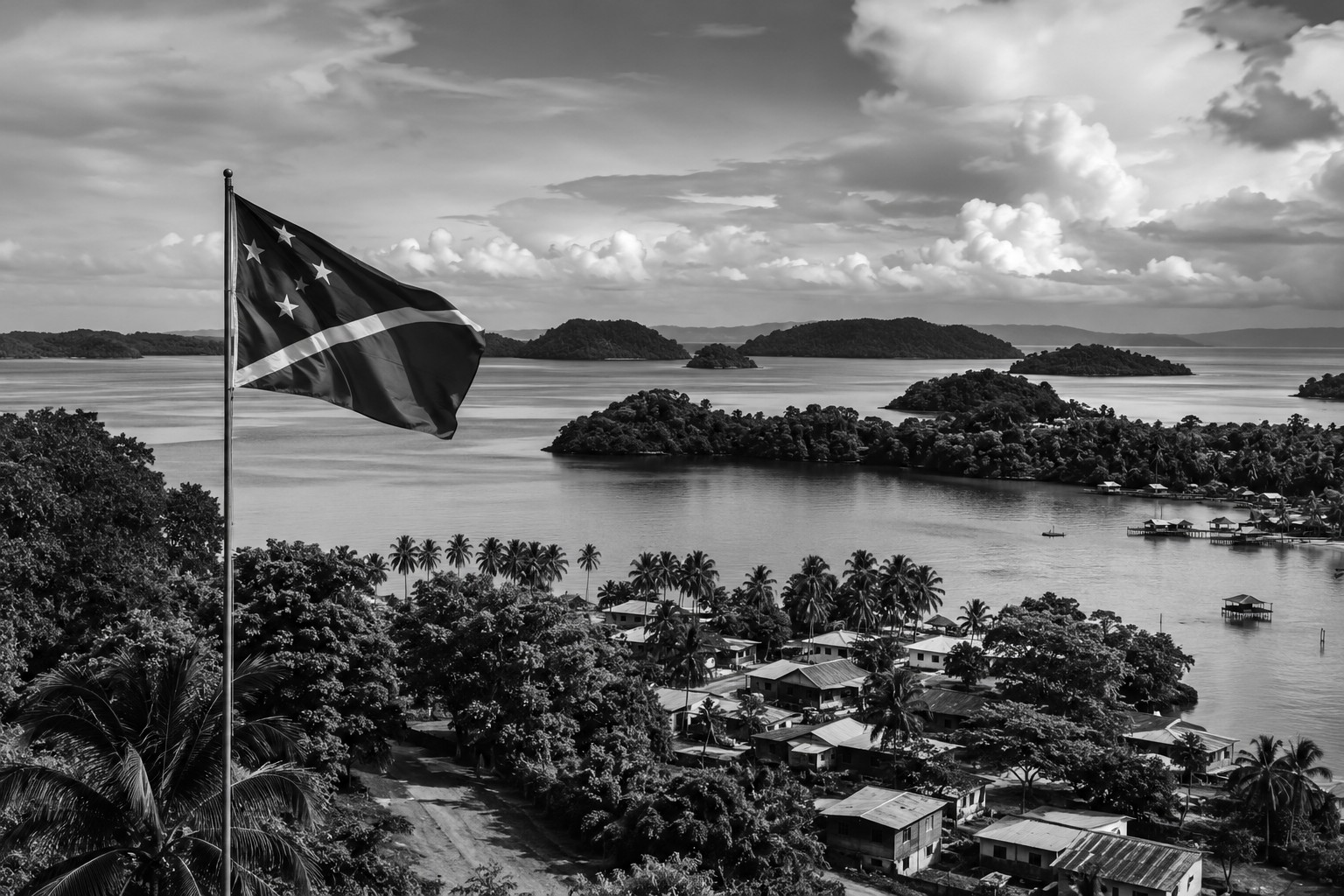
On 7 July 1978, the Solomon Islands formally became an independent nation, ending nearly a century of British colonial administration. The transition marked the birth of a sovereign Pacific state that chose constitutional democracy, retained close ties with the Commonwealth, and embarked on the complex task of forging a unified national identity across hundreds of islands and diverse communities.
A peaceful transition to independence
The Solomon Islands, an archipelago of almost 1,000 islands in the South Pacific, had been administered as the British Solomon Islands Protectorate since 1893. During the decades leading up to independence, local political participation gradually expanded through constitutional reforms and the establishment of representative institutions.
Negotiations with Britain culminated in a peaceful transfer of power on 7 July 1978. Rather than emerging through armed conflict or revolution, independence was achieved through political dialogue and constitutional development. The new nation adopted a Westminster-style parliamentary system, with King Charles III today serving as head of state through a Governor-General, reflecting its continued membership of the Commonwealth.

Building a nation from many cultures
Independence presented opportunities as well as challenges. Although the Solomon Islands had become one sovereign state, its population represented extraordinary cultural diversity. More than 70 indigenous languages are spoken across the islands, alongside Solomon Islands Pijin and English, the country’s official language.
Successive governments have worked to strengthen national institutions while balancing the interests of widely dispersed island communities. Infrastructure, healthcare, education and transport have remained major priorities, particularly given the country’s geography and the logistical challenges of serving remote populations.
Economic opportunities and vulnerabilities
The Solomon Islands possesses abundant natural resources, including timber, fisheries and mineral deposits, while agriculture continues to provide livelihoods for much of the population. Tourism also offers long-term potential, supported by the country’s coral reefs, marine biodiversity and historical sites from the Second World War.
However, the economy remains vulnerable to fluctuations in commodity prices, climate-related disasters and external economic shocks. Rising sea levels and increasingly severe weather events have placed climate resilience high on the national agenda, with the Solomon Islands frequently calling for stronger international action on climate change.
Regional importance grows
In recent years, the Solomon Islands has attracted growing international attention as geopolitical competition has intensified across the Pacific. Relations with regional partners, including Australia, New Zealand, China and the United States, have become increasingly significant, reflecting the strategic importance of the island nation within the wider Indo-Pacific region.
Despite external interest, successive Solomon Islands governments have consistently emphasised their right to pursue an independent foreign policy based on national interests and development priorities.
A continuing journey
Nearly five decades after independence, the Solomon Islands continues to evolve as a sovereign democracy. The country has experienced periods of political tension and reconciliation, economic change and institutional reform, while maintaining its democratic framework and cultural heritage.
The anniversary of independence serves as both a celebration of national self-determination and a reminder that nation-building is an ongoing process. From its peaceful emergence as an independent state in 1978 to its growing role in regional affairs today, the Solomon Islands continues to shape its own future while preserving the traditions and identities that make the archipelago unique.
Newshub Editorial in Oceania – 7 July 2026

Ask NF GPT
If you have an account with ChatGPT you get deeper explanations,
background and context related to what you are reading.
Open an account:
Recent Comments