
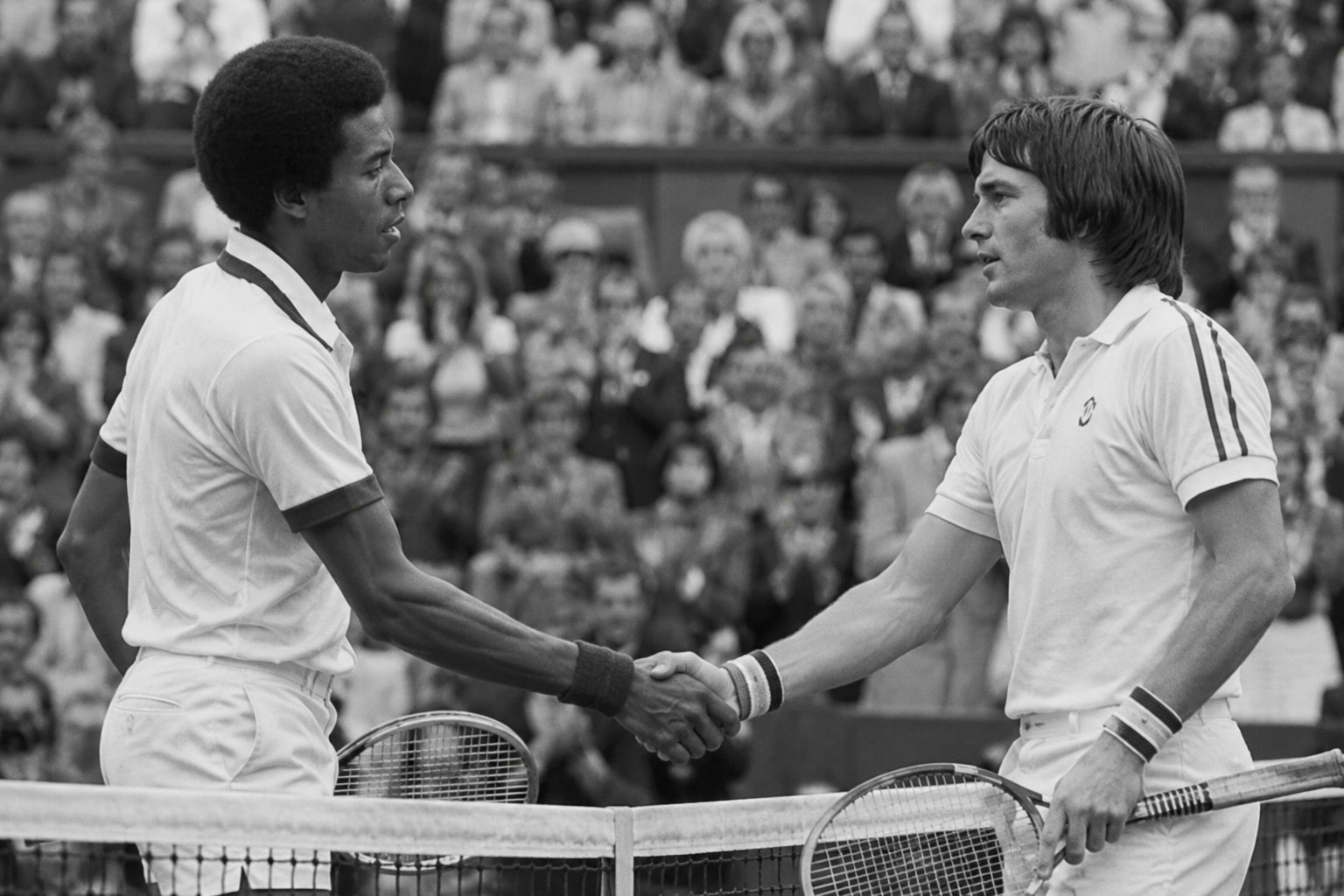
On this day in 1975, Arthur Ashe etched his name into sporting history by defeating defending champion Jimmy Connors in four sets to win the men’s singles title at the 89th Wimbledon Championships. The victory made Ashe the first Black man to lift the Wimbledon singles trophy, cementing his place as one of the game’s greatest ambassadors and one of sport’s most influential figures.
A tactical masterclass
Heading into the final, Connors was widely regarded as the favourite. The reigning champion possessed one of the most powerful baseline games in tennis and had dominated much of the previous two seasons. Ashe, by contrast, was viewed as the experienced outsider at 32 years of age.
Rather than engaging in long power rallies, Ashe adopted an intelligent tactical approach. He mixed sliced returns, soft lobs, carefully placed volleys and changes of pace to disrupt Connors’ rhythm. The strategy frustrated the younger American throughout the contest and ultimately proved decisive.

After dropping the opening set, Ashe recovered brilliantly to win the next three, claiming a memorable 6–1, 6–4, 7–5 finish after Connors had taken the first set 6–1.
More than a championship
The Wimbledon title represented the pinnacle of Ashe’s remarkable playing career. It completed a collection of three Grand Slam singles titles, having previously won the US Open and the Australian Open.
Yet Ashe’s influence extended far beyond the tennis court. Throughout his life he championed civil rights, education and equal opportunity, becoming one of the world’s most respected sporting figures.
His success at Wimbledon carried profound symbolic importance during a period when opportunities for Black athletes remained limited in many elite sports. Ashe’s composure, dignity and sportsmanship made him a role model for generations of players around the globe.
A defining Wimbledon moment
The 1975 final remains one of the most analysed championship matches in Wimbledon history. Coaches and players continue to study Ashe’s tactical performance as an example of how intelligence, patience and adaptability can overcome superior power.
Connors would continue to enjoy an outstanding career, winning multiple Grand Slam titles and spending years among the world’s best players. Nevertheless, on Centre Court that July afternoon, Ashe’s strategic brilliance proved unstoppable.
Nearly five decades later, the victory continues to resonate not only as a sporting achievement but also as a milestone in the history of equality and representation in international sport.
Arthur Ashe’s Wimbledon triumph demonstrated that greatness is measured not simply by victories, but by the lasting impact an athlete leaves on both their sport and society.
Newshub Editorial in Europe – 5 July 2026

Ask NF GPT
If you have an account with ChatGPT you get deeper explanations,
background and context related to what you are reading.
Open an account:
Recent Comments