
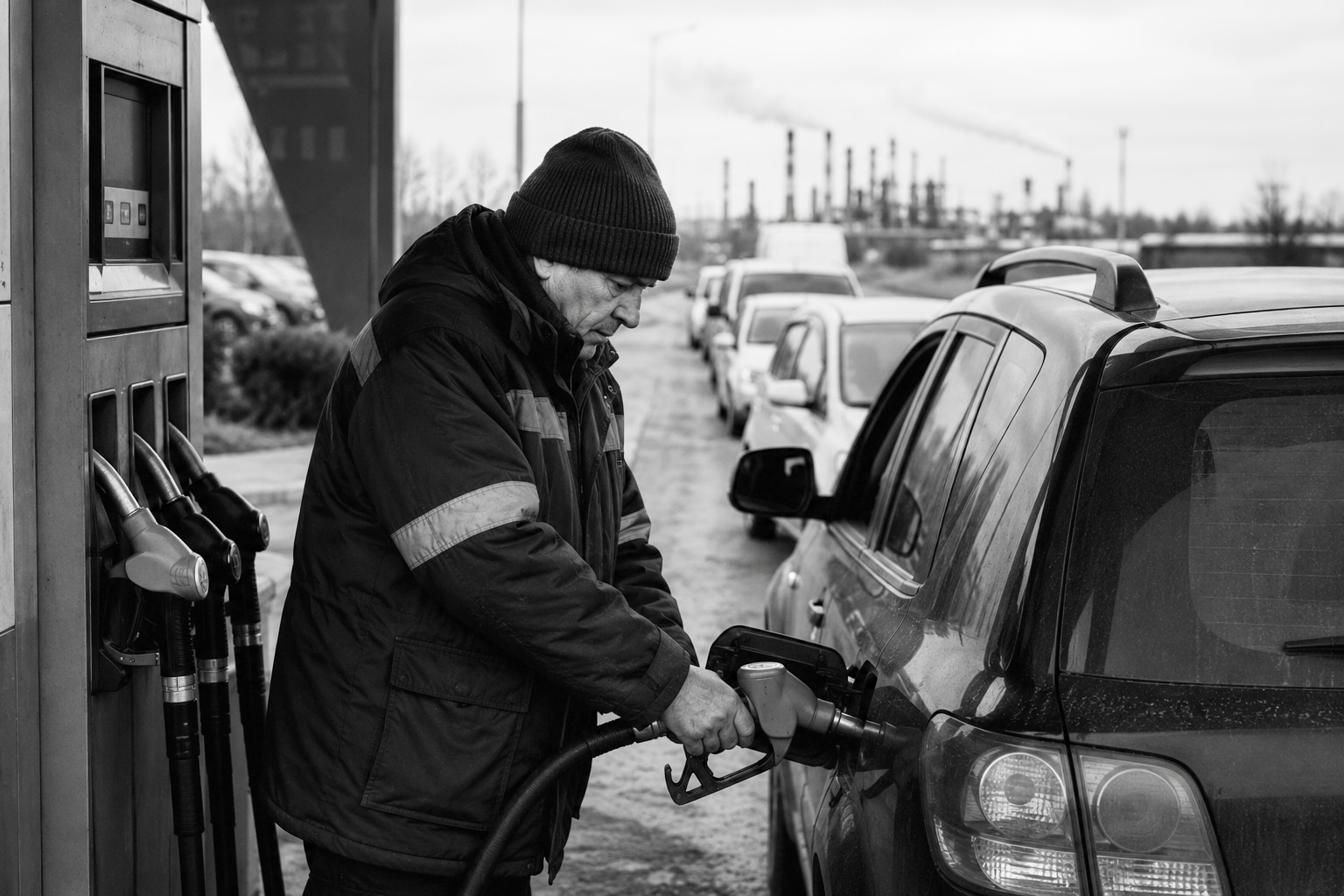
Russian President Vladimir Putin has publicly acknowledged that Russia is experiencing fuel shortages following sustained Ukrainian attacks on oil refineries and energy infrastructure, marking one of the clearest admissions yet that the war is creating growing domestic economic pressures. The admission came as fuel rationing expanded across parts of Siberia and Moscow signalled that it expects a new round of talks with US negotiators once tensions in the Middle East begin to ease.
Kremlin acknowledges supply problems
Speaking in remarks published by the Kremlin, Putin admitted that attacks on critical energy infrastructure had created “a certain shortage” of fuel, although he insisted the situation remained manageable. He said the government was working to strengthen air defences around refineries while increasing fuel production and improving supplies to strategically important regions, particularly occupied Crimea.

The comments represent a notable shift in tone, with the Kremlin publicly recognising supply disruptions that have become increasingly visible across the country.
Fuel rationing reaches Siberia
The impact is now being felt far beyond Russia’s western regions. Authorities in the Siberian region of Irkutsk have introduced limits of 50 litres of fuel per vehicle per day at state-run Rosneft filling stations as shortages continue to spread. Some private fuel retailers have imposed even stricter limits, while regional governments have prioritised supplies for emergency services, agriculture and public transport.
Russia’s Deputy Prime Minister, Alexander Novak, said the government was reviewing fuel export agreements to ensure domestic demand takes priority as pressure on supplies continues.
Ukraine intensifies pressure
The shortages follow months of increasingly sophisticated Ukrainian drone strikes targeting Russian oil refineries, fuel depots and transport infrastructure. Kyiv argues that the campaign is designed to reduce Russia’s ability to sustain its military operations while forcing the Kremlin to divert resources towards defending critical economic assets.
Russian officials say they are rapidly repairing damaged facilities, but repeated attacks have disrupted refining capacity and complicated fuel distribution across the country.
Diplomatic signals continue
Alongside his comments on fuel supplies, Putin said he expects US representatives to return to Moscow for further negotiations once Washington concludes its current diplomatic efforts related to the Middle East. While no timetable has been announced, the remarks suggest that channels of communication between Moscow and Washington remain open despite the continuing conflict in Ukraine.
The combination of domestic fuel shortages, expanding rationing and ongoing diplomatic contacts illustrates the increasingly complex environment facing the Kremlin. Although Russian officials continue to describe the shortages as temporary and under control, the crisis highlights how Ukraine’s long-range strikes are beginning to affect daily life deep inside Russia, adding a new economic dimension to a conflict that has now entered its fifth year.
Newshub Editorial in Europe – 29 June 2026

If you have an account with ChatGPT you get deeper explanations,
background and context related to what you are reading.
Open an account:
Open an account
Recent Comments