
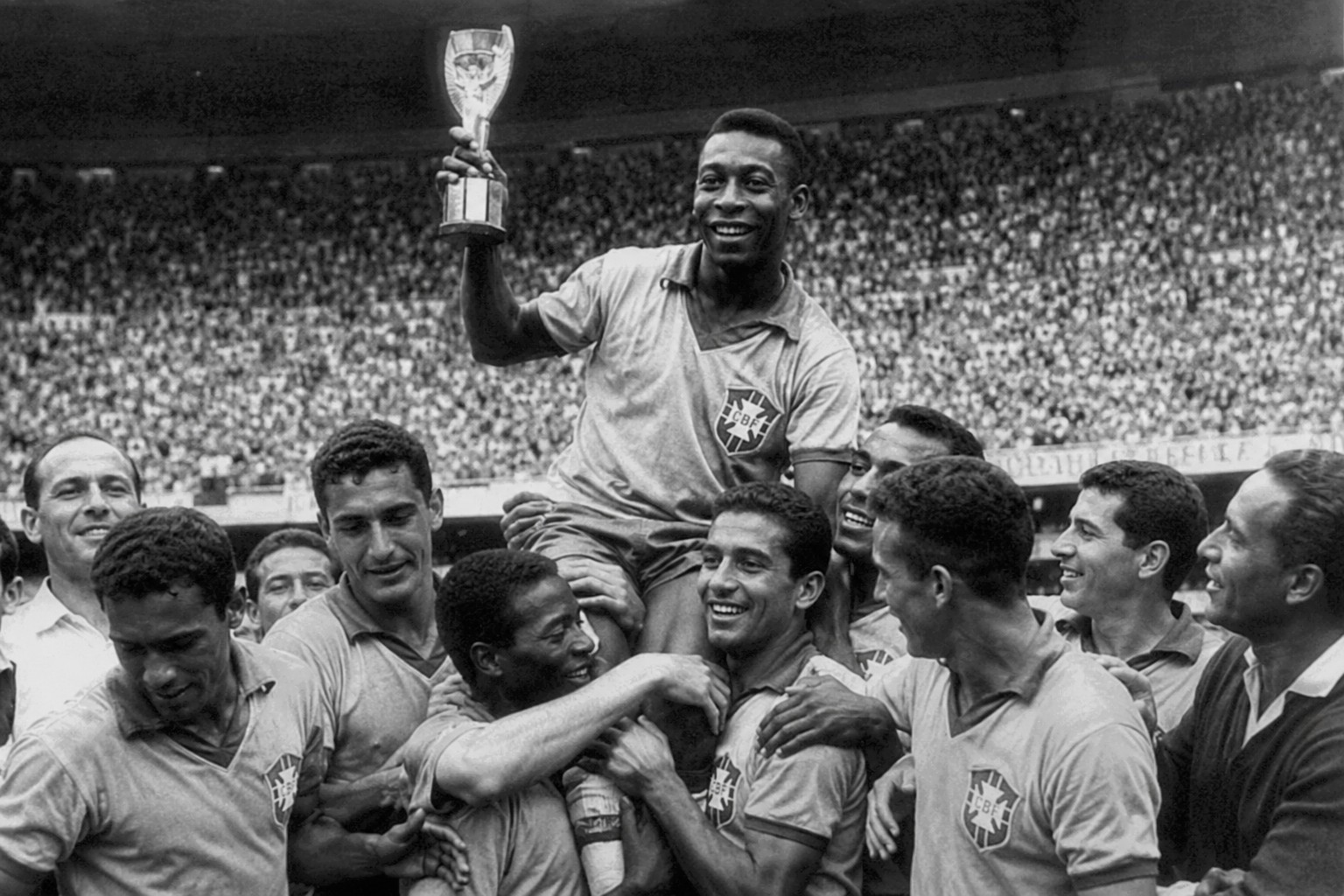
On 29 June 1958, Brazil transformed international football forever by winning its first FIFA World Cup, defeating hosts Sweden 5–2 in the final at the Rasunda Stadium in Stockholm. The victory marked the beginning of what would become the most successful national team in World Cup history and introduced a new era of attacking, technical football that captivated the world.
A nation seeking redemption
Eight years earlier, Brazil had suffered one of the greatest heartbreaks in football history when they lost the decisive match of the 1950 World Cup on home soil to Uruguay, an event remembered as the “Maracanazo”. The defeat left deep scars on Brazilian football and created immense pressure on future generations.

By 1958, however, Brazil arrived in Sweden with an exceptionally talented squad. Under coach Vicente Feola, the team blended experience with youthful brilliance. Among its stars were Didi, Garrincha, Vavá and a relatively unknown 17-year-old forward named Pelé.
The final in Stockholm
Sweden took an early lead through Nils Liedholm, raising hopes among the home supporters. Brazil responded almost immediately, with Vavá scoring twice before half-time to put the visitors ahead.
The second half became a showcase of Brazilian brilliance. Pelé produced one of the tournament’s defining moments, elegantly lifting the ball over a defender before volleying home to score one of the greatest goals ever seen in a World Cup final. Mário Zagallo added another before Sweden’s Agne Simonsson briefly reduced the deficit. Pelé completed the scoring with a towering header in the closing minutes, sealing a memorable 5–2 victory.
At just 17 years and 249 days old, Pelé became the youngest player ever to score in a World Cup final, a record that still stands today.
A legacy that shaped football
Brazil’s triumph in Sweden changed perceptions of how football could be played. Their fluid passing, technical excellence and attacking flair inspired coaches and players across generations.
The victory also launched Brazil’s golden era. The nation would go on to win additional World Cup titles in 1962, 1970, 1994 and 2002, becoming the only country to lift the trophy five times.
For Pelé, the 1958 tournament marked the beginning of one of the greatest careers in sporting history. He would become a global ambassador for football and remains the only player to win three FIFA World Cups.
More than six decades later, Brazil’s first World Cup victory remains one of the defining moments in football history. It was not merely the country’s first world championship—it was the birth of a footballing identity that continues to influence the game around the globe.
Newshub Editorial in Europe – 29 June 2026

If you have an account with ChatGPT you get deeper explanations,
background and context related to what you are reading.
Open an account:
Open an account
Recent Comments