
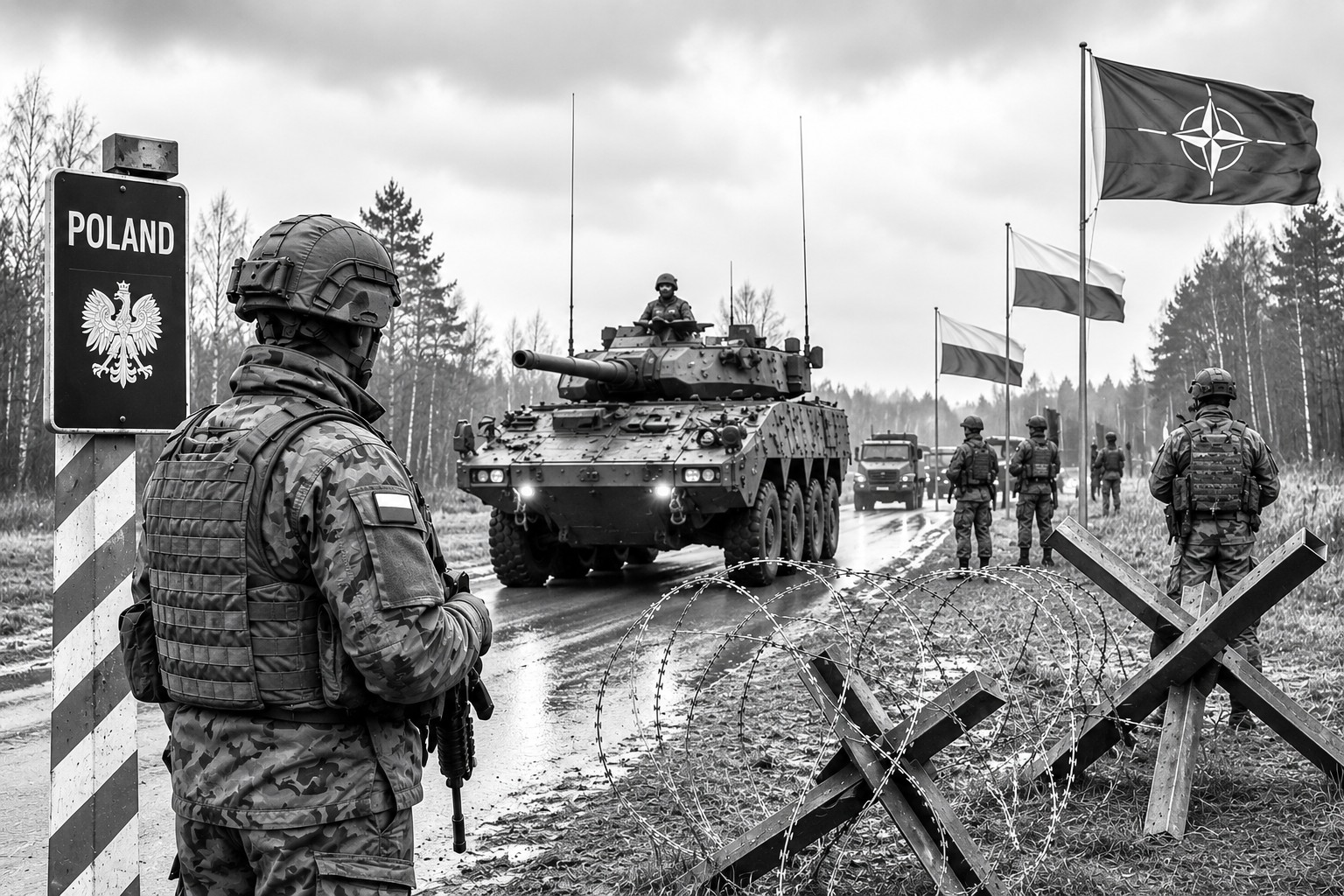
Western intelligence and security sources have warned that Russia could be preparing a limited provocation involving one or more NATO member states, potentially targeting the Baltic region or Poland. According to officials from two European countries familiar with the assessments, such an operation could be intended to test the Alliance’s unity as Moscow faces increasing military and political pressure from Ukraine.
Growing concerns among NATO allies
The intelligence assessments suggest that any potential Russian action would likely fall below the threshold of a conventional military attack, instead relying on hybrid tactics designed to create uncertainty and challenge NATO’s collective response mechanisms.


Officials cited by several media outlets say possible scenarios could include cyberattacks, sabotage, border incidents, disinformation campaigns or other covert activities intended to destabilise neighbouring countries without triggering a full-scale military confrontation.
No public evidence has been released indicating that such an operation is imminent, and officials stress that the assessments are precautionary rather than predictive.
Pressure on Moscow
The warnings come as Russia continues to face sustained military pressure from Ukraine, including long-range strikes against military infrastructure and growing logistical challenges inside Russian territory.
Some Western analysts believe the Kremlin could seek to shift strategic attention by increasing pressure elsewhere in Europe, particularly in regions where NATO’s collective defence commitments would be tested politically as well as militarily.
Others caution that intelligence assessments often examine a range of possible scenarios rather than forecasting a specific course of action.
NATO remains on alert
NATO has significantly strengthened its military presence along its eastern flank since Russia’s full-scale invasion of Ukraine in 2022. Multinational battlegroups have been expanded across Estonia, Latvia, Lithuania and Poland, while additional air defence, surveillance and rapid-response capabilities have been deployed throughout the region.
Alliance officials have repeatedly stated that any attack against a NATO member would be met under Article 5 of the North Atlantic Treaty, which considers an attack on one member to be an attack on all.
Although NATO has not publicly commented on the latest intelligence reports, officials have consistently emphasised the importance of vigilance against hybrid threats.
Heightened uncertainty
Security analysts note that Europe’s strategic environment remains highly volatile as the war in Ukraine continues. Intelligence agencies across the continent are closely monitoring Russian military movements, cyber activity and influence operations for signs of potential escalation.
While the reported assessments have increased concern among Western governments, officials continue to stress that diplomacy, deterrence and Alliance cohesion remain the primary tools for preventing wider conflict.
For now, the warnings serve as a reminder that Europe’s security landscape extends beyond the battlefield in Ukraine, with hybrid threats and political pressure remaining central features of the current geopolitical environment.
Newshub Editorial | Europe – 26 June 2026

If you have an account with ChatGPT you get deeper explanations,
background and context related to what you are reading.
Open an account:
Open an accountWestern intelligence and security sources have warned that Russia could be preparing a limited provocation involving one or more NATO member states, potentially targeting the Baltic region or Poland. According to officials from two European countries familiar with the assessments, such an operation could be intended to test the Alliance's unity as Moscow faces increasing military and political pressure from Ukraine.
Recent Comments