
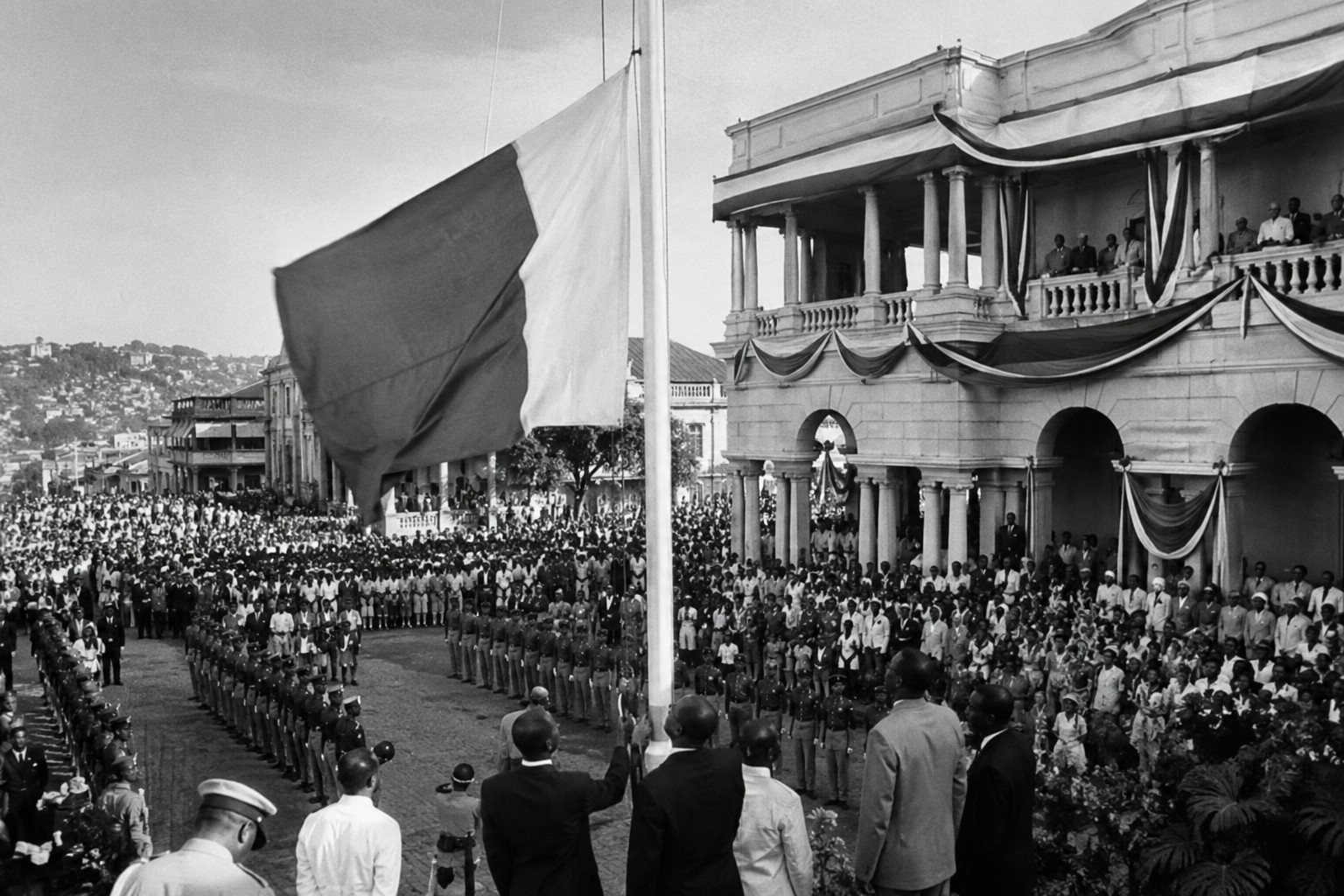
After more than six decades under French colonial rule, Madagascar officially became an independent nation on 26 June 1960. The historic transition marked the birth of the Malagasy Republic and positioned the island nation to chart its own political and economic future during Africa’s sweeping wave of decolonisation.
A peaceful path to sovereignty
Unlike several other African independence movements of the era, Madagascar’s independence was achieved through political negotiations rather than prolonged armed conflict. Following constitutional reforms and increasing demands for self-government during the 1950s, France agreed to transfer sovereignty after a period of growing Malagasy autonomy.

On 26 June 1960, the Republic of Madagascar was formally proclaimed, ending 64 years of French colonial administration that had begun in 1896.
The leadership of a new nation
Philibert Tsiranana became the country’s first president, advocating close diplomatic and economic ties with France while seeking stability during the early years of independence. His administration focused on building national institutions, expanding education and establishing the foundations of a modern state.
Although political challenges would emerge in later decades, the peaceful transfer of power was viewed internationally as a successful example of negotiated decolonisation.
A strategically important island
Located in the Indian Ocean off Africa’s southeastern coast, Madagascar is the world’s fourth-largest island and is renowned for its extraordinary biodiversity. More than 90 percent of its wildlife species are found nowhere else on Earth, making the country one of the world’s most significant ecological treasures.
Its strategic maritime position has also made Madagascar an important trading and logistical hub throughout history.
Part of Africa’s independence era
Madagascar’s independence came during what is often referred to as the “Year of Africa.” In 1960 alone, 17 African countries achieved independence, dramatically reshaping the political map of the continent and accelerating the decline of European colonial empires.
For Madagascar, 26 June remains the nation’s most important public holiday, celebrated each year with parades, cultural events, fireworks and ceremonies honouring the country’s sovereignty and national identity.
Newshub Editorial | Africa – 26 June 2026

If you have an account with ChatGPT you get deeper explanations,
background and context related to what you are reading.
Open an account:
Open an account
Recent Comments