
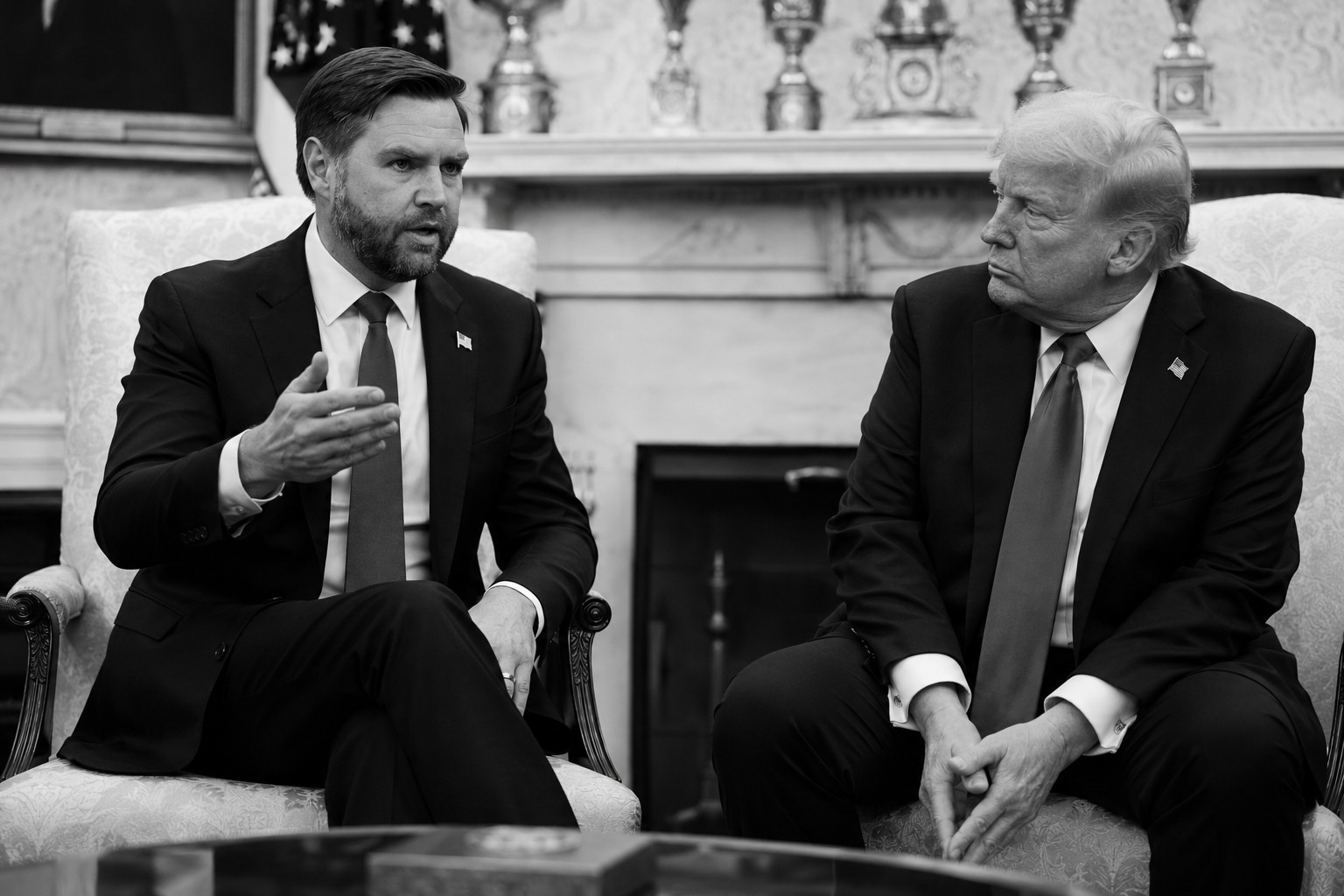
US Vice President JD Vance has delivered one of the strongest public rebukes yet of Israeli criticism directed at President Donald Trump over the recently announced Iran agreement. Speaking at the White House, Vance warned members of the Israeli government that attacking Trump was strategically unwise, arguing that the US president remains Israel’s only major ally willing to provide unwavering political and military backing. The unusually direct remarks highlight growing tensions between Washington and Jerusalem over how to deal with Iran following the ceasefire agreement.
A sharp message to Israel
Responding to reports that senior Israeli officials had criticised Trump’s Iran deal, Vance dismissed what he described as an overreaction and urged Israeli leaders to recognise the realities of their strategic relationship with Washington.
“Donald J. Trump is the only head of state in the entire world who is sympathetic to the nation of Israel at this moment in time,” Vance said. He added that if he were serving in the Israeli cabinet, he would avoid publicly attacking “the only powerful ally” Israel has left.

His comments represent one of the clearest signs yet that frustration has been building inside the Trump administration over criticism coming from elements of Prime Minister Benjamin Netanyahu’s government.
Defence aid at the centre of the argument
Vance also reminded critics of the scale of American military assistance provided to Israel. He noted that much of Israel’s defensive capability is built using American technology and financed by US taxpayers, referencing the billions of dollars in annual defence assistance that Washington provides.
The vice president argued that this support demonstrates America’s long-standing commitment to Israel’s security and should not be overlooked during political disagreements over diplomatic strategy. The United States currently provides roughly $4 billion in military assistance to Israel each year, with negotiations continuing over future defence cooperation.
Iran deal divides allies
The agreement with Iran has generated mixed reactions across both the United States and Israel. Supporters argue that the deal offers an opportunity to reduce regional tensions, reopen critical shipping routes and prevent further military escalation.
Critics, however, contend that the framework does not sufficiently address Iran’s ballistic missile programme, lacks firm guarantees regarding Tehran’s nuclear ambitions and may provide Iran with significant economic relief before permanent safeguards are established.
Several members of Israel’s governing coalition have expressed concern that the agreement could strengthen Iran while limiting Israel’s freedom to respond militarily to regional threats.
A changing political relationship
Vance’s remarks underline what many analysts see as a more complicated phase in US-Israeli relations. While Washington continues to describe Israel as a key strategic partner, disagreements over diplomacy with Iran have become increasingly public.
Despite the sharp rhetoric, neither side has suggested that military or intelligence cooperation will be reduced. Instead, the exchange illustrates the growing challenge of balancing long-standing security commitments with differing approaches to preventing future conflict in the Middle East.
As negotiations over the Iran agreement continue, relations between Washington and Jerusalem are likely to remain under close international scrutiny, with both governments seeking to protect their strategic interests while managing an increasingly complex regional landscape.
Newshub Editorial in North America – 19 June 2026

If you have an account with ChatGPT you get deeper explanations,
background and context related to what you are reading.
Open an account:
Open an account
Recent Comments