
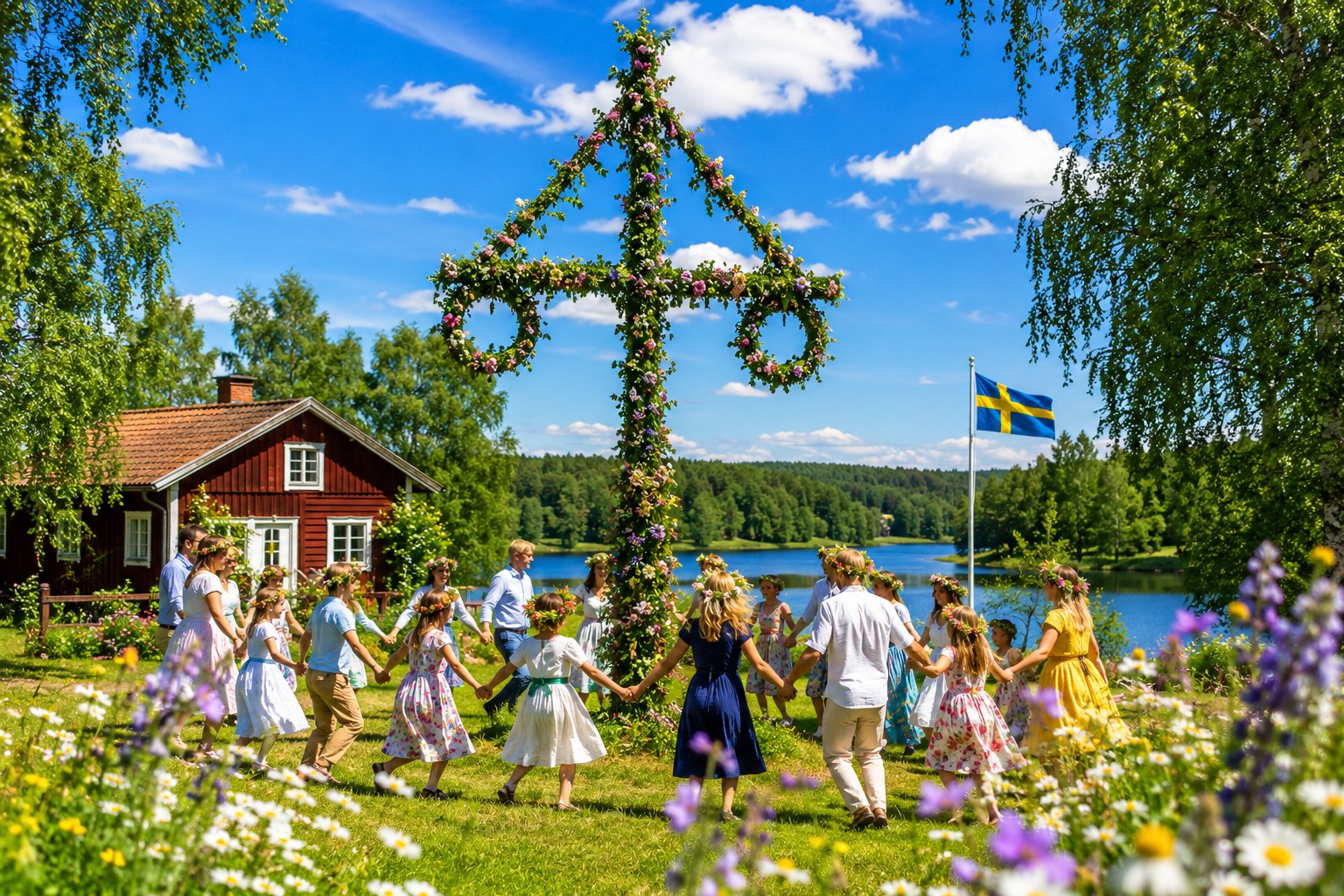
Today, millions of Swedes celebrate Midsummer Eve, one of the country’s oldest and most cherished traditions. More than just a public holiday, Midsummer represents the arrival of the brightest days of the year and a celebration deeply rooted in nature, family and community. While Christmas may be the largest family holiday, many Swedes consider Midsummer to be the true highlight of the year – a uniquely Nordic festival where ancient customs continue to thrive in modern society.
Ancient roots stretching back centuries
The origins of Midsummer date back long before Christianity reached Scandinavia. Early celebrations marked the summer solstice, when daylight reached its peak and nature was believed to possess extraordinary powers. The festival symbolised fertility, growth and prosperity, with communities gathering to celebrate successful harvests and the abundance of the natural world.
When Christianity spread across Sweden, the celebration became associated with St John the Baptist’s Day, observed around 24 June. Rather than replacing the older traditions, Christian and pagan customs merged, creating the distinctive Midsummer celebrations that remain largely unchanged today.

A nation heads for the countryside
For many Swedes, Midsummer marks the unofficial beginning of summer holidays. Cities become noticeably quieter as millions leave urban centres for summer cottages, islands, lakes, forests or family homes in the countryside.
Preparations often begin days in advance. Homes are decorated with fresh flowers and birch branches, while villages and local communities build and decorate the traditional maypole, or midsommarstång, with greenery and wildflowers. The raising of the maypole remains the centrepiece of most public celebrations.
Food, music and timeless traditions
Midsummer is renowned for its distinctive culinary traditions. The classic menu typically includes pickled herring served in various marinades, freshly harvested new potatoes, sour cream, chives, smoked or cured salmon, crispbread and locally grown strawberries. Many adults also enjoy schnapps, often accompanied by traditional drinking songs.
Flower crowns remain another iconic feature of the celebration, particularly among women and children. Dancing around the maypole to traditional songs such as Små grodorna has become synonymous with Swedish Midsummer and continues to bring together generations of families.
One enduring folklore tradition suggests that unmarried people should collect seven different flowers from seven different meadows and place them beneath their pillow on Midsummer Eve. According to legend, doing so will reveal the face of their future partner in a dream.
A tradition that continues to unite Sweden
Despite Sweden’s highly modern and digital society, Midsummer remains remarkably unchanged. It is one of the few occasions where traditions are observed across all generations and throughout the country. Whether celebrated in a small rural village, on an island in the Stockholm archipelago or at a family gathering in the north, the themes remain the same: nature, friendship, family and the appreciation of the long Scandinavian summer light.
As the sun barely sets across much of Sweden tonight, Midsummer continues to reflect an important part of Swedish identity. It is a celebration that connects the present with centuries of history while reminding people to slow down, gather with loved ones and enjoy the beauty of nature during the longest days of the year.
Newshub Editorial in Europe – 19 June 2026

If you have an account with ChatGPT you get deeper explanations,
background and context related to what you are reading.
Open an account:
Open an account
Recent Comments