
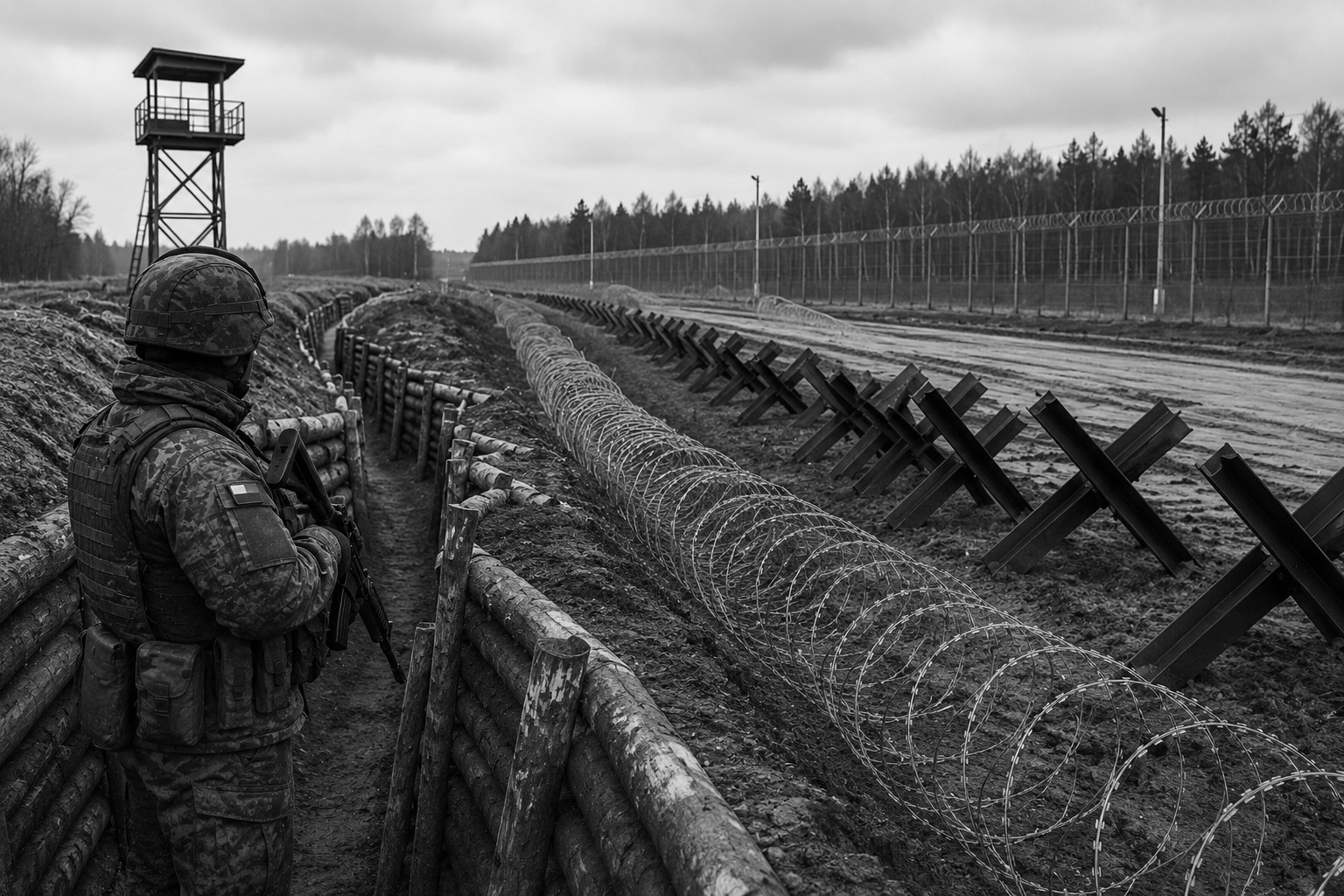
Ukraine is reinforcing its northern defensive positions amid growing concerns that Belarus could become more directly involved in Russia’s military campaign. While there is currently no indication of an imminent cross-border offensive, Kyiv says it cannot afford to underestimate the possibility as Moscow continues to deepen military integration with its closest ally.
Northern frontier remains under close watch
Since Russia launched its full-scale invasion in 2022, Ukraine has significantly expanded its defensive infrastructure along the border with Belarus. Military engineers continue to construct trenches, anti-tank barriers, fortified positions and surveillance systems designed to slow any potential advance from the north.
The measures reflect lessons learned from the early stages of the war, when Russian forces used Belarusian territory as a launch point for their unsuccessful assault on Kyiv.

Ukrainian officials maintain that maintaining a credible defensive posture allows military commanders to respond quickly should the security situation deteriorate.
Belarus and Russia deepen military cooperation
Belarus has remained one of Russia’s closest military partners throughout the conflict, allowing Russian troops to use its territory for training, logistics and missile operations. Joint military exercises, integrated command structures and increased defence cooperation have strengthened ties between Minsk and Moscow.
Although Belarus has not officially committed its own armed forces to combat operations inside Ukraine, analysts note that political and military dependence on Russia has steadily increased over the past several years.
This growing integration has fuelled concerns in Kyiv that Belarus could become more deeply involved if the conflict escalates further.
Ukraine avoids diverting excessive resources
Despite strengthening its northern frontier, Ukrainian military planners continue to prioritise the eastern and southern fronts, where active combat remains concentrated.
Officials emphasise that the current reinforcements are precautionary rather than a response to specific intelligence indicating an imminent attack. Maintaining flexible defensive capabilities allows Ukraine to deter potential threats without significantly weakening operations elsewhere.
Western intelligence agencies have similarly stated that they have seen no definitive evidence suggesting preparations for a major offensive from Belarus at this stage.
Regional security remains fragile
The situation nevertheless illustrates the broader security challenges facing Eastern Europe. The continued presence of Russian military assets in Belarus, combined with frequent joint exercises, means uncertainty persists along NATO’s eastern flank and Ukraine’s northern border.
Neighbouring countries, including Poland and the Baltic states, also continue to monitor developments closely, viewing Belarus as an increasingly important component of Russia’s regional military strategy.
Preparedness over prediction
For Ukraine, strengthening northern defences is less about anticipating an immediate invasion than ensuring the country is prepared for every possible scenario. Military planners recognise that strategic uncertainty has become one of the defining characteristics of the conflict.
As Russia and Belarus continue expanding defence cooperation, Kyiv’s investment in fortifications and border security demonstrates a long-term commitment to maintaining readiness while avoiding strategic surprise. Whether Belarus becomes more directly involved or not, Ukraine appears determined to ensure that its northern border remains secure against any future contingency.
Newshub Editorial in Europe – 18 June 2026

If you have an account with ChatGPT you get deeper explanations,
background and context related to what you are reading.
Open an account:
Open an account
Recent Comments