
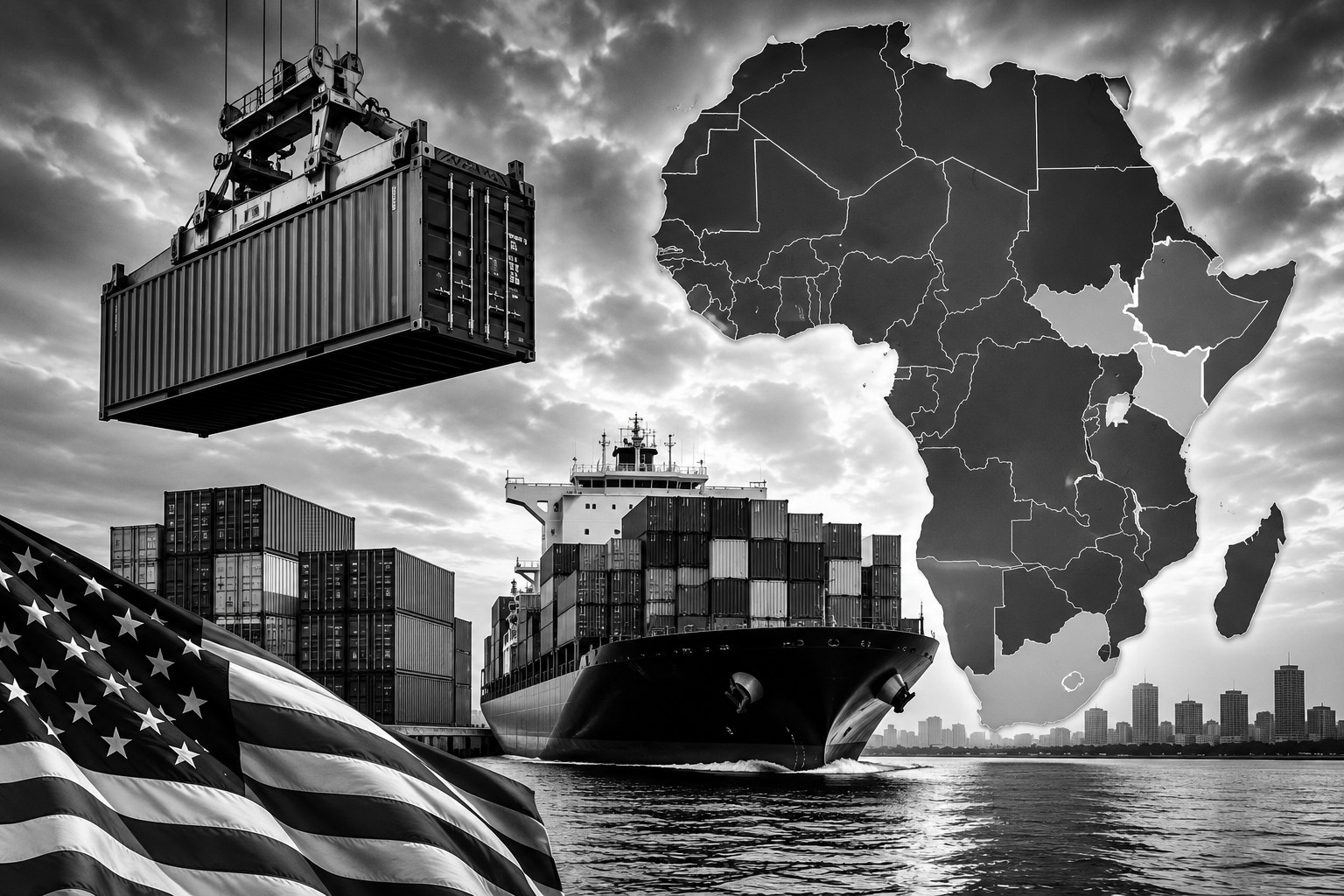
Seven African countries are facing the prospect of new United States tariffs after the Trump administration identified them among a broader group of nations allegedly failing to meet American labour standards. According to new analysis by ONE Data, Egypt, South Africa and Morocco are expected to be among the hardest hit if the proposed measures are implemented, raising concerns over exports, investment and economic growth across the continent.
Trade policy shifts put African exporters under pressure
The proposed tariffs form part of a wider review of US trade relationships, with Washington arguing that preferential market access should be linked more closely to labour protections and employment standards. Officials have stated that countries failing to demonstrate sufficient progress in workers’ rights and labour enforcement could face additional import duties on a range of products.
Research by ONE Data indicates that seven African economies are particularly exposed due to their reliance on exports to the United States. Egypt, South Africa and Morocco top the list, reflecting both the size of their export sectors and their integration into global manufacturing and supply chains.

Industries including automotive manufacturing, textiles, apparel, agriculture and industrial goods could face higher costs when entering the American market, potentially reducing their competitiveness against producers from other regions.
Major export sectors could be affected
South Africa is regarded as one of the most vulnerable countries because of its sizeable automotive exports and industrial production, both of which benefit from long-established trade arrangements with the United States. Additional tariffs could increase costs for American importers while reducing demand for South African products.
Egypt’s expanding manufacturing sector also faces significant exposure. In recent years, the country has positioned itself as a regional production hub serving both European and North American markets. New trade barriers could slow export growth at a time when Cairo is seeking greater foreign investment and industrial expansion.
Morocco, which has successfully attracted major automotive and aerospace manufacturers, could also experience reduced export competitiveness if tariffs are introduced. The country has invested heavily in developing advanced manufacturing industries aimed at international markets, particularly Europe and North America.
Several other African economies with growing export relationships with the United States are also expected to be affected, although to a lesser extent.
Governments seek diplomatic solutions
African governments are expected to engage with Washington in an effort to avoid the proposed measures. Many argue that significant progress has already been made in strengthening labour legislation, improving workplace protections and modernising employment regulations.
Business organisations across the continent have also warned that higher tariffs could discourage foreign direct investment and disrupt supply chains that have taken years to establish. They argue that African economies require stable access to international markets to support industrialisation, job creation and long-term economic development.
Trade experts note that many of the affected countries have invested substantially in export-oriented industries under existing trade frameworks, making sudden policy changes particularly disruptive for manufacturers and investors alike.
Global trade tensions remain elevated
The proposed tariffs reflect the Trump administration’s broader strategy of using trade policy to encourage regulatory reforms among international trading partners. While supporters argue that linking market access to labour standards promotes fair competition, critics warn that additional tariffs risk increasing global trade tensions and slowing economic growth.
For Africa, the potential measures arrive at a time when many economies are recovering from recent global shocks while seeking to diversify exports beyond traditional commodities. Access to the US market remains an important component of that strategy.
Although negotiations are expected to continue, investors and exporters will be watching developments closely. The outcome could have significant implications for African manufacturing, international investment flows and the future of US-Africa trade relations.
Newshub Editorial in Africa – 15 June 2026

If you have an account with ChatGPT you get deeper explanations,
background and context related to what you are reading.
Open an account:
Open an account
Recent Comments