
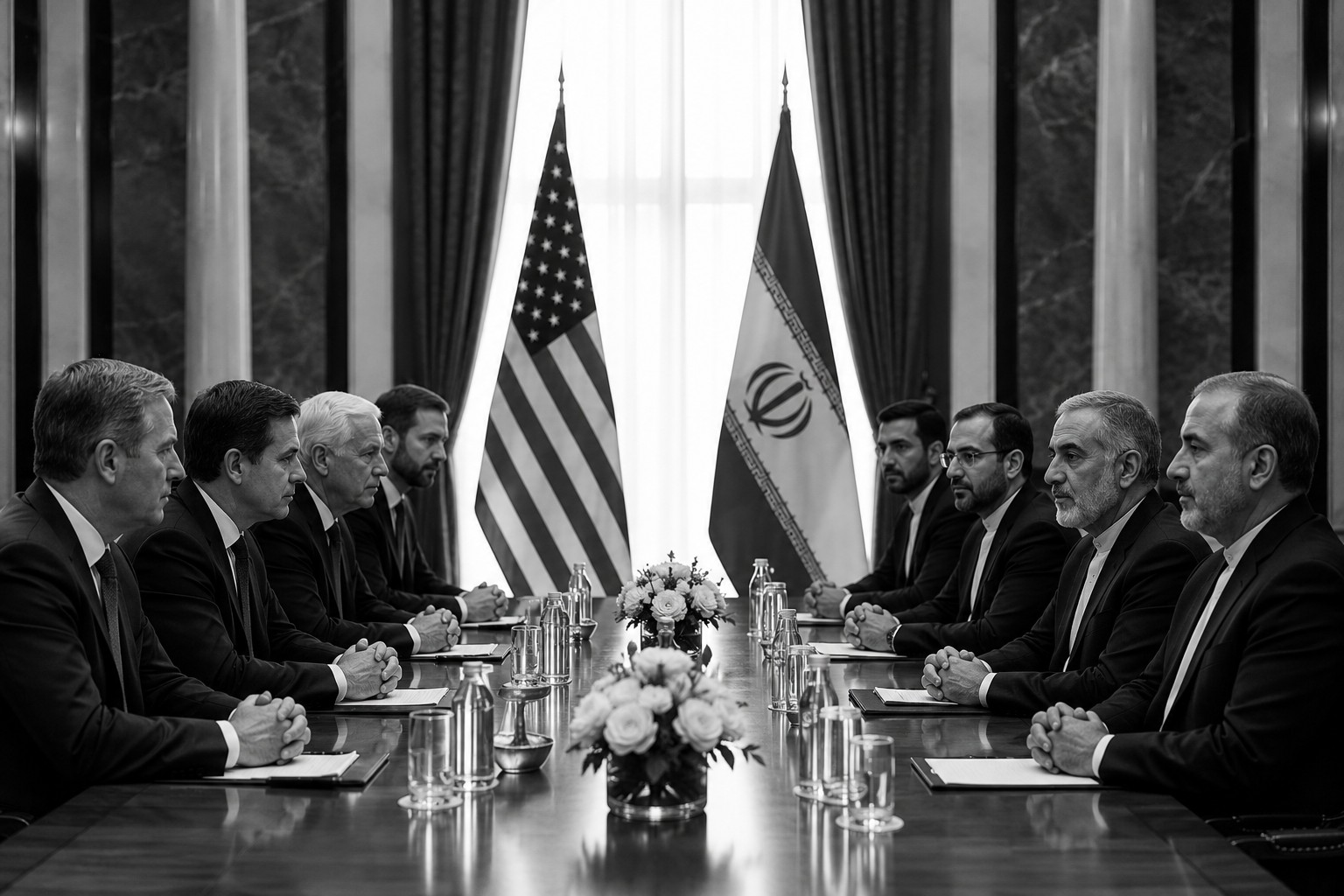
The United States and Iran have announced a landmark framework agreement aimed at ending months of conflict, marking one of the most significant diplomatic breakthroughs in the Middle East in recent years. While both sides hailed the agreement as the foundation for lasting peace, European leaders stressed that any final settlement must permanently prevent Iran from acquiring a nuclear weapon.
A framework for peace emerges
The preliminary agreement, brokered with the assistance of Pakistan, outlines an immediate de-escalation of hostilities and establishes a roadmap towards a comprehensive peace settlement. A formal signing ceremony is expected to take place in Switzerland later this week, after which negotiators will begin a 60-day period of technical discussions covering the remaining unresolved issues.
Among the key provisions are the reopening of the strategically vital Strait of Hormuz, the gradual lifting of certain U.S. restrictions on Iran, and the beginning of negotiations on sanctions relief and broader economic cooperation. The reopening of one of the world’s most important energy shipping routes immediately boosted investor confidence, sending oil prices lower and lifting equity markets across Asia, Europe and the United States.

Nuclear programme remains the central issue
Despite the optimism surrounding the announcement, the future of Iran’s nuclear programme remains the defining issue of the negotiations. According to officials familiar with the draft memorandum, Iran has agreed that it will neither develop nor acquire nuclear weapons while technical negotiations continue. The agreement also calls for a halt to further uranium enrichment beyond current levels and future discussions over existing enriched uranium stockpiles.
European leaders welcomed the diplomatic breakthrough but emphasised that any permanent agreement must include robust verification mechanisms under international supervision.
British Prime Minister Sir Keir Starmer, French President Emmanuel Macron, German officials and European Union leaders reiterated that Iran must never be allowed to possess a nuclear weapon. They also called for close cooperation with the International Atomic Energy Agency to ensure full compliance with any future agreement.
Markets respond positively
Financial markets reacted enthusiastically to the announcement. Crude oil prices declined sharply as traders anticipated the restoration of shipping through the Strait of Hormuz, easing concerns over global energy supplies. Equity markets across Asia rallied, with Japan’s Nikkei, Hong Kong’s Hang Seng and Singapore’s Straits Times Index all opening significantly higher.
Lower energy prices also improved expectations for global inflation, leading investors to reassess the outlook for future interest rate decisions by major central banks. Analysts believe that reduced geopolitical risk could support stronger economic growth if the agreement remains on track.
A cautious path forward
While the framework agreement represents a significant diplomatic achievement, negotiators acknowledge that substantial challenges remain. Discussions over sanctions relief, verification procedures, Iran’s missile programme and regional security issues have yet to be finalised, and political opposition exists in both Washington and Tehran.
Nevertheless, the announcement represents the strongest indication in years that diplomacy may succeed where military confrontation has repeatedly failed. If negotiators can translate the framework into a durable treaty, the agreement could reshape security dynamics across the Middle East while reducing uncertainty in global energy markets.
For now, governments, investors and international organisations alike will be watching closely as technical negotiations begin and both sides attempt to transform a historic breakthrough into a lasting peace.
Newshub Editorial in Asia – 15 June 2026

If you have an account with ChatGPT you get deeper explanations,
background and context related to what you are reading.
Open an account:
Open an account
Recent Comments