
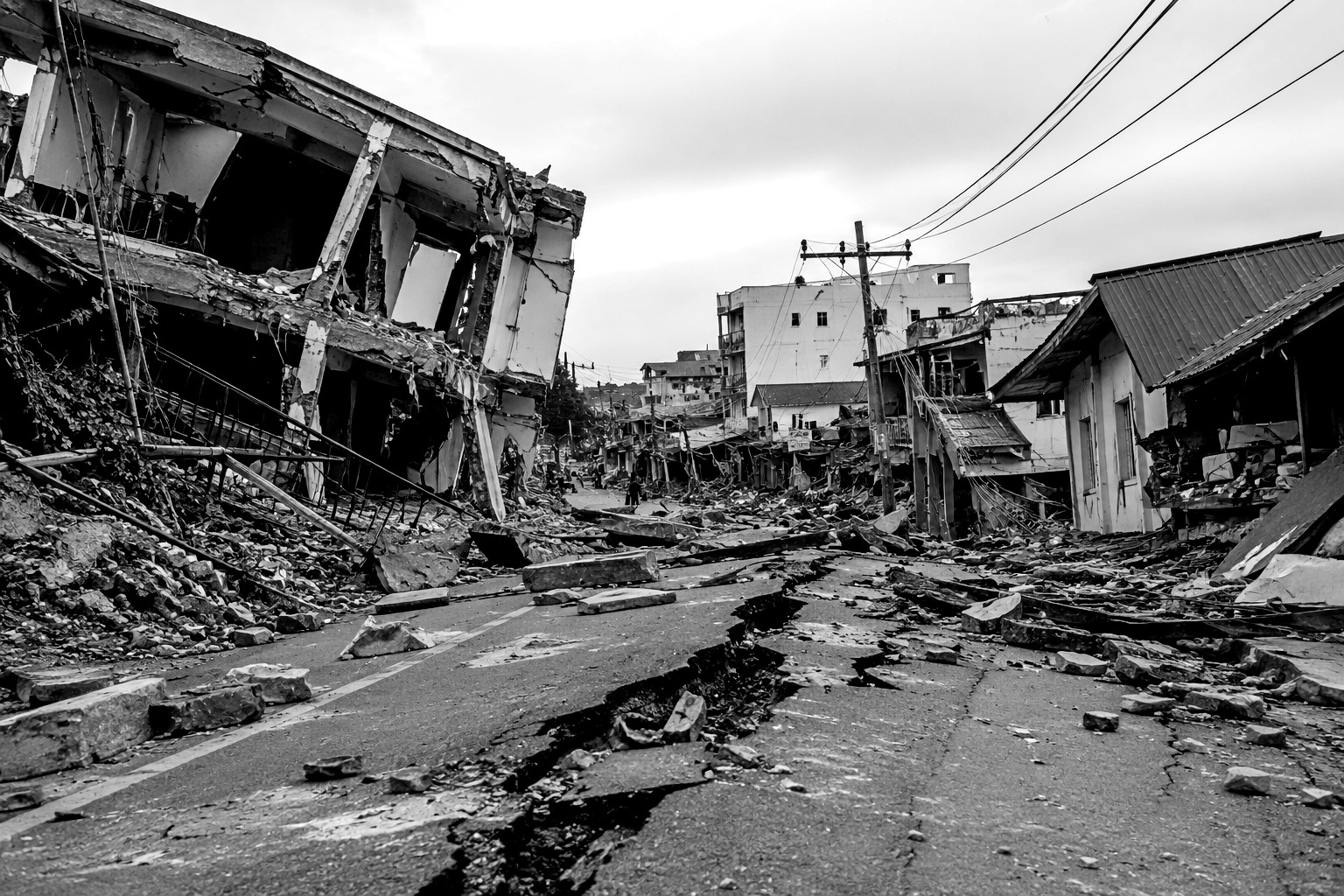
A powerful magnitude-7.8 earthquake struck the southern Philippines on Monday, killing at least 19 people and causing widespread damage across several provinces. Authorities have warned residents not to return to damaged homes and buildings as strong aftershocks continue to shake the region.
Deadly quake strikes southern region
The earthquake struck during the early hours of the morning, sending residents rushing into the streets as buildings swayed violently. The epicentre was located off the coast of Mindanao, one of the Philippines’ largest and most populous islands.
Initial reports from emergency services indicated that at least 19 people were killed, while dozens more were injured. Rescue teams have been deployed to affected areas where collapsed structures and damaged roads have complicated relief efforts.

Aftershocks increase danger
Government agencies warned that powerful aftershocks could continue for days, increasing the risk of further structural failures. Residents have been instructed to avoid entering buildings that may have suffered damage during the main quake.
Engineers and disaster-response officials are conducting rapid safety inspections of schools, hospitals, government offices and residential buildings. Temporary evacuation centres have been established to accommodate thousands of displaced residents.
The Philippine Institute of Volcanology and Seismology stated that the possibility of additional strong tremors remains elevated following an earthquake of this magnitude.
Infrastructure and services disrupted
The quake caused significant disruptions to transportation, communications and electricity networks across parts of southern Mindanao. Several roads were reported blocked by landslides, while power outages affected numerous communities.
Airports and ports conducted precautionary inspections before resuming normal operations. Authorities also assessed the risk of coastal hazards, although no major tsunami damage was immediately reported.
Local governments have begun distributing food, water and emergency supplies to affected communities as rescue and recovery operations continue.
A country vulnerable to earthquakes
The Philippines is located along the Pacific Ring of Fire, one of the world’s most seismically active regions. The country experiences thousands of earthquakes each year, although only a small percentage cause significant damage.
Experts note that densely populated urban areas and vulnerable infrastructure can increase the impact of major seismic events, particularly when strong earthquakes occur near populated regions.
Relief efforts intensify
National authorities, military units and humanitarian organisations have mobilised resources to support affected communities. Search-and-rescue teams continue to inspect damaged buildings while medical personnel treat the injured.
President Ferdinand Marcos Jr. expressed condolences to the victims’ families and pledged government support for recovery efforts. Officials indicated that damage assessments are ongoing and that the number of casualties could rise as information becomes available from remote areas.
As residents brace for further aftershocks, emergency services continue to urge caution, emphasising that the greatest immediate risk comes from weakened structures and unstable ground conditions left behind by the powerful earthquake.
Newshub Editorial in Asia – 8 June 2026

If you have an account with ChatGPT you get deeper explanations,
background and context related to what you are reading.
Open an account:
Open an accountA powerful magnitude-7.8 earthquake struck the southern Philippines on Monday, killing at least 19 people and causing widespread damage across several provinces. Authorities have warned residents not to return to damaged homes and buildings as strong aftershocks continue to shake the region.
Recent Comments