
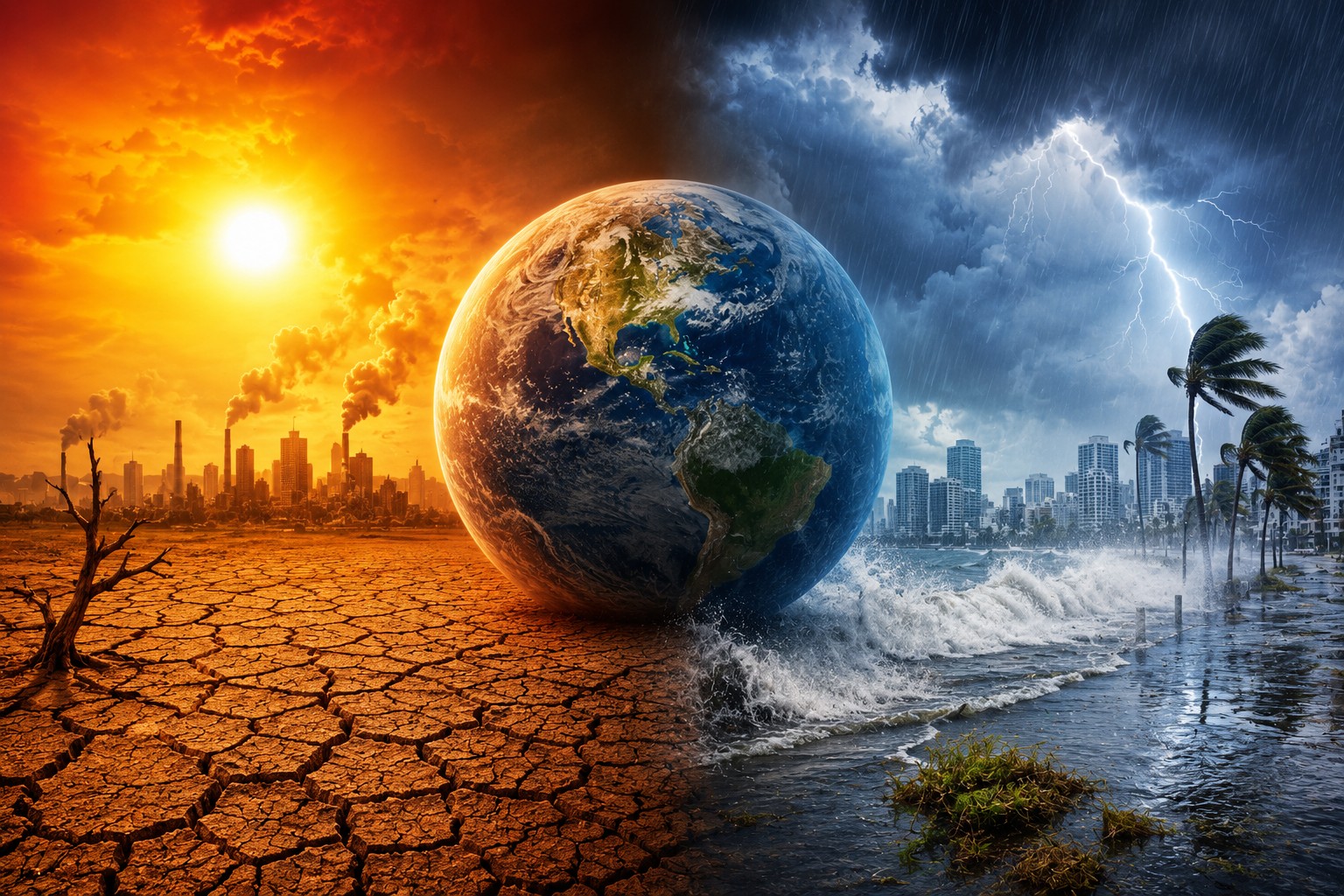
The world could experience another record-breaking year for global temperatures as early as 2027, according to updated forecasts from the World Meteorological Organization. Scientists say the likely return of El Niño, combined with the continuing build-up of greenhouse gases in the atmosphere, could push global temperatures to new highs and intensify the impacts of climate change across multiple continents.
A warming world faces another boost
The warning comes as climate researchers continue to observe a long-term warming trend driven primarily by human activity. While each year brings natural variations in weather patterns, the underlying rise in global temperatures has continued for decades.
The return of the climate phenomenon known as El Niño is expected to add further warmth to the atmosphere. El Niño occurs when sea surface temperatures in parts of the Pacific Ocean become unusually warm, altering weather patterns around the globe and often contributing to higher average global temperatures.

Scientists note that El Niño does not create climate change, but it can amplify its effects by temporarily boosting temperatures already elevated by greenhouse gas emissions.
Extreme weather risks increase
A stronger El Niño could increase the likelihood of heatwaves, droughts, heavy rainfall and other extreme weather events in many regions. Previous El Niño episodes have been linked to severe drought conditions in parts of Asia and Australia, while some areas of the Americas experienced intense rainfall and flooding.
Rising temperatures also place additional pressure on water resources, agriculture and public health systems. Vulnerable populations, particularly in developing nations, are often the most exposed to climate-related disruptions.
Recent years have already produced a succession of global temperature records, with oceans absorbing much of the excess heat generated by human activity. Scientists warn that warmer seas can fuel stronger storms, coral bleaching and disruptions to marine ecosystems.
Economic consequences becoming clearer
The economic implications of rising temperatures are becoming increasingly evident. Heat-related disruptions can reduce agricultural yields, strain electricity networks and increase insurance costs associated with natural disasters.
Businesses and governments are also facing growing pressure to adapt infrastructure to cope with more frequent extreme weather events. From transportation networks to urban water systems, climate resilience is becoming a major investment priority around the world.
Financial markets are paying closer attention to climate risks as investors assess the long-term impact of environmental changes on economic growth and corporate performance.
A critical decade for climate action
Climate experts continue to stress that short-term weather cycles such as El Niño should not distract from the broader challenge of reducing greenhouse gas emissions. While natural climate patterns fluctuate over time, the long-term warming trend remains firmly linked to human activity.
The possibility of another record-hot year by 2027 serves as a reminder that the coming decade will be critical for determining the pace and severity of future climate impacts. As governments prepare for warmer conditions, the focus remains on both adaptation and reducing emissions to limit the risks facing future generations.
Newshub Editorial in Europe – 2 June 2026

If you have an account with ChatGPT you get deeper explanations,
background and context related to what you are reading.
Open an account:
Open an account
Recent Comments