
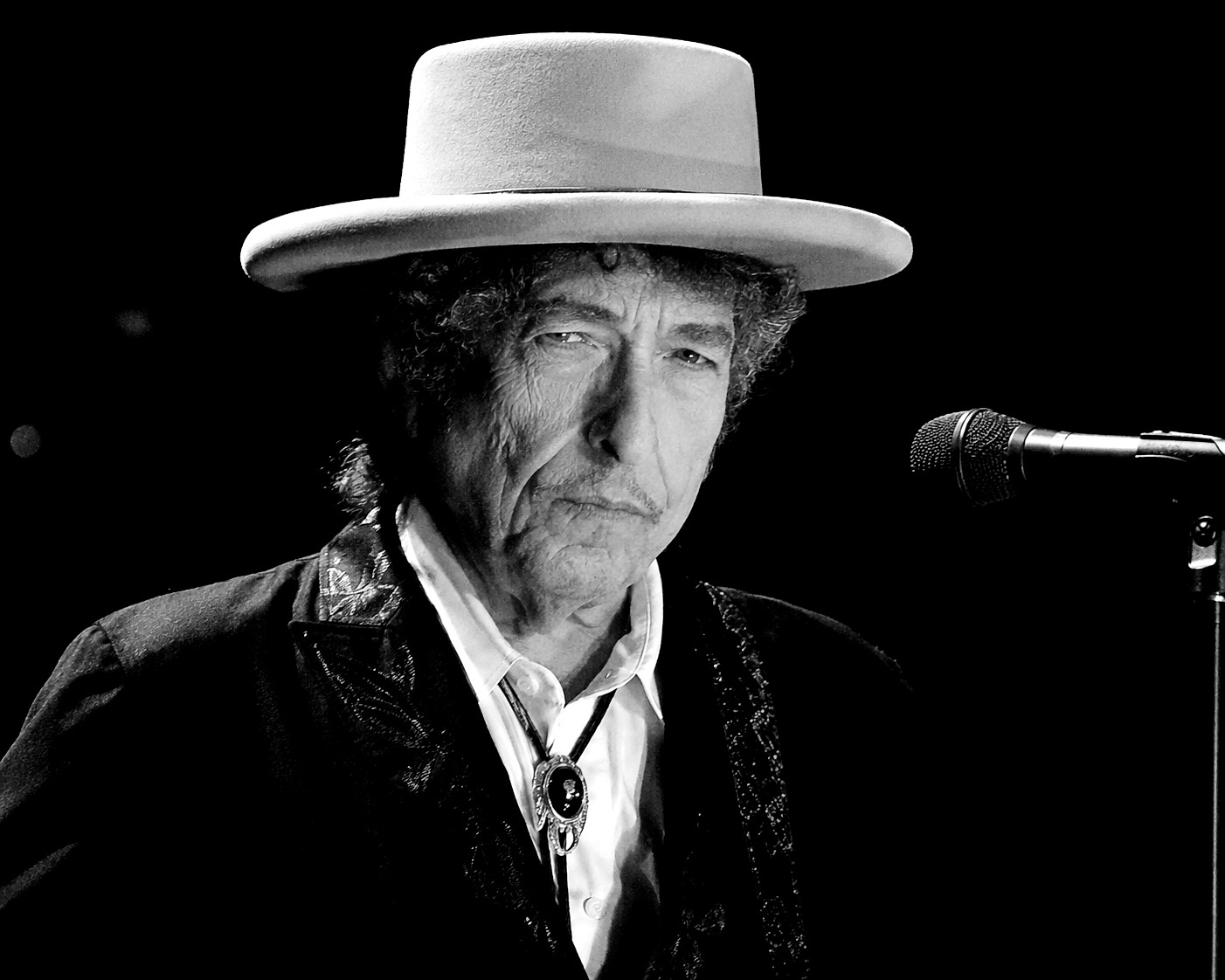
Bob Dylan turns 85 today, 24 May 2026, and his career remains one of the most extraordinary cultural journeys of the modern age. Born Robert Allen Zimmerman in Duluth, Minnesota, in 1941, and raised in Hibbing, Dylan became far more than a singer-songwriter. He became a literary force, a musical revolutionary, a chronicler of American unease and one of the few artists whose work has repeatedly changed the expectations of popular culture itself.
From Hibbing to Greenwich Village
Dylan’s early life was shaped by the wide spaces and industrial atmosphere of northern Minnesota. As a teenager he played in bands, absorbed rock and roll, country, blues and folk, and developed a fascination with older American musical traditions. His move to New York City in 1961 placed him at the centre of the Greenwich Village folk scene, where he arrived as a young admirer of Woody Guthrie and quickly became something more original: a writer capable of making inherited forms sound urgent, strange and new.
The protest years
The early 1960s made Dylan famous as a protest singer, though the label was always too narrow. Songs such as Blowin’ in the Wind, A Hard Rain’s A-Gonna Fall and The Times They Are a-Changin’ became attached to civil rights, anti-war sentiment and generational change. They sounded public, but they were also poetic and ambiguous. Dylan did not simply write slogans. He wrote questions, warnings and images that allowed listeners to hear their own fears and hopes inside the songs.

The electric rupture
Dylan’s mid-1960s turn to electric music was one of the decisive moments in rock history. With Bringing It All Back Home, Highway 61 Revisited and Blonde on Blonde, he fused folk, blues, rock, surrealist language and literary ambition. Like a Rolling Stone expanded what a single could be: longer, sharper, more psychologically complex and less bound by commercial formula. For many listeners, this was the moment when rock music stopped being only entertainment and became a serious artistic language.
A writer of American myth
Dylan’s songs are filled with America, but not the official version. His America is biblical, comic, violent, romantic, absurd and haunted. It contains gamblers, drifters, preachers, outlaws, workers, lovers, judges, saints and frauds. He drew from folk ballads, the blues, scripture, newspapers, Beat poetry and modernist literature, creating songs that often feel both ancient and immediate. That ability to make the past speak in the present is central to his power.
Refusing the role assigned to him
One reason Dylan has lasted is that he repeatedly refused the role others wanted him to play. When he was called the voice of a generation, he moved away from protest. When folk purists wanted acoustic authenticity, he went electric. When rock audiences wanted certainty, he became elusive. When critics thought they understood him, he changed again. This refusal was not merely stubbornness. It protected the work from becoming propaganda, nostalgia or self-parody.
The many Dylans
Across more than six decades, Dylan has moved through several artistic identities: folk troubadour, electric rocker, country singer, confessional poet, gospel preacher, blues elder, radio host, painter and Nobel laureate. Albums such as John Wesley Harding, Nashville Skyline, Blood on the Tracks, Desire, Slow Train Coming, Oh Mercy, Time Out of Mind, Love and Theft, Modern Times and Rough and Rowdy Ways show a career built not on one style, but on continuous re-entry into the American songbook.
The Nobel moment
In 2016, Dylan received the Nobel Prize in Literature “for having created new poetic expressions within the great American song tradition”. The decision was controversial, but historically significant. It forced the literary world to confront a question Dylan’s audience had understood for decades: can song lyrics, when joined to melody, performance and cultural memory, belong to literature? The Swedish Academy’s answer was yes.
Why the Nobel mattered
The Nobel Prize did not make Dylan important; it recognised an importance already established. His songs had long been studied, quoted, argued over and absorbed into public language. The award widened the definition of literary achievement and acknowledged that oral and musical traditions are not secondary to printed literature. Dylan’s Nobel lecture later reflected on the relationship between song and literature, placing his work in conversation with older narrative traditions.
Impact beyond music
Dylan’s influence reaches far beyond his own recordings. He changed the ambitions of the Beatles, Bruce Springsteen, Patti Smith, Neil Young, Leonard Cohen, Joni Mitchell and countless others. He gave songwriters permission to be indirect, literary, political, personal and contradictory. He also changed audiences. After Dylan, listeners expected lyrics to carry meaning, not merely melody. Popular music became a place where history, philosophy, satire and private confession could coexist.
The voice as instrument
Dylan’s singing has often divided listeners, but his voice is inseparable from his art. It is not a conventionally polished voice; it is a dramatic instrument. It can sound mocking, wounded, prophetic, comic, weary or defiant. He phrases like an actor and bends lines like a blues singer. His delivery reminds listeners that songs are not only written; they are inhabited.
The late-career achievement
Many artists fade into repetition. Dylan did not. From the late 1990s onward, he produced a remarkable late period, beginning with Time Out of Mind and continuing through albums that revisited blues, folk, jazz standards and original meditations on mortality, violence and memory. Rough and Rowdy Ways, released in 2020, showed that Dylan remained artistically alert, still able to write with mystery, humour and historical depth.
A living catalogue
Dylan’s concerts have also become part of his legend. He often rearranges songs so radically that audiences must listen again rather than simply recognise. This approach frustrates some fans, but it reflects his central artistic principle: songs are living things. They are not fixed museum pieces. They can be rephrased, slowed down, darkened, loosened or rebuilt.
Why Dylan still matters
At 85, Bob Dylan matters because he made the popular song larger. He brought poetry into mass culture without making it decorative. He brought politics into music without reducing art to instruction. He brought the old American song tradition into the modern age without treating it as heritage theatre. His work continues to resist final interpretation, which is why it remains alive.
The lasting measure
Dylan’s greatness is not only in the famous songs, the awards or the myth. It is in the scale of the transformation he caused. Before Dylan, popular songs could be brilliant, moving and memorable. After Dylan, they could also be literary events, political documents, spiritual arguments and private riddles. On his 85th birthday, his achievement stands as one of the central artistic facts of the last century: he changed not just what songs could say, but what people believed songs could be.
Newshub Editorial in North America – 24 May 2026

If you have an account with ChatGPT you get deeper explanations,
background and context related to what you are reading.
Open an account:
Open an account
Recent Comments