
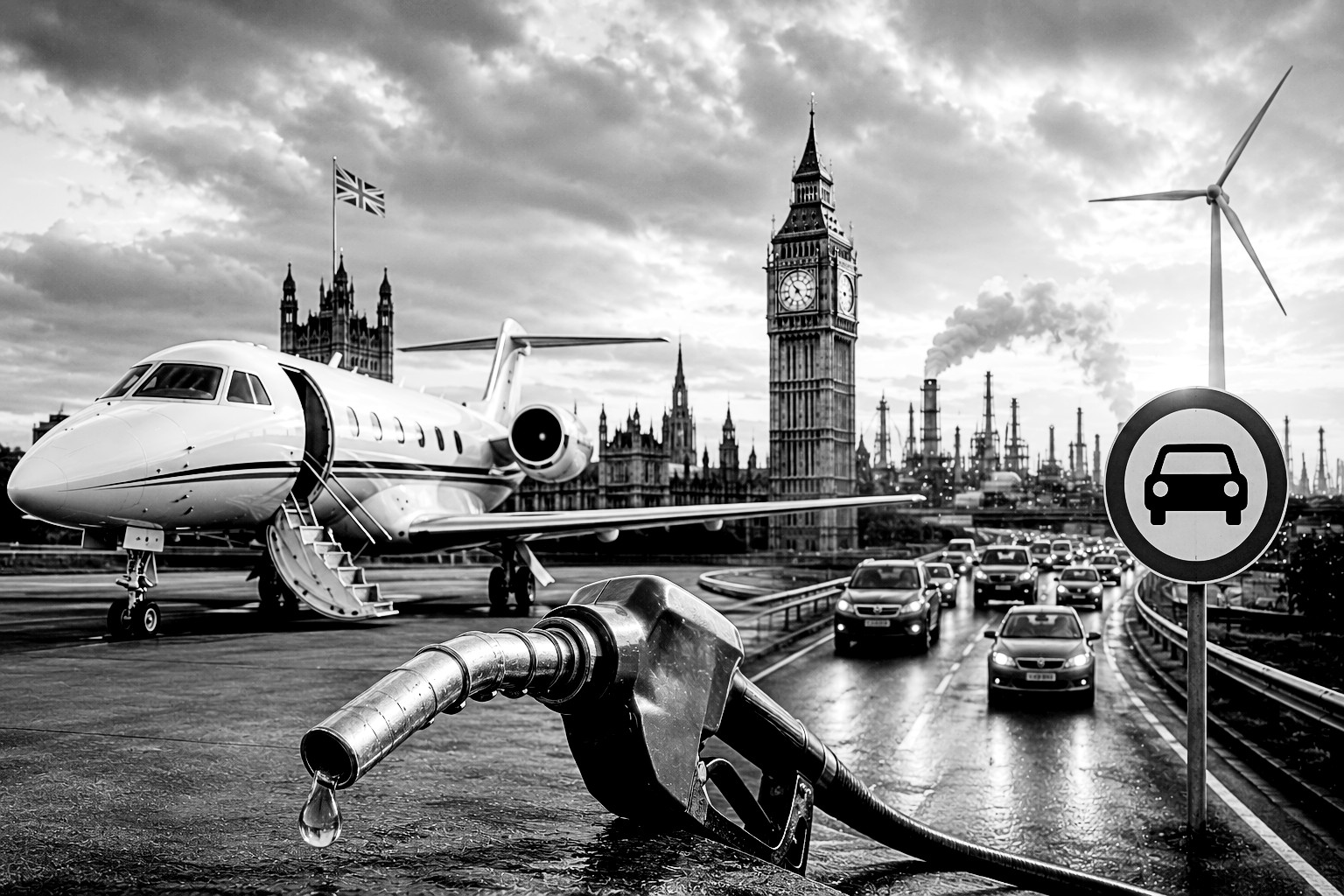
Environmental and transport organisations are calling on the British government to introduce emergency fuel-saving measures, including banning private jets and lowering motorway speed limits, as concerns grow over potential oil and gas shortages linked to the ongoing Iran conflict. Campaigners warn ministers not to “sleepwalk into crisis” as pressure on global fuel supplies intensifies ahead of the summer travel season.
Pressure grows over UK fuel vulnerability
Climate groups including Greenpeace and transport advocacy organisation Transport & Environment argue that the UK remains dangerously exposed to global fossil fuel disruptions due to continued dependence on imported oil and aviation fuel.
The organisations are urging ministers to reduce fuel demand before shortages worsen by introducing temporary emergency measures. Among the proposals are reducing motorway speed limits to 60mph, restricting private jet flights and limiting certain short-haul aviation routes.

Campaigners say the measures would not only ease pressure on fuel supplies but also reduce carbon emissions and prioritise essential travel over luxury consumption.
Iran conflict intensifies global energy concerns
The calls come as global energy markets continue reacting to the conflict involving Iran and disruptions linked to the strategically vital Strait of Hormuz, through which a large share of global oil and jet fuel supplies normally pass. Analysts warn that prolonged instability could continue driving fuel prices sharply higher across Europe.
Jet fuel prices have already risen dramatically since the beginning of the crisis, while airlines and airports across Europe remain concerned about longer-term supply stability heading into the peak summer holiday period.
Several campaign groups argue that governments should act early rather than waiting until shortages become severe enough to require rationing or more disruptive emergency restrictions.
Private aviation becomes political flashpoint
Private jets have become a particularly controversial issue within the debate. Environmental groups argue that private aviation consumes disproportionately large amounts of fuel while serving a relatively small number of wealthy travellers.
Greenpeace estimates that restricting private jets and reducing unnecessary short-haul flights could significantly lower fuel consumption while demonstrating a more equitable approach to crisis management.
Supporters of the proposals also point to historical precedents. During the 1970s oil crisis, governments across Europe and North America introduced fuel-saving measures including lower speed limits and conservation campaigns in response to energy shortages.
Critics, however, argue that such restrictions would have limited practical impact on overall fuel demand while risking public backlash and economic disruption.
Government resists immediate restrictions
The UK government has so far insisted that no immediate fuel shortages currently exist. Officials stated that airlines are not yet experiencing widespread supply problems and that ministers are working closely with industry groups to maintain stability across transport networks.
Nevertheless, authorities acknowledged that contingency planning remains ongoing should the international situation deteriorate further.
Energy analysts warn that the broader issue extends beyond short-term shortages. The current crisis is increasingly being viewed as another major reminder of Europe’s continued dependence on geopolitically vulnerable fossil fuel supply chains.
As tensions in the Middle East continue affecting global energy markets, debates surrounding energy security, transport policy and climate resilience are rapidly moving toward the centre of British political discussion.
Newshub Editorial in Europe – May 18, 2026

If you have an account with ChatGPT you get deeper explanations,
background and context related to what you are reading.
Open an account:
Open an account
Recent Comments