
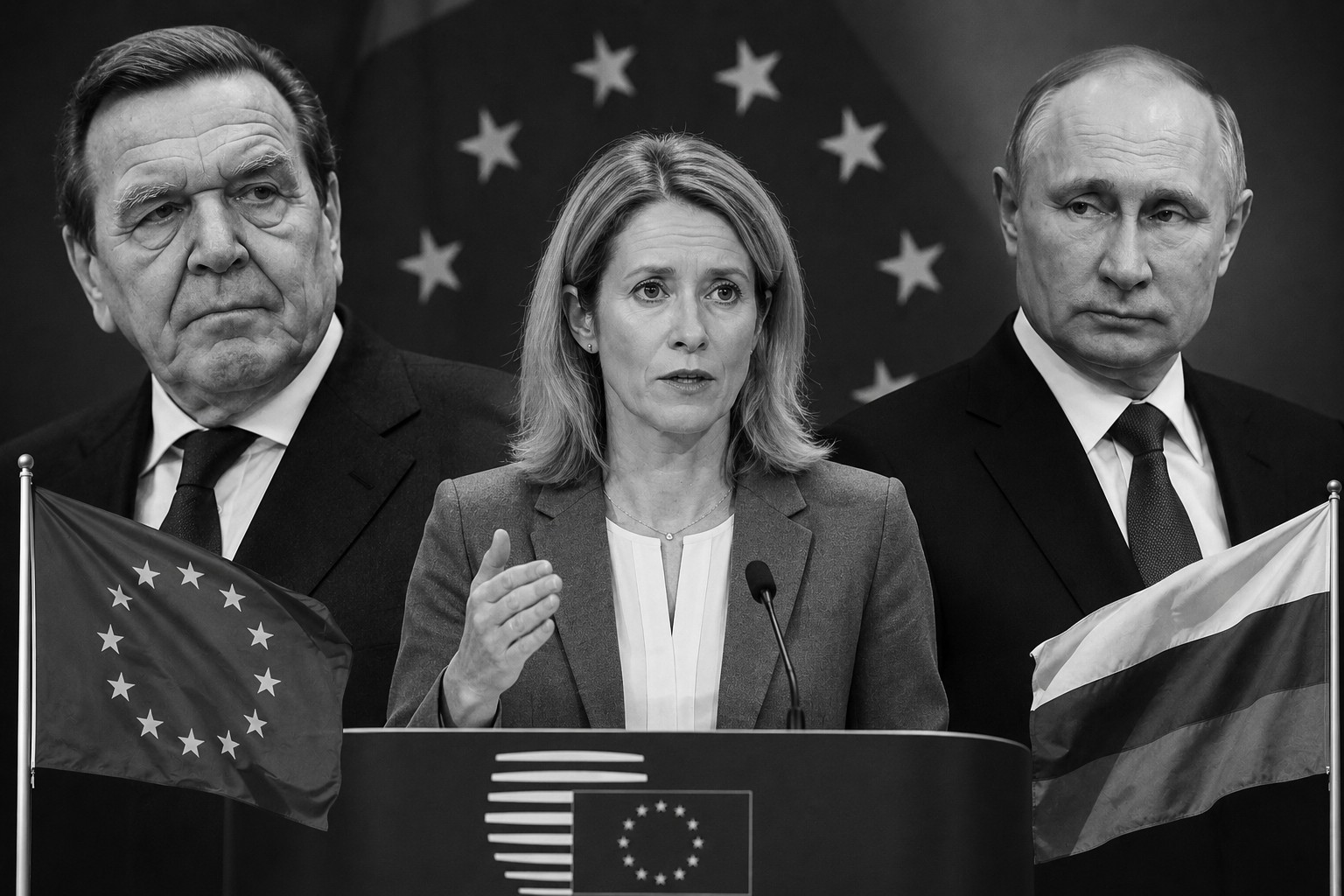
The European Union has firmly rejected suggestions that former German Chancellor Gerhard Schröder could play a role in potential peace negotiations between Russia and Ukraine, with senior EU officials arguing that his longstanding ties to the Kremlin undermine any claim of neutrality or impartiality.
The comments came after reports that Russian President Vladimir Putin had indicated Schröder as a possible figure who could assist in future diplomatic discussions linked to the war in Ukraine. However, EU foreign policy chief Kaja Kallas dismissed the idea, stating that individuals perceived as closely aligned with Moscow could not realistically function as credible mediators.
Schröder, who served as German chancellor from 1998 to 2005, has for years maintained controversial business and political relationships with Russian state-linked energy companies, including ties to Gazprom and Rosneft. His friendship with Vladimir Putin has repeatedly drawn criticism across Europe, particularly following Russia’s full-scale invasion of Ukraine in 2022.

Questions over neutrality and credibility
EU officials argue that any mediator involved in future negotiations must be viewed as politically independent and trusted by both sides. According to Kallas, Schröder’s history of defending Russian policy positions and maintaining close relations with the Kremlin makes such neutrality impossible.
The issue reflects broader European concerns about Russian influence networks within European politics and business. Since the outbreak of the war, several former European politicians with previous Russian corporate ties have faced increased scrutiny over questions of influence, lobbying and geopolitical alignment.
Germany itself has distanced significantly from Schröder in recent years. Political pressure intensified after the invasion of Ukraine, leading to the removal of some official privileges previously associated with his status as former chancellor. His role within Russian energy companies also became increasingly controversial as Europe sought to reduce dependence on Russian energy imports.
Ukraine conflict remains diplomatically stalled
The discussion surrounding possible mediators comes as diplomatic prospects for ending the war remain uncertain. Ukraine continues to insist that any negotiations must respect its territorial sovereignty and security guarantees, while Russia has maintained demands that Kyiv and Western allies reject.
European governments remain broadly aligned behind continued military, financial and political support for Ukraine. At the same time, several countries have continued exploring whether future diplomatic frameworks could eventually emerge once battlefield conditions stabilise.
Analysts note that the debate over Schröder’s potential involvement illustrates how deeply trust and credibility have become central issues in any future negotiation process. Figures viewed as too closely linked to either Moscow or Western political structures may struggle to gain acceptance as intermediaries.
Europe seeks unified diplomatic posture
For the EU, maintaining a coherent diplomatic position remains strategically important as the war continues reshaping European security policy. Leaders across the bloc increasingly view the conflict not only as a regional war but also as a defining challenge for Europe’s long-term geopolitical stability.
Kallas’ remarks therefore also signal a broader message from Brussels: that the EU intends to remain highly cautious regarding any diplomatic channels perceived as favourable to Russian strategic interests.
As discussions about future peace frameworks continue to emerge intermittently, European officials appear determined to ensure that any mediation process is built around actors viewed as independent, internationally credible and politically balanced.
Newshub Editorial in Europe – May 11, 2026

If you have an account with ChatGPT you get deeper explanations,
background and context related to what you are reading.
Open an account:
Open an account
Recent Comments