
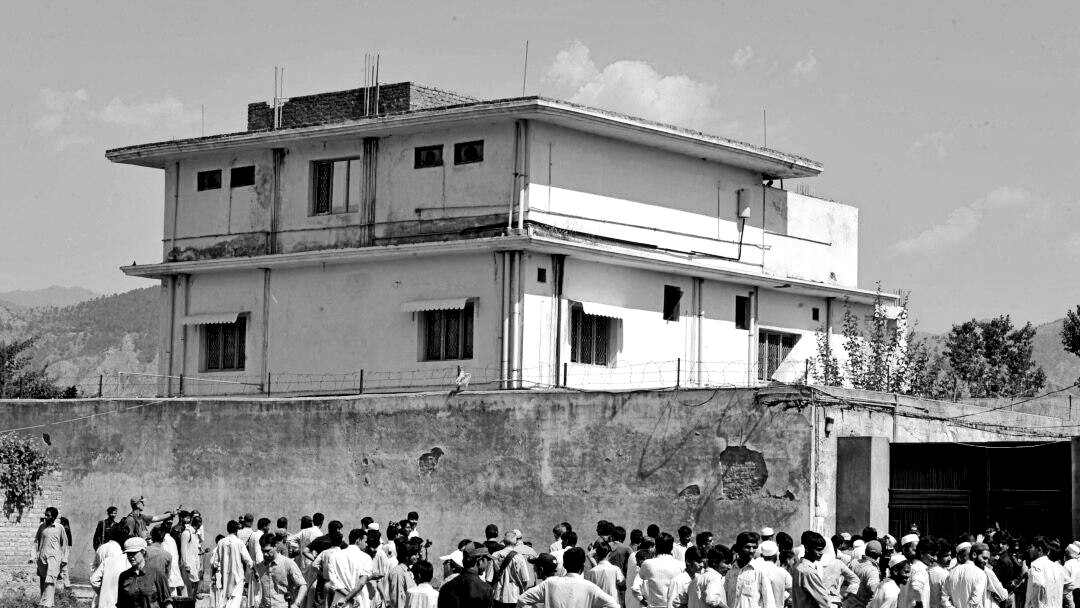
Osama bin Laden, the founder and leader of al-Qaeda and the architect behind the September 11 terrorist attacks in the United States, was killed by American special forces in a covert operation carried out in Pakistan. The raid marked one of the most significant counterterrorism operations in modern history and brought an end to a decade-long international manhunt.
Bin Laden was killed on May 2, 2011, during a highly classified operation conducted by United States Navy SEALs in Abbottabad, a city located north of the Pakistani capital Islamabad. The mission, authorised by then-US President Barack Obama, was carried out by members of the elite SEAL Team Six unit after years of intelligence gathering and surveillance.
The al-Qaeda leader had been the world’s most wanted terrorist following the September 11 attacks in 2001, when hijacked commercial aircraft were used to strike the World Trade Center in New York and the Pentagon near Washington, killing nearly 3,000 people. The attacks reshaped global security policy, triggered the US-led War on Terror and led to military interventions in Afghanistan and beyond.

The Abbottabad operation
The raid, officially named Operation Neptune Spear, lasted approximately 40 minutes. US helicopters transported the special forces team into the compound where bin Laden had been hiding. According to American officials, bin Laden resisted capture and was shot during the operation.
The compound itself drew significant attention because of its unusual security measures, including high walls, limited external communications and extensive privacy features. The discovery that bin Laden had been living in Abbottabad, not far from Pakistan’s military academy, triggered international debate and strained relations between Washington and Islamabad.
Following the mission, US officials confirmed that bin Laden’s body had been identified through DNA testing. The remains were subsequently buried at sea, a decision the US government said was made to prevent any burial site from becoming a symbolic location for extremist supporters.
Global reaction and political impact
News of bin Laden’s death prompted celebrations in several US cities, including outside the White House and at Ground Zero in New York. Many Americans viewed the operation as a moment of justice nearly ten years after the September 11 attacks.
President Obama addressed the nation shortly after the raid, stating that “justice has been done.” The announcement was widely seen as a major political and military success for the Obama administration and the broader US intelligence community.
International leaders also reacted swiftly. NATO allies and governments across Europe, Asia and the Middle East largely welcomed the development, although concerns remained about potential retaliatory attacks by extremist groups.
Legacy of al-Qaeda and continuing security concerns
Although bin Laden’s death represented a major symbolic blow to al-Qaeda, the organisation did not disappear. Various affiliated groups continued operating across parts of the Middle East, Africa and Asia. The rise of other extremist organisations, including ISIS later in the decade, demonstrated the continuing challenges facing global counterterrorism efforts.
Historians and analysts continue to debate the broader consequences of the War on Terror, including its geopolitical impact, human cost and influence on surveillance, military strategy and international relations.
More than two decades after the September 11 attacks, bin Laden remains one of the most infamous figures in modern history, associated globally with terrorism, extremism and the deadliest attack ever carried out on American soil.
Newshub Editorial in Europe – May 2, 2026

If you have an account with ChatGPT you get deeper explanations,
background and context related to what you are reading.
Open an account:
Open an account
Recent Comments