
• Global
    • Africa
      • Burundi
      • Ghana
      • Gambia
      • Senegal
    • Asia
      • Indonesia
      • Laos
      • Malaysia
      • South Korea
    • Caribbean
      • Central America
    • Climate & energy
      • Climate
      • Carbon
      • Coal
      • Disruptive
      • Gas
      • Nuclear
      • Oil
      • Solar
      • Water
      • Waves
      • Wind
      • Renewable
      • South America
    • Lifestyle
      • Best chefs
      • Cocktail of the week
      • History
      • Influential women
      • Newshub long-read
    • US politics
      • Epstein
    • War
  • Finance
    • Africa finance
    • Australia
    • Asia finance
    • Banking
    • Business of the week
    • Central Banks
    • China
    • Commodities
    • Corporate
    • Europe
    • Investment
    • Japan
    • MSTRpay
    • Neobanking
    • South East Asia
    • UK
    • US
  • Fintech
    • Tech
    • AI
    • Blockchain
  • Press releases
  • NF GPT
Saturday, April 25, 2026
  • Login
No Result
View All Result
Newshub Finance
  • Global
    • Africa
      • Burundi
      • Ghana
      • Gambia
      • Senegal
    • Asia
      • Indonesia
      • Laos
      • Malaysia
      • South Korea
    • Caribbean
      • Central America
    • Climate & energy
      • Climate
      • Carbon
      • Coal
      • Disruptive
      • Gas
      • Nuclear
      • Oil
      • Solar
      • Water
      • Waves
      • Wind
      • Renewable
      • South America
    • Lifestyle
      • Best chefs
      • Cocktail of the week
      • History
      • Influential women
      • Newshub long-read
    • US politics
      • Epstein
    • War
  • Finance
    • Africa finance
    • Australia
    • Asia finance
    • Banking
    • Business of the week
    • Central Banks
    • China
    • Commodities
    • Corporate
    • Europe
    • Investment
    • Japan
    • MSTRpay
    • Neobanking
    • South East Asia
    • UK
    • US
  • Fintech
    • Tech
    • AI
    • Blockchain
  • Press releases
  • NF GPT
  • Global
    • Africa
      • Burundi
      • Ghana
      • Gambia
      • Senegal
    • Asia
      • Indonesia
      • Laos
      • Malaysia
      • South Korea
    • Caribbean
      • Central America
    • Climate & energy
      • Climate
      • Carbon
      • Coal
      • Disruptive
      • Gas
      • Nuclear
      • Oil
      • Solar
      • Water
      • Waves
      • Wind
      • Renewable
      • South America
    • Lifestyle
      • Best chefs
      • Cocktail of the week
      • History
      • Influential women
      • Newshub long-read
    • US politics
      • Epstein
    • War
  • Finance
    • Africa finance
    • Australia
    • Asia finance
    • Banking
    • Business of the week
    • Central Banks
    • China
    • Commodities
    • Corporate
    • Europe
    • Investment
    • Japan
    • MSTRpay
    • Neobanking
    • South East Asia
    • UK
    • US
  • Fintech
    • Tech
    • AI
    • Blockchain
  • Press releases
  • NF GPT
No Result
View All Result
Newshub Finance
No Result
View All Result
Download MSTRpay app Download MSTRpay app Download MSTRpay app
ADVERTISEMENT

Chernobyl: then and now – from nuclear catastrophe to living laboratory – video

Chernobyl: then and now – from nuclear catastrophe to living laboratory – video

The disaster at Chernobyl Nuclear Power Plant in April 1986 remains one of the most consequential technological failures in modern history, reshaping global attitudes toward nuclear energy while leaving a complex legacy that continues to evolve today.

The night that changed everything
In the early hours of 26 April 1986, a safety test at Reactor 4 spiralled out of control. A combination of flawed reactor design and operator error triggered a sudden power surge, leading to explosions that blew the reactor core open. The graphite moderator ignited, sending a plume of radioactive material high into the atmosphere. The Soviet authorities initially struggled to contain both the physical disaster and the flow of information, delaying evacuation and amplifying the human impact.

The nearby city of Pripyat, home to nearly 50,000 residents, continued daily life for more than a day after the explosion. It was only on 27 April that evacuation began—an early indication of how information delays worsened exposure risks.

Download the MSTRpay app Download the MSTRpay app Download the MSTRpay app

Chernobyl in numbers: the scale of impact
The magnitude of the disaster is often best understood through its measurable consequences. Below is a consolidated overview of key figures that define both the immediate and long-term impact:

MetricFigureContext
Cost of New Safe Confinement€2+ billionInternationally funded structure to contain Reactor 4
Contaminated exclusion zone4,762 km²Spread across Ukraine and Belarus
Countries affected by fallout20+Radioactive particles detected across Europe
Liquidators involved~600,000Workers exposed during cleanup operations
People evacuated/resettled~350,000Including entire population of Pripyat
Immediate deaths30Workers killed by explosion or acute radiation
Time before global awareness~2 daysFallout detected in Sweden before Soviet admission
Reactor core temperature (est.)>2,000°CDuring meltdown phase
Radioactive release vs Hiroshima~400×Estimated relative radioactive output

These figures illustrate not only the scale of the event, but also its transnational and long-term implications.

Immediate human and environmental toll
The first responders—firefighters and plant workers—faced extreme radiation exposure, often without adequate protection. Many developed acute radiation syndrome. Over time, secondary health effects, particularly thyroid cancer linked to radioactive iodine exposure, became evident across affected populations.

Environmentally, large areas became uninhabitable. Forests were destroyed or contaminated, agricultural production ceased, and radioactive isotopes spread widely across Europe. The “Red Forest” became a symbol of acute ecological damage.

The Soviet response and containment
The Soviet Union mobilised hundreds of thousands of liquidators to stabilise the site. Their work included extinguishing fires, removing radioactive debris and constructing the original sarcophagus over Reactor 4. Built under extreme conditions, this structure was never designed for long-term durability.

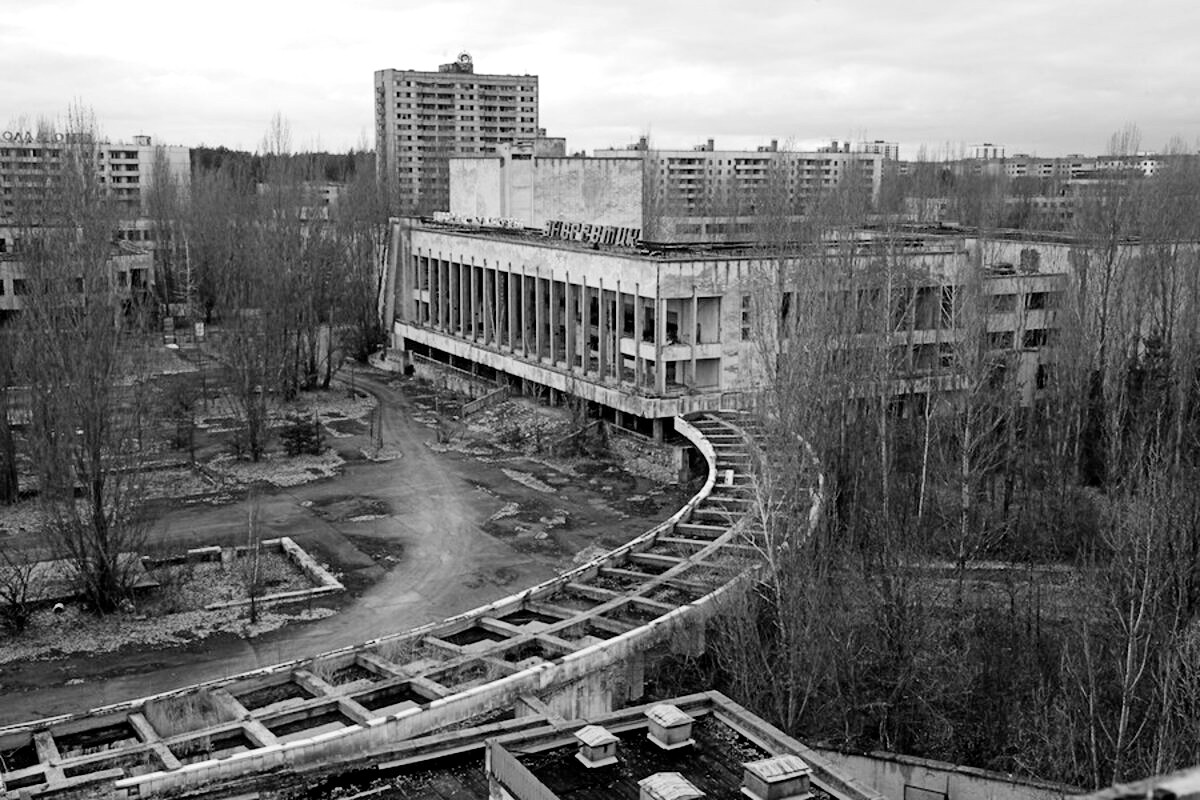
The creation of the exclusion zone formalised the abandonment of entire regions. Infrastructure, homes and public buildings were left behind, creating what is now one of the most recognisable post-industrial landscapes in the world.

Global shockwaves and policy shifts
Chernobyl fundamentally altered nuclear policy worldwide. Governments introduced stricter safety regulations, and public scepticism toward nuclear energy increased significantly. The role of the International Atomic Energy Agency expanded, particularly in safety coordination and incident transparency.

The disaster also exposed systemic failures within the Soviet system, contributing to political pressures that would later culminate in the dissolution of the USSR.

A landscape abandoned—and reclaimed
In the decades since, the exclusion zone has evolved into an unexpected ecological refuge. Wildlife populations have rebounded, including wolves, deer and the rare Przewalski’s horse. With minimal human interference, biodiversity has increased in many areas.

However, this recovery is complex. Radiation continues to affect genetic stability and reproductive health in certain species. The zone remains both a sanctuary and a contaminated environment—a rare duality in ecological science.

Engineering a long-term solution
The original sarcophagus deteriorated over time, necessitating a more durable solution. The New Safe Confinement, completed in 2016, now covers Reactor 4. This massive steel structure allows for the controlled dismantling of the reactor and containment of radioactive materials for at least a century.

Its construction represents one of the most ambitious international engineering collaborations in nuclear history.

Chernobyl today: controlled but not resolved
Today, the site remains hazardous but managed. Radiation levels vary significantly, with some areas accessible for limited periods. The zone is used for research, monitoring and controlled tourism.

Interest in the site increased following the release of the Chernobyl, which brought renewed global attention to the disaster and its human stories.

Economic and geopolitical dimensions
Parts of the exclusion zone are now used for solar energy projects, turning unusable land into productive infrastructure. At the same time, the site retains geopolitical sensitivity, particularly in the context of tensions involving Ukraine and Russia.

Temporary military activity in the zone in recent years highlighted ongoing risks associated with disturbing contaminated land.

Scientific insights and ongoing research
Chernobyl remains a critical site for studying radiation’s long-term effects. Research conducted here informs global nuclear safety standards, environmental science and disaster response frameworks.

Advancements in robotics and remote handling technologies have also been driven by the need to safely manage the site.

Memory and legacy
Chernobyl is more than a disaster site—it is a symbol. It represents the risks of technological failure, the consequences of delayed transparency and the resilience of both nature and human systems.

For those displaced, it remains a place of loss. For the world, it serves as a continuing lesson.

Then and now: an evolving reality
Then, Chernobyl was defined by chaos, secrecy and immediate tragedy. Now, it stands as a controlled environment, a research hub and a case study in long-term crisis management.

The transformation is incomplete. The risks remain, the land is still partially uninhabitable, and the human consequences continue across generations.

A legacy that endures
Chernobyl continues to shape global thinking on energy, risk and governance. As nuclear power re-enters climate discussions, the lessons of the Chernobyl disaster remain central.

It is a place where the past is still present—and where the future continues to be studied, managed and, cautiously, rebuilt.

Newshub Editorial in Europe – April 25, 2026

Ask NF GPT

If you have an account with ChatGPT you get deeper explanations,
background and context related to what you are reading.

Open article chat

Open an account:

Open an account
No Result
View All Result

Recent Posts

  • Trump administration pushes to accelerate executions with expanded methods
  • US envoys head to Pakistan as hopes rise for renewed Iran peace talks
  • Zelenskyy visits Azerbaijan to deepen security and energy cooperation
  • Vietnam strengthens innovation drive as prime minister chairs national technology committee
  • Chernobyl: then and now – from nuclear catastrophe to living laboratory – video

Recent Comments

    Archives

    • April 2026
    • March 2026
    • February 2026
    • January 2026
    • December 2025
    • November 2025
    • October 2025
    • September 2025
    • August 2025
    • July 2025
    • June 2025
    • May 2025
    • April 2025
    • March 2025
    • February 2025
    • January 2025
    • December 2024
    • November 2024
    • October 2024
    • September 2024
    • August 2024
    • July 2024
    • June 2024
    • May 2024
    • April 2024
    • March 2024
    • February 2024
    • January 2024
    • December 2023
    • November 2023
    • October 2023
    • September 2023
    • August 2023
    • July 2023
    • June 2023
    • May 2023
    • April 2023
    • March 2023
    • February 2023
    • January 2023
    • December 2022
    • November 2022
    • October 2022
    • September 2022
    • August 2022

    Categories

    • Africa
    • Africa finance
    • AI
    • An diesem Tag
    • Asia
    • Asia finance
    • Australia
    • Banking
    • Best chefs
    • Biden
    • Blockchain
    • Burundi
    • Business of the week
    • Carbon
    • Caribbean
    • Central America
    • Central Banks
    • China
    • Climate
    • Climate & Energy
    • Coal
    • Cocktail of the week
    • Commodities
    • Corporate
    • Deutsch
    • Deutsch PR
    • Digital Banking
    • DRC
    • English PR
    • Epstein
    • Europe
    • Financial insights
    • Focus on neobanking
    • Gambia
    • Gas
    • Ghana
    • Global news
    • Harris
    • History
    • India
    • India
    • Indonesia
    • Influential women
    • Invest and Rest
    • Italiano PR
    • Jamaica
    • Japan
    • Kenya
    • Kenya
    • Laos
    • Laos
    • LATAM
    • Lifestyle
    • Malaysia
    • Metaverse
    • MSTRpay
    • Neobanking
    • News
    • Newshub long-read
    • newshub special
    • newshub-special
    • NFT
    • Nobel Prizes 2024
    • Nuclear
    • Oil
    • Philippines
    • Press
    • Press releases
    • Pressroom
    • Renewable
    • Russia
    • Senegal
    • Senegal
    • Solar
    • South America
    • South East Asia
    • South Korea
    • South Korea
    • Stocks
    • Svensk PR
    • Tech
    • Trump
    • Trump trials
    • UFO
    • Uganda
    • UK
    • UK News
    • Ukraine
    • US
    • US politics
    • Vietnam
    • Vietnam
    • War
    • Waves
    • WEX
    • Wind
    • World safety

    Meta

    • Log in
    • Entries feed
    • Comments feed
    • WordPress.org

    Recent Posts

    • Trump administration pushes to accelerate executions with expanded methods
    • US envoys head to Pakistan as hopes rise for renewed Iran peace talks
    • Zelenskyy visits Azerbaijan to deepen security and energy cooperation
    • Vietnam strengthens innovation drive as prime minister chairs national technology committee
    • Chernobyl: then and now – from nuclear catastrophe to living laboratory – video

    Categories

    • Africa
    • Africa finance
    • AI
    • An diesem Tag
    • Asia
    • Asia finance
    • Australia
    • Banking
    • Best chefs
    • Biden
    • Blockchain
    • Burundi
    • Business of the week
    • Carbon
    • Caribbean
    • Central America
    • Central Banks
    • China
    • Climate
    • Climate & Energy
    • Coal
    • Cocktail of the week
    • Commodities
    • Corporate
    • Deutsch
    • Deutsch PR
    • Digital Banking
    • DRC
    • English PR
    • Epstein
    • Europe
    • Financial insights
    • Focus on neobanking
    • Gambia
    • Gas
    • Ghana
    • Global news
    • Harris
    • History
    • India
    • India
    • Indonesia
    • Influential women
    • Invest and Rest
    • Italiano PR
    • Jamaica
    • Japan
    • Kenya
    • Kenya
    • Laos
    • Laos
    • LATAM
    • Lifestyle
    • Malaysia
    • Metaverse
    • MSTRpay
    • Neobanking
    • News
    • Newshub long-read
    • newshub special
    • newshub-special
    • NFT
    • Nobel Prizes 2024
    • Nuclear
    • Oil
    • Philippines
    • Press
    • Press releases
    • Pressroom
    • Renewable
    • Russia
    • Senegal
    • Senegal
    • Solar
    • South America
    • South East Asia
    • South Korea
    • South Korea
    • Stocks
    • Svensk PR
    • Tech
    • Trump
    • Trump trials
    • UFO
    • Uganda
    • UK
    • UK News
    • Ukraine
    • US
    • US politics
    • Vietnam
    • Vietnam
    • War
    • Waves
    • WEX
    • Wind
    • World safety

    Archives

    • April 2026
    • March 2026
    • February 2026
    • January 2026
    • December 2025
    • November 2025
    • October 2025
    • September 2025
    • August 2025
    • July 2025
    • June 2025
    • May 2025
    • April 2025
    • March 2025
    • February 2025
    • January 2025
    • December 2024
    • November 2024
    • October 2024
    • September 2024
    • August 2024
    • July 2024
    • June 2024
    • May 2024
    • April 2024
    • March 2024
    • February 2024
    • January 2024
    • December 2023
    • November 2023
    • October 2023
    • September 2023
    • August 2023
    • July 2023
    • June 2023
    • May 2023
    • April 2023
    • March 2023
    • February 2023
    • January 2023
    • December 2022
    • November 2022
    • October 2022
    • September 2022
    • August 2022
    • Global
    • Finance
    • Fintech
    • Press releases
    • NF GPT
    Legal - Disclosure - Cookies

    © 2022-2026
    MSTRpay/Newshub Finance

    Welcome Back!

    Login to your account below

    Forgotten Password?

    Retrieve your password

    Please enter your username or email address to reset your password.

    Log In

    Add New Playlist

    No Result
    View All Result
    • Global
      • Africa
        • Burundi
        • Ghana
        • Gambia
        • Senegal
      • Asia
        • Indonesia
        • Laos
        • Malaysia
        • South Korea
      • Caribbean
        • Central America
      • Climate & energy
        • Climate
        • Carbon
        • Coal
        • Disruptive
        • Gas
        • Nuclear
        • Oil
        • Solar
        • Water
        • Waves
        • Wind
        • Renewable
        • South America
      • Lifestyle
        • Best chefs
        • Cocktail of the week
        • History
        • Influential women
        • Newshub long-read
      • US politics
        • Epstein
      • War
    • Finance
      • Africa finance
      • Australia
      • Asia finance
      • Banking
      • Business of the week
      • Central Banks
      • China
      • Commodities
      • Corporate
      • Europe
      • Investment
      • Japan
      • MSTRpay
      • Neobanking
      • South East Asia
      • UK
      • US
    • Fintech
      • Tech
      • AI
      • Blockchain
    • Press releases
    • NF GPT

    © 2022-2026
    MSTRpay/Newshub Finance