
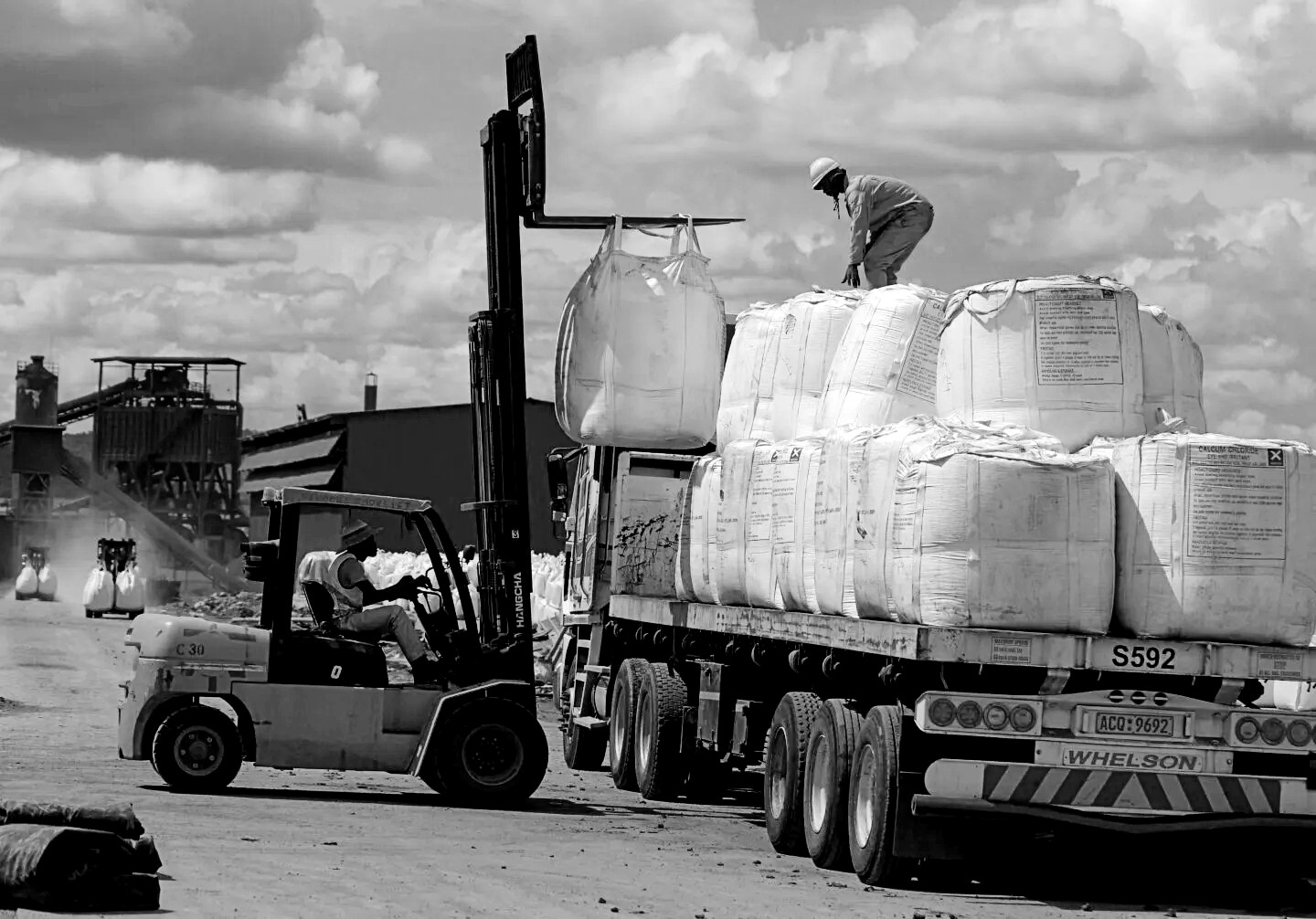
African economies rich in critical minerals are being urged to look beyond export restrictions, as experts warn that bans on raw material shipments alone are insufficient to secure long-term economic gains and may risk unintended consequences.
Limits of export restrictions
Across parts of Africa, governments have introduced or considered export bans on unprocessed minerals such as lithium, cobalt, and rare earth elements. The aim is to retain more value domestically by encouraging local refining and industrial development.
However, analysts caution that such measures, when implemented in isolation, can disrupt investment flows and reduce competitiveness. Without adequate processing capacity, logistics infrastructure, and regulatory clarity, export bans may lead to production bottlenecks and lost revenue.

Need for integrated industrial policy
Experts emphasise that maximising the value of critical minerals requires a broader policy framework. This includes investment in processing facilities, energy supply, transport networks, and workforce development. Without these elements, countries risk remaining dependent on raw material extraction despite policy interventions.
Developing downstream industries—such as battery manufacturing or component assembly—requires not only capital but also stable regulatory environments and access to global markets. Coordinated strategies are therefore seen as essential to achieving meaningful value addition.
Global demand creates opportunity
Rising global demand for critical minerals, driven by the energy transition and expansion of electric mobility, has positioned Africa as a key supplier. Countries including the Democratic Republic of Congo, Zambia, and Namibia hold significant reserves that are central to global supply chains.
This demand presents an opportunity to shift from export-led models towards more diversified industrial economies. However, capturing this value depends on the ability to move up the supply chain rather than relying solely on resource extraction.
Risks of policy misalignment
Export bans can create uncertainty for international investors if not accompanied by clear long-term strategies. Sudden regulatory changes may deter investment in both extraction and processing, particularly in capital-intensive sectors.
There is also a risk that global buyers will seek alternative suppliers if supply becomes unpredictable, potentially reducing market share for African producers over time.
Path forward for sustainable growth
Policymakers are increasingly being advised to adopt balanced approaches that combine resource governance with industrial development. Public–private partnerships, regional cooperation, and targeted incentives for processing industries are among the tools being discussed.
Over time, success will depend on the ability to align natural resource wealth with industrial capacity, ensuring that the continent captures a greater share of the value generated by its mineral resources.
The debate underscores a broader shift in how resource-rich economies approach development, moving from extraction-focused models towards integrated value chains that support long-term economic resilience.
Newshub Editorial in Africa – April 24, 2026

If you have an account with ChatGPT you get deeper explanations,
background and context related to what you are reading.
Open an account:
Open an account
Recent Comments