
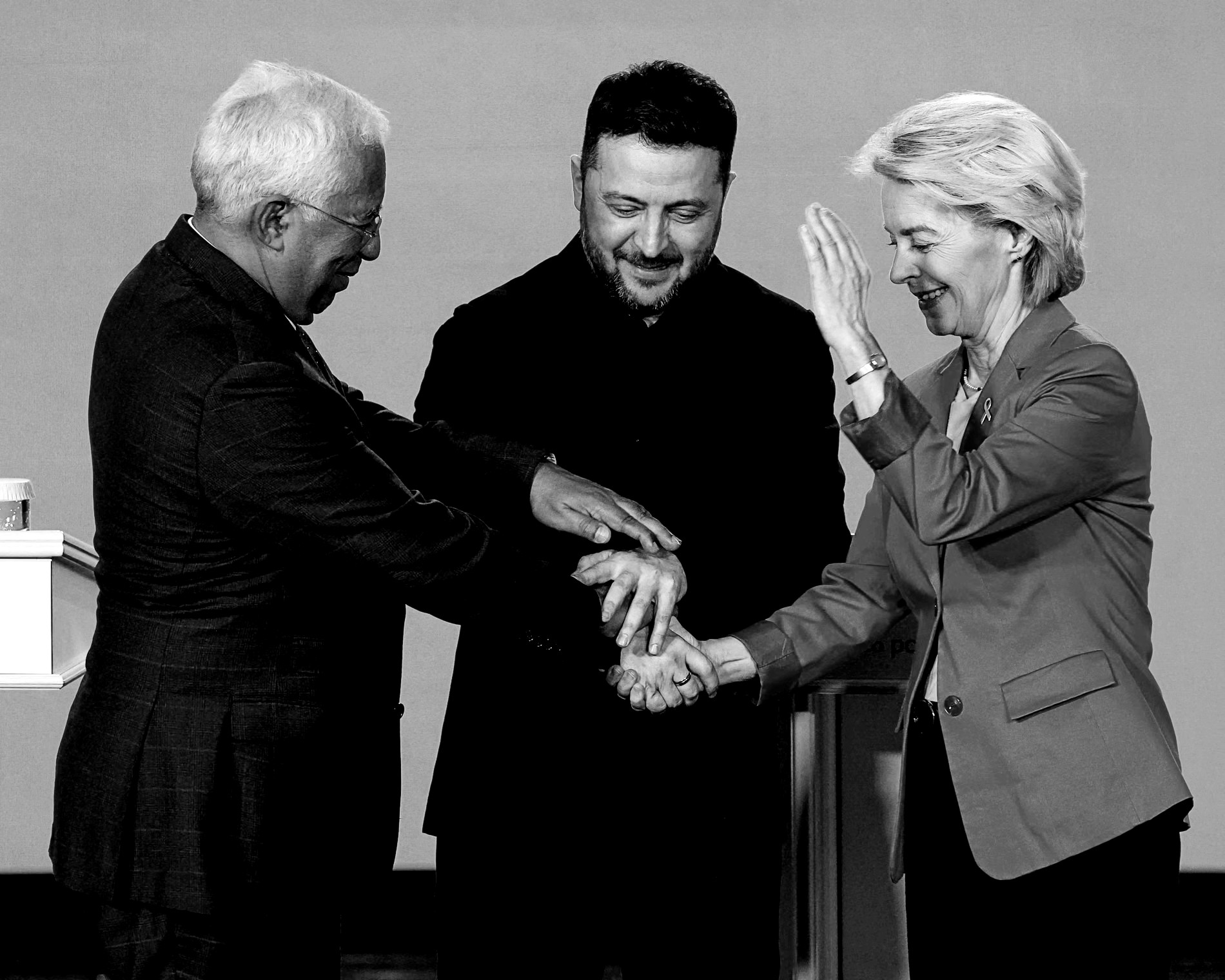
The European Union has formally approved a €90bn financial support package for Ukraine while adopting its 20th round of sanctions against Russia, following the lifting of vetoes that had delayed agreement among member states.
Breakthrough after political deadlock
The approval came after Ursula von der Leyen confirmed that internal divisions had been resolved, enabling leaders to sign off on both the financial assistance and the expanded sanctions regime. Hungary’s decision to withdraw its objections proved decisive in unlocking the agreement, ending a period of uncertainty over the bloc’s unified response.
The €90bn package is designed to provide long-term financial stability to Ukraine, supporting government operations, reconstruction efforts, and economic resilience amid ongoing conflict pressures.

Expanded sanctions signal continued pressure
Alongside the financial package, the EU’s 20th sanctions round targets key sectors of the Russian economy. While details vary, measures are expected to focus on limiting access to critical technologies, restricting financial flows, and tightening existing trade controls.
The sanctions framework reflects the EU’s ongoing strategy to apply sustained economic pressure on Russia while reducing its own dependency on Russian energy and resources. Over successive rounds, the bloc has expanded restrictions in a coordinated effort with international partners.
Strategic and economic implications
The dual decision highlights the EU’s commitment to supporting Ukraine both financially and politically. The scale of the loan package underscores the long-term nature of the bloc’s engagement, extending beyond immediate crisis response to broader reconstruction and stabilisation.
For financial markets, the agreement reduces short-term political risk within the EU by demonstrating cohesion among member states. It also signals continued fiscal commitment at a time when economic conditions across Europe remain sensitive to inflation and interest rate dynamics.
Outlook for EU policy direction
The resolution of internal disagreements may strengthen the EU’s ability to act more decisively in future negotiations. However, underlying divisions among member states are likely to persist, particularly on issues involving fiscal commitments and foreign policy alignment.
Going forward, the effectiveness of both the financial package and the sanctions regime will depend on implementation, enforcement, and coordination with global partners. The EU is expected to continue balancing internal consensus-building with external strategic objectives.
The latest measures reinforce the bloc’s position as a central actor in shaping the economic and political response to the conflict, while highlighting the complexity of maintaining unity across a diverse union.
Newshub Editorial in Europe – April 24, 2026

If you have an account with ChatGPT you get deeper explanations,
background and context related to what you are reading.
Open an account:
Open an account
Recent Comments