
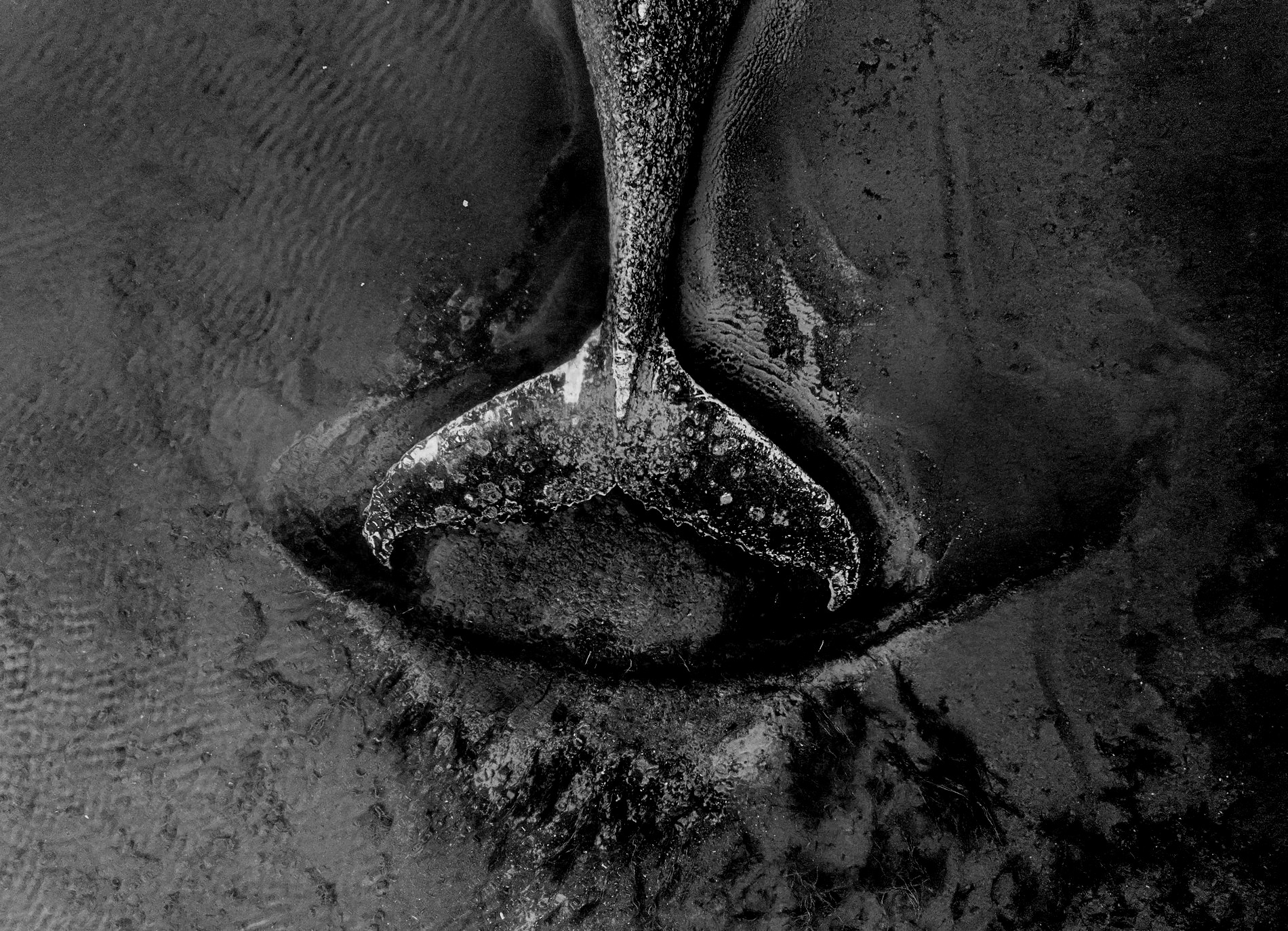
A stranded whale along Germany’s coastline has become a stark symbol of humanity’s complex and often damaging relationship with marine life, underscoring how modern pressures continue to threaten even the largest creatures in the ocean.
A tragic encounter in European waters
The whale, discovered along the shores of Germany, drew widespread attention as rescue teams and marine experts assessed its condition. Despite efforts to assist, such strandings often end in death due to the immense physiological stress these animals experience once out of deep water.
Whales, highly adapted to ocean environments, struggle to survive when beached, as their own body weight becomes a burden and vital functions begin to fail. The incident has once again brought into focus the vulnerability of these marine giants.

From historic hunting to modern threats
Historically, whales were driven close to extinction by industrial whaling, which peaked in the 20th century before international protections were introduced. While large-scale hunting has largely been curtailed, new threats have emerged in the modern era.
Today, shipping traffic, underwater noise pollution, plastic waste, and climate change all contribute to declining whale populations. Collisions with vessels and disorientation caused by sonar or environmental shifts are increasingly cited as causes of strandings.
Intelligence and empathy deepen the impact
Whales are widely recognised for their intelligence, social structures, and communication abilities. Their complex behaviours have made them a powerful symbol of the natural world, deepening public empathy when such tragedies occur.
The emotional response to stranded whales reflects a broader awareness of the interconnectedness between human activity and marine ecosystems. Yet, despite this awareness, the scale of harm remains significant.
Economic activity versus ecological balance
Modern economies depend heavily on ocean-based industries, including shipping, energy exploration, and fishing. These activities, while essential for global trade and development, place increasing pressure on marine habitats.
Efforts to balance economic growth with environmental protection have led to the creation of marine conservation zones and stricter regulations. However, enforcement and global coordination remain uneven.
A broader warning for ocean health
The stranded whale serves as a reminder that the challenges facing marine ecosystems are systemic rather than isolated incidents. Each event highlights underlying stresses within ocean environments that affect not only whales but entire food chains.
As climate change continues to alter ocean temperatures and currents, the frequency and severity of such incidents may increase, raising concerns among scientists and policymakers alike.
Symbol of an unresolved relationship
The image of a stranded whale resonates far beyond a single घटना, capturing the tension between admiration for nature and the consequences of human expansion. While progress has been made in conservation, the relationship between humanity and the ocean remains fraught with contradiction.
The fate of these sea giants continues to reflect broader environmental choices, making each stranding not just a tragedy, but a warning.
Newshub Editorial in Europe – April 18, 2026

If you have an account with ChatGPT you get deeper explanations,
background and context related to what you are reading.
Open an account:
Open an account
Recent Comments