
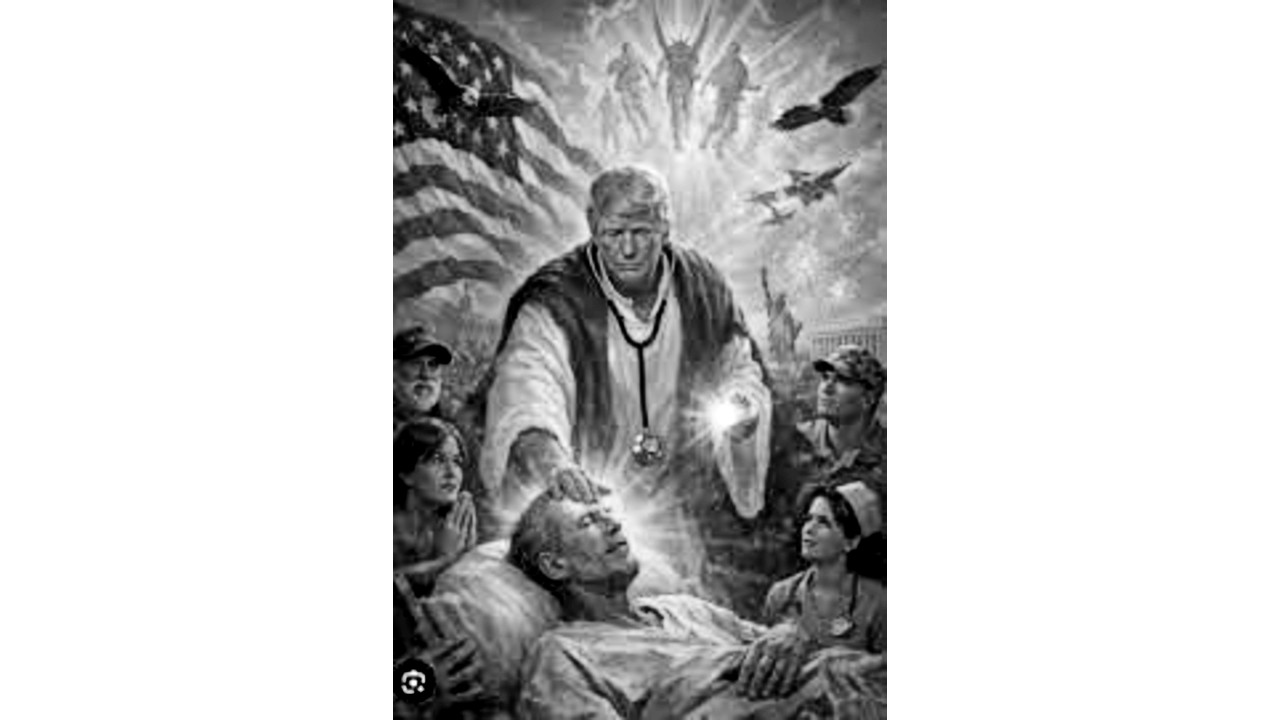
US President Donald Trump has removed a controversial social media post featuring an AI-generated image of himself depicted in a Jesus-like form, following strong backlash from segments of his own conservative Christian base. The incident has reignited debate over political messaging, religious symbolism, and the growing use of artificial intelligence in public discourse.
Post sparks immediate controversy
The image, which appeared on Trump’s platform Truth Social, portrayed the president in a stylised, almost divine manner, drawing clear parallels to traditional depictions of Jesus Christ. Within hours, the post circulated widely across social media, prompting criticism not only from political opponents but also from key supporters.
Many conservative Christian commentators described the image as inappropriate and offensive, arguing that it crossed a line by trivialising deeply held religious beliefs. The backlash was notable in that it came from a demographic that has historically formed a core part of Trump’s political base.

Supporters call the image ‘disgusting’
Prominent voices within evangelical and conservative Christian communities expressed strong disapproval. Critics labelled the post “disrespectful” and “disgusting”, warning that such imagery risked alienating faith-based voters.
The reaction highlights a sensitive boundary in American politics, where religious symbolism often plays a significant role but is rarely used in a direct or personalised manner by political leaders. For many, the issue was not political alignment but perceived irreverence.
Deletion follows mounting pressure
Facing growing criticism, the post was subsequently removed without formal explanation. The deletion suggests a recognition within Trump’s team that the image had misfired, particularly among supporters whose backing remains strategically important.
The episode underscores the speed at which digital content—especially AI-generated imagery—can escalate into reputational risk. What may have been intended as provocative or symbolic messaging quickly became a liability.
AI and political communication under scrutiny
The incident also feeds into a broader discussion about the role of artificial intelligence in political branding and communication. AI-generated images are increasingly used to create viral content, but they also raise ethical questions about authenticity, manipulation, and cultural sensitivity.
In this case, the use of religious imagery amplified the stakes, demonstrating how AI tools can unintentionally—or deliberately—push messaging into controversial territory.
Implications ahead of a critical political cycle
With the United States approaching another pivotal election period, the episode serves as a reminder of the delicate balance political figures must maintain when engaging with their base. While provocative content can drive engagement, it also carries the risk of backlash, particularly when it touches on deeply personal values such as religion.
For Trump, the swift removal of the post may limit immediate fallout, but the reaction reveals underlying sensitivities that could shape messaging strategies in the months ahead.
Newshub Editorial in North America – 14 April 2026

If you have an account with ChatGPT you get deeper explanations,
background and context related to what you are reading.
Open an account:
Open an account
Recent Comments