
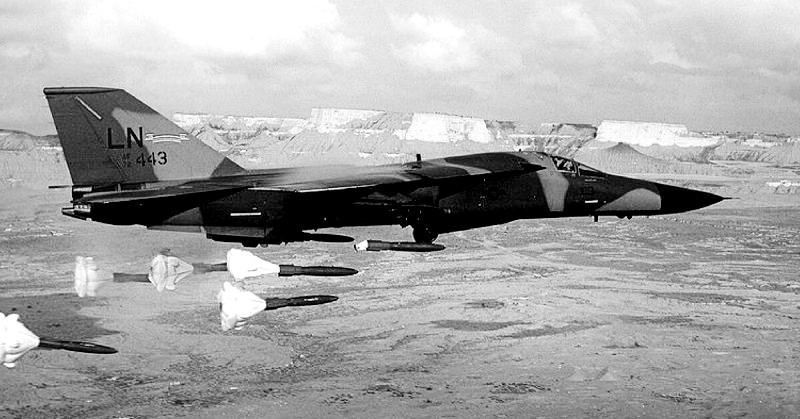
Strictly speaking, the main air strikes took place in the early hours of 15 April 1986, the day after today’s date, although the operation was launched from British bases on 14 April. The attack, code-named Operation El Dorado Canyon, marked one of the sharpest confrontations between Washington and Muammar Gaddafi’s Libya during the late Cold War.
Why it happened
The Reagan administration said the raid was a direct response to a wave of attacks that it linked to Libya, culminating in the bombing of the La Belle discotheque in West Berlin on 5 April 1986, which killed two American servicemen and a Turkish woman and injured many others. Washington argued that it had compelling intelligence tying Libyan officials to the blast and presented the operation as retaliation as well as deterrence.
How the strike was carried out
The mission combined U.S. Air Force F-111Fs flying from RAF Lakenheath in England with carrier-based Navy and Marine aircraft operating from the Mediterranean. Targets in Tripoli and Benghazi included military facilities, air-defence sites and compounds associated with the Libyan regime. The attack was brief but intense, lasting only minutes, and depended on a large and complex support effort involving tankers, electronic warfare aircraft and naval aviation.

What was hit — and at what cost
American officials said the objective was to degrade Libya’s ability to support terrorism while limiting civilian casualties. In practice, the raid remained controversial from the start. U.S. sources recorded the loss of one F-111 and its two-man crew, while Libyan military installations and aircraft were damaged. Civilian casualties were also reported, and Libyan leader Gaddafi used the bombing to reinforce his anti-American narrative at home and abroad.
International fallout
Britain’s decision to allow the U.S. to use RAF Lakenheath was politically significant, showing Margaret Thatcher’s support for Ronald Reagan even as parts of Europe remained uneasy about escalation. The operation underlined how counter-terrorism, alliance politics and superpower signalling were converging in the mid-1980s. It also showed the limits of air power: the strike sent a message, but it did not settle Washington’s wider confrontation with Libya.
Why it still matters
Nearly four decades later, the 1986 Libya raid is still studied as an early modern example of punitive precision air strikes used to deliver a political warning. Supporters saw it as a demonstration of resolve after a terrorist attack on Americans. Critics saw it as a legally and morally fraught use of force with uncertain long-term effect. Either way, it remains a defining episode in the Reagan era and in the history of U.S. intervention in the Middle East and North Africa.
Newshub Editorial in Africa – 14 April 2026

If you have an account with ChatGPT you get deeper explanations,
background and context related to what you are reading.
Open an account:
Open an account
Recent Comments