
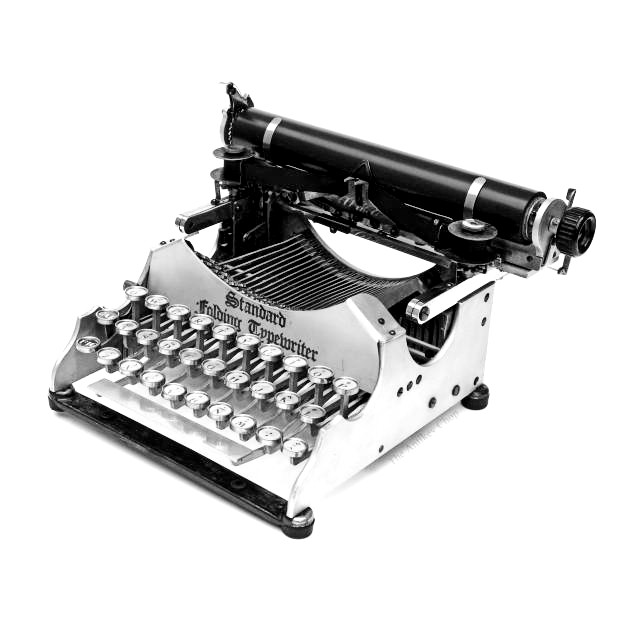
On this day, the United States issued a patent that would fundamentally change how and where people wrote, marking the birth of the portable typewriter and a new era of mobile communication.
A shift from desk to mobility
The granting of a patent for the first portable typewriter represented a decisive technological step away from the bulky, desk-bound machines that had dominated written communication in the late 19th century. Early typewriters, while revolutionary in standardising business correspondence, were heavy, complex, and largely confined to offices. The portable variant introduced a compact design that allowed writers, journalists, and travellers to carry their work with them, effectively decentralising the act of writing.
This shift was not merely mechanical—it was cultural. Writing, once tethered to specific locations, became fluid. The portable typewriter enabled a generation of correspondents to report from the field, authors to draft manuscripts on the move, and businesses to extend their administrative reach beyond headquarters.

Engineering innovation and design constraints
The early portable typewriters required significant engineering compromises. Designers had to reduce weight and size without sacrificing functionality or durability. This led to innovations in folding mechanisms, lightweight materials, and simplified key actions. While these machines often lacked some features of their larger counterparts, their efficiency and convenience outweighed the limitations.
The patent formalised these innovations, protecting intellectual property while encouraging further development. Over time, manufacturers refined the design, producing models that balanced portability with performance, ultimately leading to widespread adoption across professions.
Impact on journalism and global communication
The portable typewriter quickly became an indispensable tool for journalists and war correspondents. Its ability to function without electricity made it ideal for remote or unstable environments. Reports could be typed quickly, legibly, and with a level of professionalism that handwritten documents could not match.
This had broader implications for global communication. News cycles accelerated, reporting became more immediate, and the standardisation of typed text improved clarity across languages and regions. In emerging markets, where infrastructure was often limited, portable typewriters offered a practical solution for administrative and commercial documentation.
A precursor to modern mobility
In hindsight, the portable typewriter can be seen as an early precursor to today’s mobile computing devices. The underlying concept—enabling productivity independent of location—remains central to modern technology, from laptops to smartphones. The patent marked the beginning of a continuum that would eventually lead to the digital age.
While the typewriter itself has largely been replaced, its legacy persists. The principles of portability, efficiency, and accessibility continue to shape innovation across industries.
Enduring legacy in a digital world
Collectors and enthusiasts still value early portable typewriters as symbols of a transformative period in technological history. They represent a bridge between mechanical ingenuity and the information-driven world that followed.
The issuance of this patent was more than a legal milestone; it was a signal of changing human behaviour. By untethering writing from fixed locations, it redefined how ideas were created, shared, and preserved—an impact that continues to resonate in today’s interconnected world.
Newshub Editorial in Europe – April 12, 2026

If you have an account with ChatGPT you get deeper explanations,
background and context related to what you are reading.
Open an account:
Open an account
Recent Comments