
• Global
    • Africa
      • Burundi
      • Ghana
      • Gambia
      • Senegal
    • Asia
      • Indonesia
      • Laos
      • Malaysia
      • South Korea
    • Caribbean
      • Central America
    • Climate & energy
      • Climate
      • Carbon
      • Coal
      • Disruptive
      • Gas
      • Nuclear
      • Oil
      • Solar
      • Water
      • Waves
      • Wind
      • Renewable
      • South America
    • Lifestyle
      • Best chefs
      • Cocktail of the week
      • History
      • Influential women
      • Newshub long-read
    • US politics
      • Epstein
    • War
  • Finance
    • Africa finance
    • Australia
    • Asia finance
    • Banking
    • Business of the week
    • Central Banks
    • China
    • Commodities
    • Corporate
    • Europe
    • Investment
    • Japan
    • MSTRpay
    • Neobanking
    • South East Asia
    • UK
    • US
  • Fintech
    • Tech
    • AI
    • Blockchain
  • Press releases
  • NF GPT
Friday, April 10, 2026
  • Login
No Result
View All Result
Newshub Finance
  • Global
    • Africa
      • Burundi
      • Ghana
      • Gambia
      • Senegal
    • Asia
      • Indonesia
      • Laos
      • Malaysia
      • South Korea
    • Caribbean
      • Central America
    • Climate & energy
      • Climate
      • Carbon
      • Coal
      • Disruptive
      • Gas
      • Nuclear
      • Oil
      • Solar
      • Water
      • Waves
      • Wind
      • Renewable
      • South America
    • Lifestyle
      • Best chefs
      • Cocktail of the week
      • History
      • Influential women
      • Newshub long-read
    • US politics
      • Epstein
    • War
  • Finance
    • Africa finance
    • Australia
    • Asia finance
    • Banking
    • Business of the week
    • Central Banks
    • China
    • Commodities
    • Corporate
    • Europe
    • Investment
    • Japan
    • MSTRpay
    • Neobanking
    • South East Asia
    • UK
    • US
  • Fintech
    • Tech
    • AI
    • Blockchain
  • Press releases
  • NF GPT
  • Global
    • Africa
      • Burundi
      • Ghana
      • Gambia
      • Senegal
    • Asia
      • Indonesia
      • Laos
      • Malaysia
      • South Korea
    • Caribbean
      • Central America
    • Climate & energy
      • Climate
      • Carbon
      • Coal
      • Disruptive
      • Gas
      • Nuclear
      • Oil
      • Solar
      • Water
      • Waves
      • Wind
      • Renewable
      • South America
    • Lifestyle
      • Best chefs
      • Cocktail of the week
      • History
      • Influential women
      • Newshub long-read
    • US politics
      • Epstein
    • War
  • Finance
    • Africa finance
    • Australia
    • Asia finance
    • Banking
    • Business of the week
    • Central Banks
    • China
    • Commodities
    • Corporate
    • Europe
    • Investment
    • Japan
    • MSTRpay
    • Neobanking
    • South East Asia
    • UK
    • US
  • Fintech
    • Tech
    • AI
    • Blockchain
  • Press releases
  • NF GPT
No Result
View All Result
Newshub Finance
No Result
View All Result
Download MSTRpay app Download MSTRpay app Download MSTRpay app
ADVERTISEMENT

Lawrence of Arabia: Myth, man and the making of a modern Middle East narrative

Lawrence of Arabia: Myth, man and the making of a modern Middle East narrative

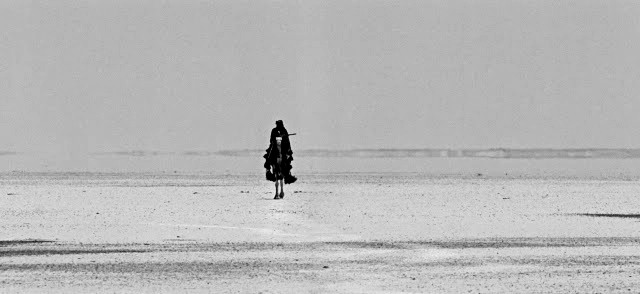
Few figures in modern history have shaped the global imagination of the Arab world as profoundly as Thomas Edward Lawrence—better known as Lawrence of Arabia. Celebrated as a wartime hero, romanticised in literature and immortalised on film, Lawrence occupies a unique position between documented history and enduring myth. Yet beyond the legend lies a far more complex figure, whose actions, writings and portrayal have had lasting consequences for how the Arab world is perceived in the West.

From Oxford scholar to desert operative
Lawrence was not a soldier by training but an archaeologist and linguist, educated at Oxford and deeply immersed in Middle Eastern history and culture. His early work in Syria and the Levant provided him with fluency in Arabic and familiarity with local tribal structures—assets that would later prove critical during the First World War.

When the war broke out, Lawrence joined British military intelligence in Cairo. At the time, the British Empire was seeking ways to undermine Ottoman control of the Arabian Peninsula. The Arab Revolt, led by Sharif Hussein of Mecca, offered such an opportunity. Lawrence was assigned as a liaison officer, tasked with coordinating British support for Arab forces.

Download the MSTRpay app Download the MSTRpay app Download the MSTRpay app

The revolt and the rise of a legend
Lawrence’s involvement in the Arab Revolt between 1916 and 1918 is the foundation of his legend. He played a key role in advising Arab leaders, most notably Prince Faisal, and helped orchestrate guerrilla campaigns against Ottoman infrastructure, including the famous attacks on the Hejaz railway.

His unconventional methods—mobility, sabotage and reliance on local alliances—were effective in weakening Ottoman control. However, historians continue to debate the extent of his influence. While Lawrence presented himself as a central figure, some accounts suggest that the revolt’s success owed more to broader strategic factors and local leadership than to any single individual.

Nevertheless, Lawrence’s own writings, particularly Seven Pillars of Wisdom, elevated his role and contributed to his heroic image. His vivid descriptions of desert warfare and tribal dynamics captivated Western audiences and helped cement his reputation.

Myth-making and Western fascination
The myth of Lawrence was not created by Lawrence alone. British media and wartime propaganda played a significant role in amplifying his story. Journalist Lowell Thomas’s lectures and films introduced Lawrence to global audiences, portraying him as a daring and charismatic figure bridging two worlds.

This narrative resonated deeply in the West, where the Arab world was often seen through an exoticised and romantic lens. Lawrence became a symbol of adventure, cultural immersion and heroic individualism—qualities that aligned with Western expectations rather than the complex realities of the region.

The 1962 film Lawrence of Arabia further entrenched this image, presenting a visually stunning but heavily stylised account of his life. While critically acclaimed, the film reinforced many of the myths surrounding Lawrence, often at the expense of historical accuracy.

The reality behind the legend
Modern scholarship has sought to reassess Lawrence’s role, separating fact from fiction. While he was undoubtedly a skilled and influential figure, his impact has sometimes been overstated.

One of the most contentious issues is Lawrence’s awareness of British and French plans for the region. The secret Sykes-Picot Agreement of 1916 divided much of the Middle East into spheres of influence, contradicting promises made to Arab leaders about independence. Lawrence later expressed regret over this betrayal, claiming he had misled his Arab allies.

This aspect of his story complicates the heroic narrative. Rather than a purely altruistic figure, Lawrence appears as a man caught between loyalty to his country and sympathy for the Arab cause. His internal conflict is evident in his writings, which often reflect guilt and disillusionment.

Shaping perceptions of the Arab world
Perhaps Lawrence’s most enduring legacy lies not in his military actions but in how he influenced Western perceptions of the Arab world. Through his writings and the narratives built around him, he helped create a framework through which the region was understood.

On one hand, Lawrence presented Arab societies as complex, dynamic and worthy of respect. His admiration for Arab culture and his efforts to learn the language set him apart from many contemporaries.

On the other hand, the mythologised version of Lawrence reinforced certain stereotypes. The focus on tribalism, desert landscapes and charismatic leaders contributed to a simplified and often romanticised view of the region. This perspective has persisted in Western media and discourse, shaping attitudes and policies.

A double-edged legacy
Lawrence’s story illustrates the power of narrative in shaping historical memory. His legend has brought attention to the Arab Revolt and the broader history of the Middle East, but it has also overshadowed the contributions of local leaders and communities.

Figures such as Faisal and other Arab commanders played crucial roles in the revolt, yet their stories are often secondary to Lawrence’s. This imbalance reflects a broader tendency in Western historiography to centre European actors, even in contexts where local agency was decisive.

At the same time, Lawrence’s critique of imperial policy and his later advocacy for Arab independence have earned him a more nuanced reputation. He is remembered not only as a participant in empire but also as a critic of its excesses.

Modern relevance and reinterpretation
In today’s context, Lawrence of Arabia remains a subject of debate among historians, political analysts and cultural critics. His story is frequently revisited as part of broader discussions about colonialism, representation and the legacy of Western involvement in the Middle East.

For emerging markets and regions seeking to redefine their global image, the legacy of figures like Lawrence is particularly relevant. It highlights the importance of controlling one’s own narrative and ensuring that local voices are heard.

The Arab world today is far more diverse and complex than the image popularised in Lawrence’s time. Rapid economic development, technological innovation and geopolitical shifts are reshaping the region, challenging outdated stereotypes.

Between history and myth
Lawrence of Arabia occupies a unique space between history and myth, embodying both the possibilities and the limitations of cross-cultural engagement. His life story offers valuable insights into the dynamics of power, perception and narrative.

Understanding Lawrence requires moving beyond the romanticised image to engage with the complexities of his actions and their consequences. It also requires recognising the broader context in which he operated—a time of imperial ambition, political upheaval and competing visions for the future of the Middle East.

A legacy that still shapes perceptions
More than a century after the Arab Revolt, the legacy of Lawrence of Arabia continues to influence how the region is viewed. His story serves as a reminder of the enduring impact of narrative and the need for critical engagement with historical sources.

For Newshub’s global audience, the lesson is clear: understanding emerging markets and regions requires looking beyond simplified narratives and engaging with their full complexity. Lawrence’s story is not just about one man, but about the power of storytelling in shaping the world.

Newshub Editorial in Middle East – April 10, 2026

Ask NF GPT

If you have an account with ChatGPT you get deeper explanations,
background and context related to what you are reading.

Open article chat

Open an account:

Open an account
No Result
View All Result

Recent Posts

  • Lawrence of Arabia: Myth, man and the making of a modern Middle East narrative
  • Togo market opens steady as regional bourse reflects cautious confidence
  • Accra market opens flat as investors await clearer economic signals
  • Nairobi stocks edge higher as investors focus on banking sector strength
  • Addis Ababa market opens steady as Ethiopia advances financial reforms

Recent Comments

    Archives

    • April 2026
    • March 2026
    • February 2026
    • January 2026
    • December 2025
    • November 2025
    • October 2025
    • September 2025
    • August 2025
    • July 2025
    • June 2025
    • May 2025
    • April 2025
    • March 2025
    • February 2025
    • January 2025
    • December 2024
    • November 2024
    • October 2024
    • September 2024
    • August 2024
    • July 2024
    • June 2024
    • May 2024
    • April 2024
    • March 2024
    • February 2024
    • January 2024
    • December 2023
    • November 2023
    • October 2023
    • September 2023
    • August 2023
    • July 2023
    • June 2023
    • May 2023
    • April 2023
    • March 2023
    • February 2023
    • January 2023
    • December 2022
    • November 2022
    • October 2022
    • September 2022
    • August 2022

    Categories

    • Africa
    • Africa finance
    • AI
    • An diesem Tag
    • Asia
    • Asia finance
    • Australia
    • Banking
    • Best chefs
    • Biden
    • Blockchain
    • Burundi
    • Business of the week
    • Carbon
    • Caribbean
    • Central America
    • Central Banks
    • China
    • Climate
    • Climate & Energy
    • Coal
    • Cocktail of the week
    • Commodities
    • Corporate
    • Deutsch
    • Deutsch PR
    • Digital Banking
    • English PR
    • Epstein
    • Europe
    • Financial insights
    • Focus on neobanking
    • Gambia
    • Gas
    • Ghana
    • Global news
    • Harris
    • History
    • India
    • Indonesia
    • Influential women
    • Invest and Rest
    • Italiano PR
    • Jamaica
    • Japan
    • Kenya
    • Kenya
    • Laos
    • Laos
    • LATAM
    • Lifestyle
    • Malaysia
    • Metaverse
    • MSTRpay
    • Neobanking
    • News
    • Newshub long-read
    • newshub special
    • newshub-special
    • NFT
    • Nobel Prizes 2024
    • Nuclear
    • Oil
    • Philippines
    • Press
    • Press releases
    • Pressroom
    • Renewable
    • Russia
    • Senegal
    • Senegal
    • Solar
    • South America
    • South East Asia
    • South Korea
    • South Korea
    • Stocks
    • Svensk PR
    • Tech
    • Trump
    • Trump trials
    • UFO
    • Uganda
    • UK
    • UK News
    • Ukraine
    • US
    • US politics
    • Vietnam
    • Vietnam
    • War
    • Waves
    • WEX
    • Wind
    • World safety

    Meta

    • Log in
    • Entries feed
    • Comments feed
    • WordPress.org

    Recent Posts

    • Lawrence of Arabia: Myth, man and the making of a modern Middle East narrative
    • Togo market opens steady as regional bourse reflects cautious confidence
    • Accra market opens flat as investors await clearer economic signals
    • Nairobi stocks edge higher as investors focus on banking sector strength
    • Addis Ababa market opens steady as Ethiopia advances financial reforms

    Categories

    • Africa
    • Africa finance
    • AI
    • An diesem Tag
    • Asia
    • Asia finance
    • Australia
    • Banking
    • Best chefs
    • Biden
    • Blockchain
    • Burundi
    • Business of the week
    • Carbon
    • Caribbean
    • Central America
    • Central Banks
    • China
    • Climate
    • Climate & Energy
    • Coal
    • Cocktail of the week
    • Commodities
    • Corporate
    • Deutsch
    • Deutsch PR
    • Digital Banking
    • English PR
    • Epstein
    • Europe
    • Financial insights
    • Focus on neobanking
    • Gambia
    • Gas
    • Ghana
    • Global news
    • Harris
    • History
    • India
    • Indonesia
    • Influential women
    • Invest and Rest
    • Italiano PR
    • Jamaica
    • Japan
    • Kenya
    • Kenya
    • Laos
    • Laos
    • LATAM
    • Lifestyle
    • Malaysia
    • Metaverse
    • MSTRpay
    • Neobanking
    • News
    • Newshub long-read
    • newshub special
    • newshub-special
    • NFT
    • Nobel Prizes 2024
    • Nuclear
    • Oil
    • Philippines
    • Press
    • Press releases
    • Pressroom
    • Renewable
    • Russia
    • Senegal
    • Senegal
    • Solar
    • South America
    • South East Asia
    • South Korea
    • South Korea
    • Stocks
    • Svensk PR
    • Tech
    • Trump
    • Trump trials
    • UFO
    • Uganda
    • UK
    • UK News
    • Ukraine
    • US
    • US politics
    • Vietnam
    • Vietnam
    • War
    • Waves
    • WEX
    • Wind
    • World safety

    Archives

    • April 2026
    • March 2026
    • February 2026
    • January 2026
    • December 2025
    • November 2025
    • October 2025
    • September 2025
    • August 2025
    • July 2025
    • June 2025
    • May 2025
    • April 2025
    • March 2025
    • February 2025
    • January 2025
    • December 2024
    • November 2024
    • October 2024
    • September 2024
    • August 2024
    • July 2024
    • June 2024
    • May 2024
    • April 2024
    • March 2024
    • February 2024
    • January 2024
    • December 2023
    • November 2023
    • October 2023
    • September 2023
    • August 2023
    • July 2023
    • June 2023
    • May 2023
    • April 2023
    • March 2023
    • February 2023
    • January 2023
    • December 2022
    • November 2022
    • October 2022
    • September 2022
    • August 2022
    • Global
    • Finance
    • Fintech
    • Press releases
    • NF GPT
    Legal - Disclosure - Cookies

    © 2022-2026
    MSTRpay/Newshub Finance

    Welcome Back!

    Login to your account below

    Forgotten Password?

    Retrieve your password

    Please enter your username or email address to reset your password.

    Log In

    Add New Playlist

    No Result
    View All Result
    • Global
      • Africa
        • Burundi
        • Ghana
        • Gambia
        • Senegal
      • Asia
        • Indonesia
        • Laos
        • Malaysia
        • South Korea
      • Caribbean
        • Central America
      • Climate & energy
        • Climate
        • Carbon
        • Coal
        • Disruptive
        • Gas
        • Nuclear
        • Oil
        • Solar
        • Water
        • Waves
        • Wind
        • Renewable
        • South America
      • Lifestyle
        • Best chefs
        • Cocktail of the week
        • History
        • Influential women
        • Newshub long-read
      • US politics
        • Epstein
      • War
    • Finance
      • Africa finance
      • Australia
      • Asia finance
      • Banking
      • Business of the week
      • Central Banks
      • China
      • Commodities
      • Corporate
      • Europe
      • Investment
      • Japan
      • MSTRpay
      • Neobanking
      • South East Asia
      • UK
      • US
    • Fintech
      • Tech
      • AI
      • Blockchain
    • Press releases
    • NF GPT

    © 2022-2026
    MSTRpay/Newshub Finance