
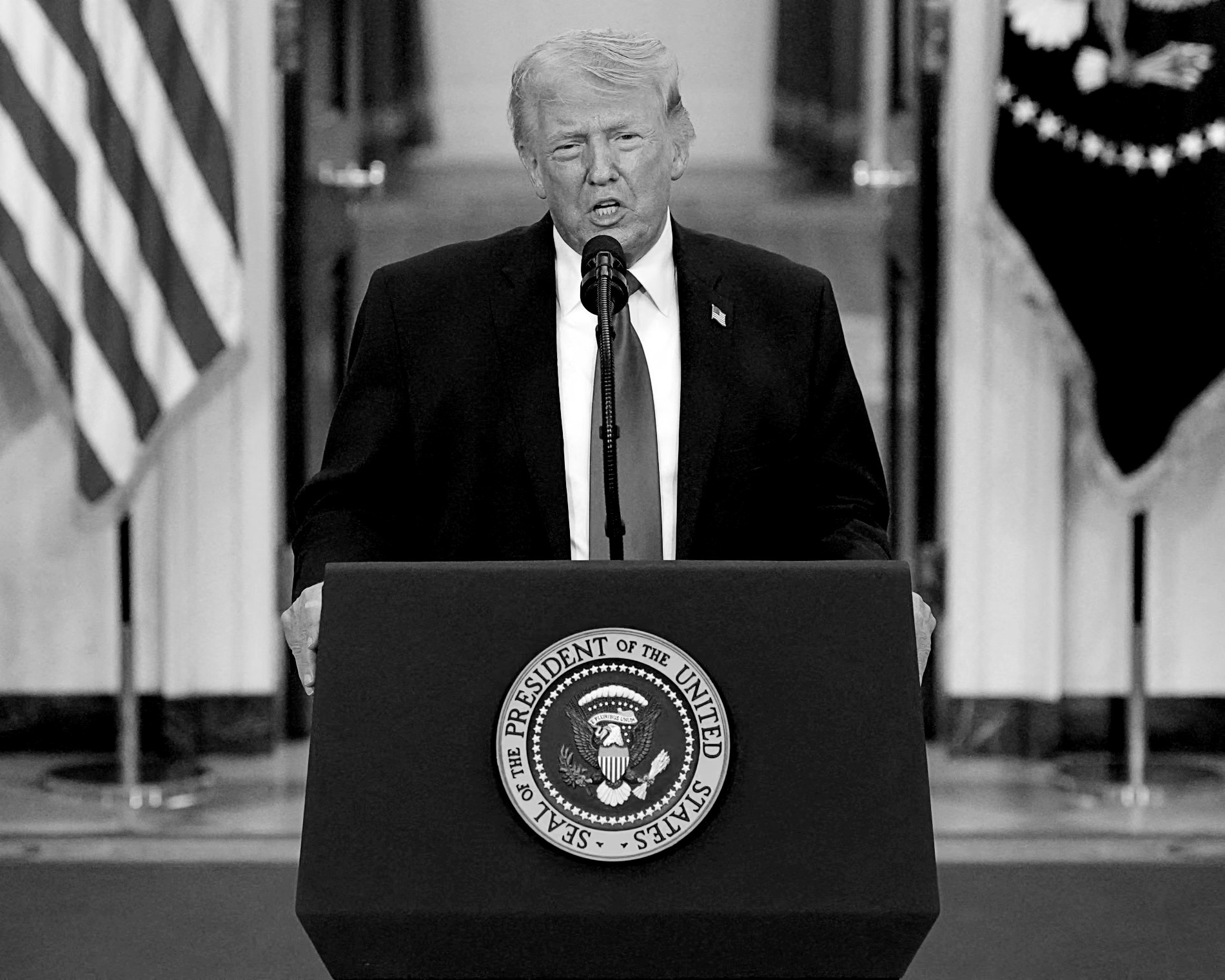
Donald Trump has issued a stark ultimatum to Iran, warning that Tehran must reopen the strategically critical Strait of Hormuz by Tuesday evening or face large-scale attacks on infrastructure, including power plants and bridges, in a sharp escalation of the ongoing regional conflict.
A deadline amid rising tensions
The warning, delivered through a series of social media posts and public statements, marks the latest shift in a rapidly evolving crisis. Trump has repeatedly adjusted deadlines in recent weeks, but the latest message sets a firm timeline, with the US president signalling that failure to comply will trigger immediate military action.
The rhetoric itself has drawn attention for its unusually explicit tone, with Trump using profane language to underscore the urgency of his demand. The ultimatum follows a period of intensified hostilities, including US and Israeli strikes on Iranian targets and Iran’s subsequent efforts to restrict maritime traffic through the strait.

A chokepoint with global consequences
The Strait of Hormuz remains one of the world’s most critical energy corridors, with roughly a fifth of global oil supply typically passing through the narrow waterway. Disruptions have already sent oil prices sharply higher and forced shipping companies to halt or reroute traffic.
Iran’s actions to block or threaten shipping have effectively brought transit close to a standstill, intensifying pressure on global energy markets. The United States has responded with military operations aimed at restoring access, while also attempting to force a political resolution through direct pressure on Tehran.
Threats to civilian infrastructure raise concerns
Trump’s explicit warning that US forces could target civilian infrastructure — including energy facilities and transport networks — has prompted concern among legal experts and policymakers. Critics argue that such strikes, if carried out, could raise serious questions under international humanitarian law, particularly regarding the protection of civilian assets.
Domestic reaction within the United States has also been divided. Some political figures have supported the administration’s hardline stance, framing it as necessary to secure global energy flows. Others have criticised both the language and the strategy, warning that escalation could draw the US deeper into a prolonged and costly conflict.
Regional risks and retaliation warnings
Iranian officials have responded with strong warnings, signalling that any attack on infrastructure would provoke broader retaliation across the region. Previous Iranian actions have already included drone strikes targeting economic assets in neighbouring Gulf states, underscoring the risk of a wider regional confrontation.
The situation remains highly volatile, with military deployments increasing and diplomatic channels appearing fragile. While Trump has indicated that a negotiated agreement remains possible, the narrowing timeline and escalating rhetoric suggest that the window for de-escalation is rapidly closing.
Markets and geopolitics in focus
For global markets, the implications are immediate. Energy prices, shipping costs and geopolitical risk premiums have all surged as uncertainty surrounding the strait intensifies. The crisis highlights the continued vulnerability of global supply chains to regional conflict, particularly in energy-dependent economies.
As Tuesday’s deadline approaches, attention is focused on whether Iran will move to reopen the strait or whether the conflict will enter a more destructive phase — one that could reshape both regional stability and global economic conditions.
Newshub Editorial in Middle East – April 6, 2026

If you have an account with ChatGPT you get deeper explanations,
background and context related to what you are reading.
Open an account:
Open an account
Recent Comments