
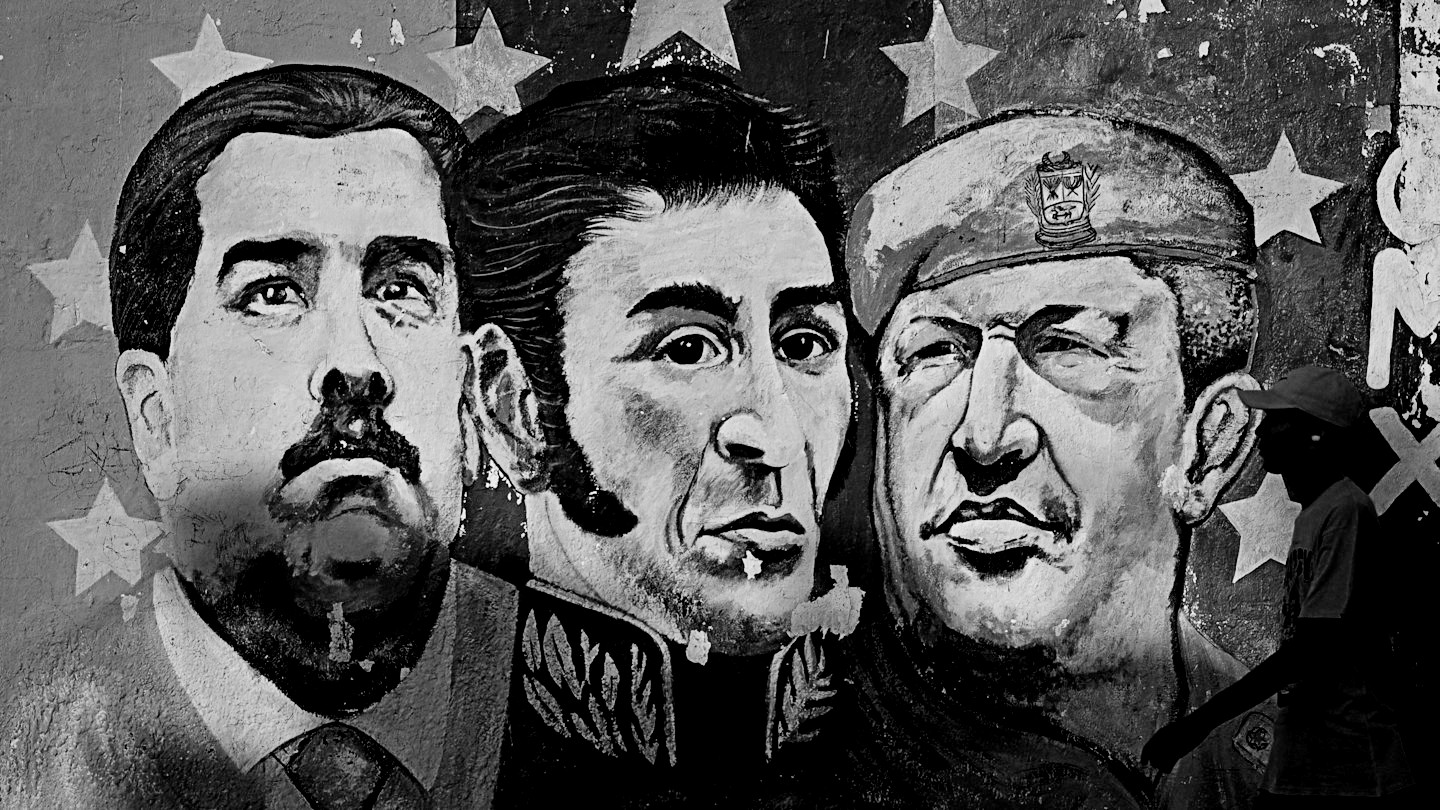
Venezuela’s interim president Delcy Rodríguez is facing mounting criticism after reports that images of former political leaders have been removed from official spaces, a move that analysts and critics interpret as part of a broader effort to reshape the country’s political narrative.
symbolic shift signals break with past leadership
The reported removal of images associated with previous leaders, including figures tied to the Chávez and Maduro eras, represents a highly symbolic act in Venezuelan politics. Visual representation has long played a central role in projecting ideological continuity in the country’s public institutions.
By altering these displays, Rodríguez appears to be signalling a recalibration of political identity following a period of upheaval that saw former president Nicolás Maduro removed from power earlier this year.

Observers suggest that such moves are designed to establish a new narrative framework, distancing the current leadership from past controversies while consolidating authority in a rapidly changing political environment.
critics warn of historical erasure
Opposition figures and human rights advocates have raised concerns that the removal of imagery risks crossing from political repositioning into historical revisionism. They argue that erasing visual references to past leaders may obscure accountability and complicate efforts to fully document Venezuela’s recent history.
Similar criticism has emerged in relation to other government initiatives, including plans to transform sites linked to past abuses. Critics argue that such efforts may prioritise rebranding over transparency and justice.
The debate highlights a broader tension between efforts to stabilise governance and the need to preserve historical memory in a country marked by years of political and economic crisis.
political consolidation amid ongoing transition
Rodríguez, a long-time figure within Venezuela’s ruling establishment, assumed leadership in early 2026 following a period of intense political disruption. Since then, her administration has undertaken a series of moves aimed at consolidating control, including restructuring military leadership and redefining institutional priorities.
The removal of symbolic references to previous leadership can be viewed within this context—as part of a wider strategy to assert authority and redefine the state’s identity during a transitional phase.
At the same time, the government has sought to present itself as reform-oriented, engaging in diplomatic outreach and economic repositioning.
international context adds complexity
The developments come amid shifting international dynamics, including a partial normalisation of relations with the United States and renewed interest in Venezuela’s energy sector. These external factors are influencing both domestic policy and the government’s messaging strategy.
Analysts note that managing perception—both internally and externally—has become a central component of Venezuela’s political transition.
outlook: narrative control versus historical accountability
Looking ahead, the controversy surrounding the removal of historical imagery is likely to persist as a point of contention within Venezuela’s political landscape. The balance between redefining leadership and preserving historical continuity will remain a sensitive issue.
For Rodríguez’s administration, the challenge lies in maintaining legitimacy while addressing calls for transparency and accountability. For critics, the concern is that symbolic changes may precede deeper efforts to reshape public understanding of the past.
Friday’s developments underscore a broader reality: in periods of political transition, control over narrative can be as consequential as control over policy.
Newshub Editorial in South America – April 3, 2026

If you have an account with ChatGPT you get deeper explanations,
background and context related to what you are reading.
Open an account:
Open an accountVenezuela’s interim president Delcy Rodríguez is facing mounting criticism after reports that images of former political leaders have been removed from official spaces, a move that analysts and critics interpret as part of a broader effort to reshape the country’s political narrative.
Recent Comments