
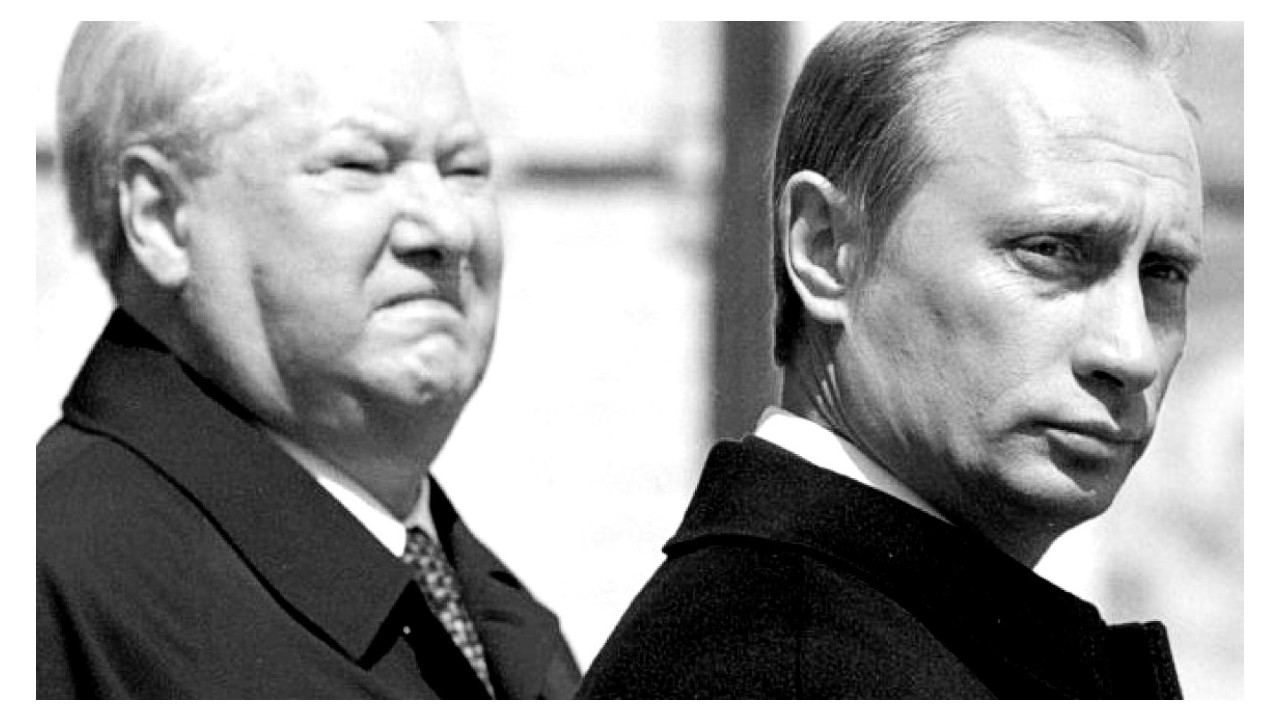
Vladimir Putin was elected President of Russia for the first time in March 2000, marking the beginning of a political era that would redefine the country’s governance, economic trajectory, and global positioning.
A transition from chaos to control
The election followed a turbulent decade in post-Soviet Russia. The 1990s, under President Boris Yeltsin, were characterised by economic instability, declining state authority, and widespread social uncertainty. On 31 December 1999, Yeltsin unexpectedly resigned, appointing Vladimir Putin—then Prime Minister—as acting president.
Putin entered the 2000 election as the clear frontrunner, positioning himself as a stabilising force capable of restoring order and national pride. His messaging focused on strengthening the state, combating separatism, and reasserting Russia’s role on the global stage.

The 2000 election outcome
The presidential election, held on 26 March 2000, resulted in a decisive victory for Putin, who secured just over 50 per cent of the vote in the first round, thereby avoiding a runoff. His closest rival, Communist Party leader Gennady Zyuganov, trailed significantly.
The result was widely interpreted as a public mandate for stability after years of political and economic volatility. Putin’s relatively swift consolidation of support reflected both his visibility as acting president and a broader desire among voters for decisive leadership.
Early priorities and consolidation of power
Following his election, Putin moved quickly to centralise authority. Key initiatives included reforms to strengthen federal control over Russia’s regions, efforts to curb the influence of oligarchs, and increased state involvement in strategic industries such as energy.
The early 2000s also saw rising oil prices, which contributed to economic recovery and improved living standards for many Russians. This period reinforced Putin’s domestic legitimacy and allowed him to build a durable political base.
At the same time, critics raised concerns about the erosion of democratic institutions, including constraints on independent media and political opposition. These tensions would become a defining feature of Russia’s political landscape in the years that followed.
Long-term implications
Putin’s initial election in 2000 marked the start of one of the longest continuous leadership periods in modern global politics. Over time, his governance model evolved into a highly centralised system, often described as “managed democracy,” combining electoral processes with tight state control.
Internationally, Russia under Putin reasserted itself as a major geopolitical actor, influencing energy markets, regional conflicts, and global diplomacy. Domestically, the balance between stability and political plurality has remained a central point of debate.
More than two decades later, the 2000 election is widely viewed as a pivotal moment that set Russia on its current political and economic path—one shaped by strong executive power, strategic state intervention, and an enduring focus on national sovereignty.
Newshub Editorial in Europe – March 26, 2026

If you have an account with ChatGPT you get deeper explanations,
background and context related to what you are reading.
Open an account:
Open an account
Recent Comments