
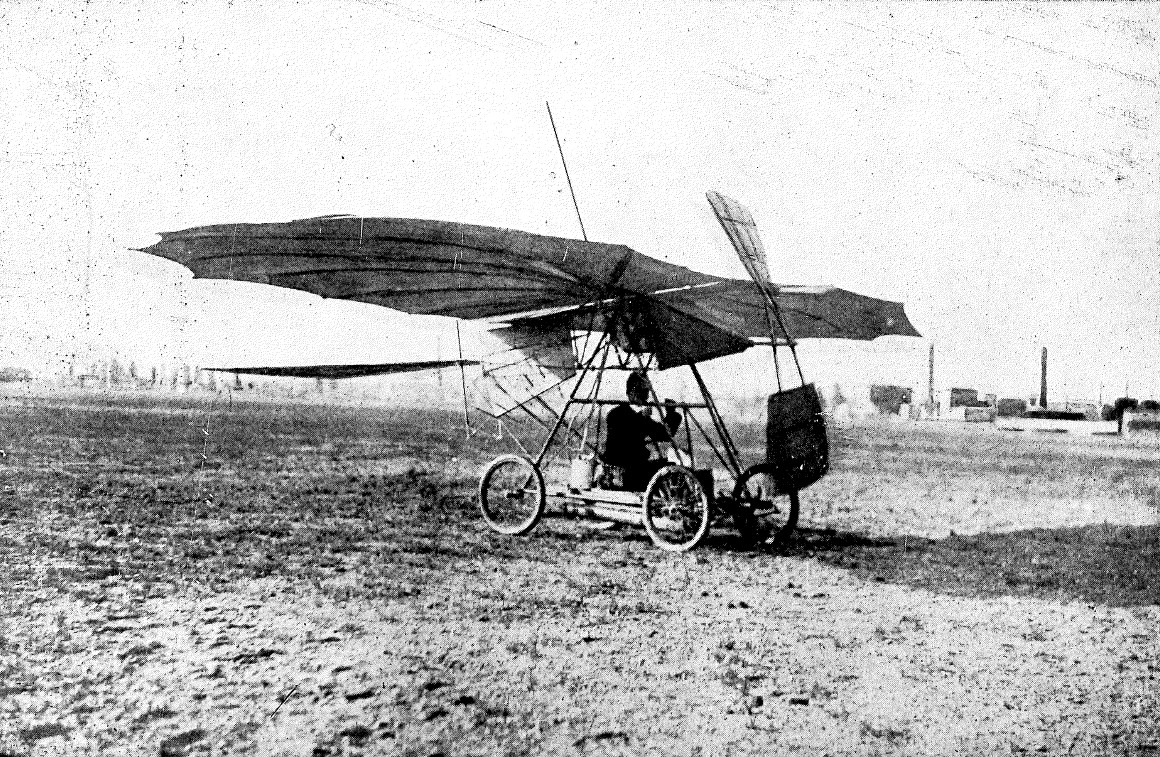
In March 1906, Romanian inventor Trajan Vuia carried out a short but historically meaningful flight of approximately 12 metres with his self-designed monoplane, marking an important step in the development of powered aviation. Though modest in scale, the achievement demonstrated a concept that would later become central to modern aircraft design.
A shift towards independent flight
Trajan Vuia’s aircraft, known as the Vuia I, introduced a crucial innovation at a time when aviation was still in its infancy. Unlike many early flying machines, which relied on external launch systems such as rails or catapults, Vuia’s design was capable of taking off using its own propulsion on wheeled undercarriage.
This represented a conceptual shift. Rather than treating flight as a controlled glide following assisted launch, Vuia focused on achieving a fully autonomous system. His aircraft accelerated across the ground before lifting off, closely resembling the operational model used in aviation today.

The 12-metre flight, conducted near Paris, was brief and low in altitude. However, it proved that a heavier-than-air machine could take off from a flat surface under its own power — a fundamental requirement for practical aviation.
Engineering ambition despite limitations
Vuia’s work was shaped by the technological and financial constraints of the early 20th century. The aircraft was constructed using lightweight materials and powered by a compressed gas engine, reflecting the experimental nature of propulsion systems at the time.
Despite these limitations, the design incorporated several forward-looking elements, including a monoplane wing structure and a wheeled chassis. These features would later become standard across the aviation industry.
The short flight distance should be understood in context. Early aviation breakthroughs were often incremental, with each test contributing to a broader understanding of aerodynamics, propulsion, and structural design. Vuia’s experiment added a critical piece to that evolving knowledge base.
Position within a competitive era
The early 1900s were marked by rapid progress in aviation, with multiple inventors working independently across Europe and the United States. The Wright brothers had demonstrated powered flight in 1903, although their system depended on a launch rail. Later in 1906, Alberto Santos-Dumont achieved a publicly observed flight in Paris, further advancing the credibility of aviation in Europe.
Within this competitive landscape, Vuia’s contribution stands out for its emphasis on independent takeoff and practical aircraft configuration. His work helped bridge the gap between experimental flight and functional aviation systems.
Lasting impact on aircraft design
While Trajan Vuia did not achieve widespread recognition during his lifetime, his influence is evident in the long-term evolution of aviation. The monoplane configuration he pioneered would eventually become the dominant design for both commercial and military aircraft.
The significance of his 12-metre flight lies not in its distance, but in what it demonstrated. By proving that an aircraft could take off under its own power from ordinary ground, Vuia helped define the operational principles that underpin modern aviation.
His work remains an example of how incremental innovation can produce lasting structural change, shaping industries far beyond their initial experimental phase.
Newshub Editorial in Europe – March 18, 2026

If you have an account with ChatGPT you get deeper explanations,
background and context related to what you are reading.
Open an account:
Open an account
Recent Comments