
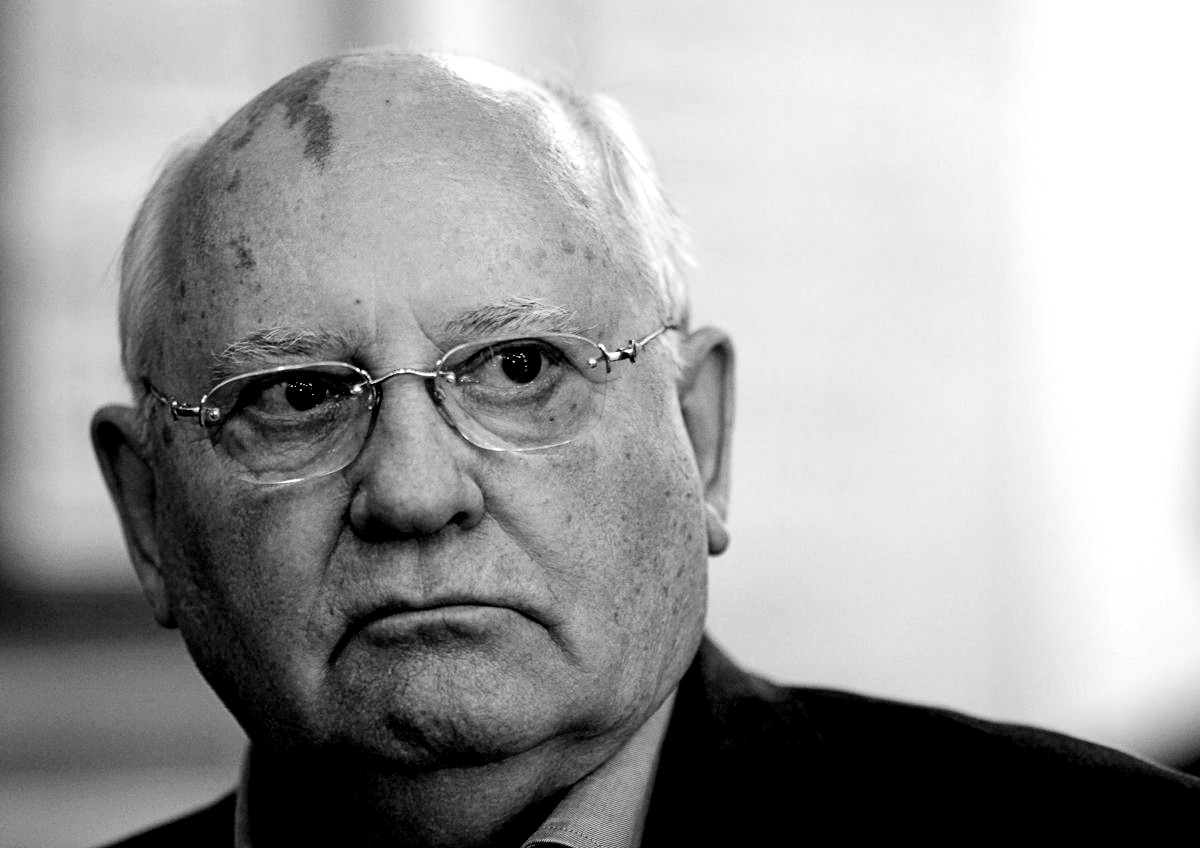
On 15 March 1990, the Congress of People’s Deputies of the Soviet Union elected Mikhail Gorbachev to the newly created office of President of the Soviet Union, marking a pivotal moment in the final chapter of the USSR’s history. The move was intended to strengthen central leadership during a period of profound political and economic upheaval, but it ultimately underscored the accelerating transformation of the Soviet system.
A new office for a changing state
The presidency of the Soviet Union was created as part of a broader set of constitutional reforms introduced under Gorbachev’s programme of perestroika (economic restructuring) and glasnost (political openness). Until then, the Soviet Union had been governed primarily through the Communist Party’s leadership structures, with the General Secretary holding the real centre of power.
By establishing a formal presidency, the Soviet leadership sought to modernise the political framework and introduce a more conventional executive role similar to those found in other states. The Congress of People’s Deputies — the USSR’s newly formed legislative body created in 1989 — voted overwhelmingly to appoint Gorbachev as the country’s first president.

The position gave him expanded authority over the government, military and foreign policy, theoretically consolidating power at a moment when the Soviet system was facing increasing strain.
Reform and resistance
Gorbachev had risen to the position of General Secretary of the Communist Party in 1985 and quickly launched a reform agenda aimed at revitalising the stagnating Soviet economy and political system. His policies encouraged greater transparency, loosened state control over the media and introduced limited democratic elements into the political process.
However, these reforms had unintended consequences. Increased openness revealed deep economic problems, historical grievances and nationalist tensions within the Soviet republics. At the same time, the transition toward a mixed economic system created instability rather than rapid improvement in living standards.
Hardliners within the Communist Party accused Gorbachev of weakening the state, while reformists and nationalist leaders argued that his changes did not go far enough.
A presidency under pressure
Gorbachev’s presidency was marked by growing political fragmentation across the Soviet Union. Several republics, including Lithuania, Latvia and Estonia, began openly pursuing independence. In Russia itself, Boris Yeltsin emerged as a powerful political rival advocating deeper reforms and greater sovereignty for the Russian republic.
Economic conditions continued to deteriorate, with shortages, inflation and declining industrial output undermining public confidence in the government. Attempts to preserve the Soviet Union through a new union treaty faced resistance from both conservatives and separatists.
In August 1991, a group of hardline officials attempted a coup against Gorbachev while he was on holiday in Crimea. The coup failed, largely due to resistance led by Yeltsin, but it fatally weakened the central Soviet government.
The end of the Soviet presidency
The office of President of the Soviet Union existed for less than two years. Following the failed coup and the rapid declaration of independence by several republics, the Soviet Union began to unravel.
On 25 December 1991, Gorbachev resigned as president, acknowledging that the Soviet state had effectively ceased to exist. The following day, the USSR was formally dissolved.
His presidency remains a symbol of one of the most dramatic political transitions of the twentieth century — an attempt to reform a superpower that instead accelerated its collapse.
Newshub Editorial in Europe – March 15, 2026

If you have an account with ChatGPT you get deeper explanations,
background and context related to what you are reading.
Open an account:
Open an account
Recent Comments