
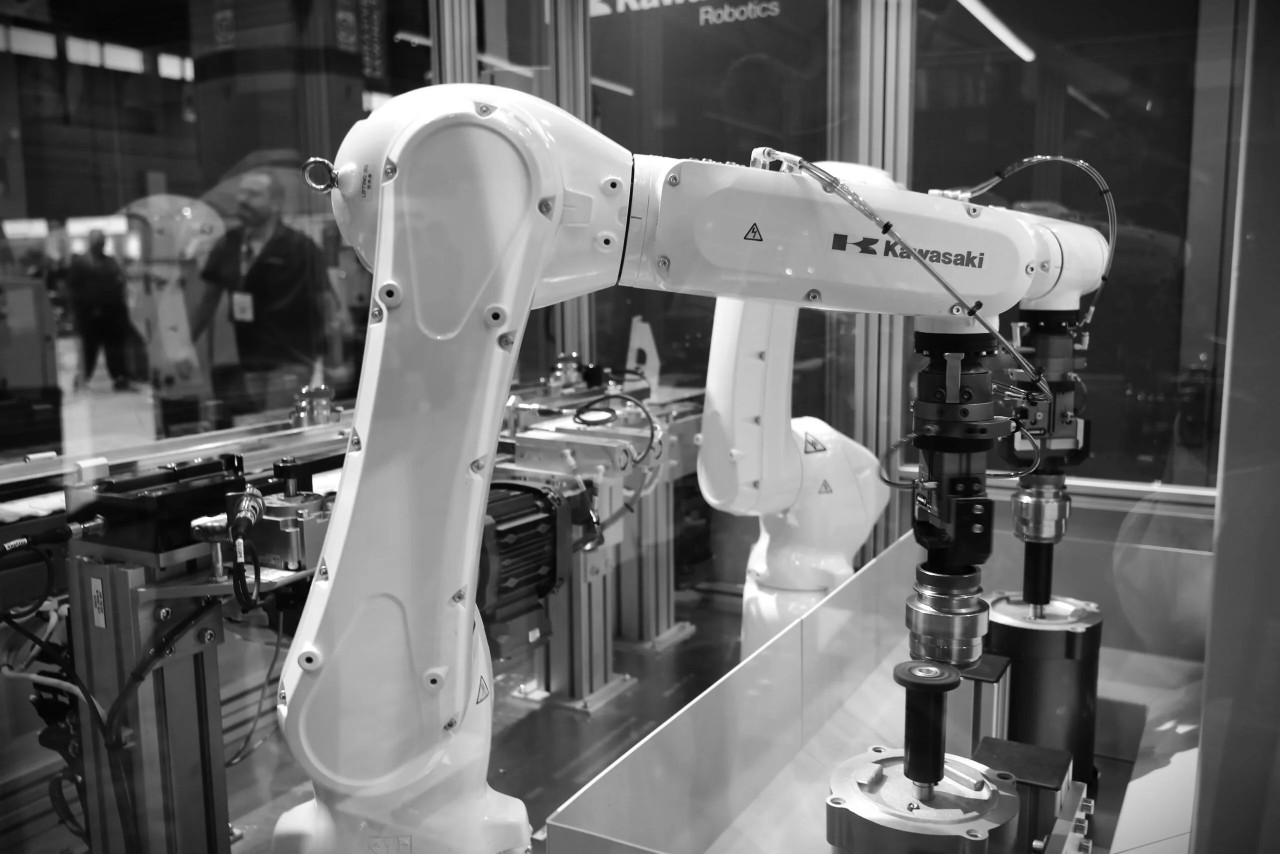
The Allen Institute for AI (Ai2) is advancing the development of physical artificial intelligence by training systems using vast quantities of virtual simulation data, a method that could accelerate the deployment of robots and autonomous machines in real-world environments.
From digital simulation to real-world intelligence
Physical AI refers to artificial intelligence systems capable of interacting with the physical world through robots, machines or autonomous devices. Unlike traditional software-based AI models that operate primarily on text or digital information, physical AI systems must understand motion, space and real-world constraints.
Ai2’s approach focuses on generating large-scale virtual environments where AI systems can train continuously through simulation. Within these digital worlds, robots can practise tasks such as object manipulation, navigation and coordination without the risks and costs associated with training in real physical environments.

Researchers say the technique allows millions of training iterations to occur far faster than would be possible in real-world laboratories. The simulation environments can replicate complex situations ranging from warehouse logistics and household tasks to industrial assembly processes.
By exposing AI systems to diverse simulated scenarios, engineers hope to build models that can transfer their learned behaviour to real-world machines.
A growing race to develop physical AI
Interest in physical AI has surged in recent years as technology companies and research institutions explore the next stage of artificial intelligence development. While generative AI has transformed digital industries, physical AI could reshape sectors such as manufacturing, logistics, construction and healthcare.
Training robots in the real world is often slow, expensive and potentially dangerous. Simulation-based training offers a way to scale learning dramatically while reducing the cost of experimentation.
Ai2’s work forms part of a broader industry trend in which AI developers are combining simulation, reinforcement learning and large datasets to teach machines how to interact with complex environments.
Several technology companies are investing heavily in similar approaches as they attempt to build general-purpose robots capable of performing a wide range of tasks.
Bridging the gap between virtual and physical worlds
One of the major challenges facing developers of physical AI is ensuring that behaviours learned in simulation translate effectively into real-world performance. Differences between virtual environments and physical conditions — sometimes referred to as the “reality gap” — can cause trained systems to behave unpredictably when deployed outside the simulated world.
To address this challenge, researchers use increasingly sophisticated simulation engines designed to replicate real-world physics with high precision. These platforms model gravity, friction, lighting conditions and object behaviour, allowing AI systems to learn under conditions that closely resemble reality.
Ai2’s research aims to narrow this gap further by improving the diversity and accuracy of simulated training data.
Implications for industry and the global economy
If simulation-trained physical AI systems become reliable, the implications for global industry could be significant. Autonomous robots capable of performing complex tasks could transform sectors ranging from logistics and agriculture to disaster response and infrastructure maintenance.
Companies and governments alike are closely monitoring progress in the field, viewing physical AI as a potential driver of productivity growth and technological competitiveness.
While fully general-purpose robots remain a long-term objective, the use of simulation-based training suggests that the pace of development in physical AI could accelerate rapidly in the coming years.
Newshub Editorial in North America – March 13, 2026

If you have an account with ChatGPT you get deeper explanations,
background and context related to what you are reading.
Open an account:
Open an account
Recent Comments