
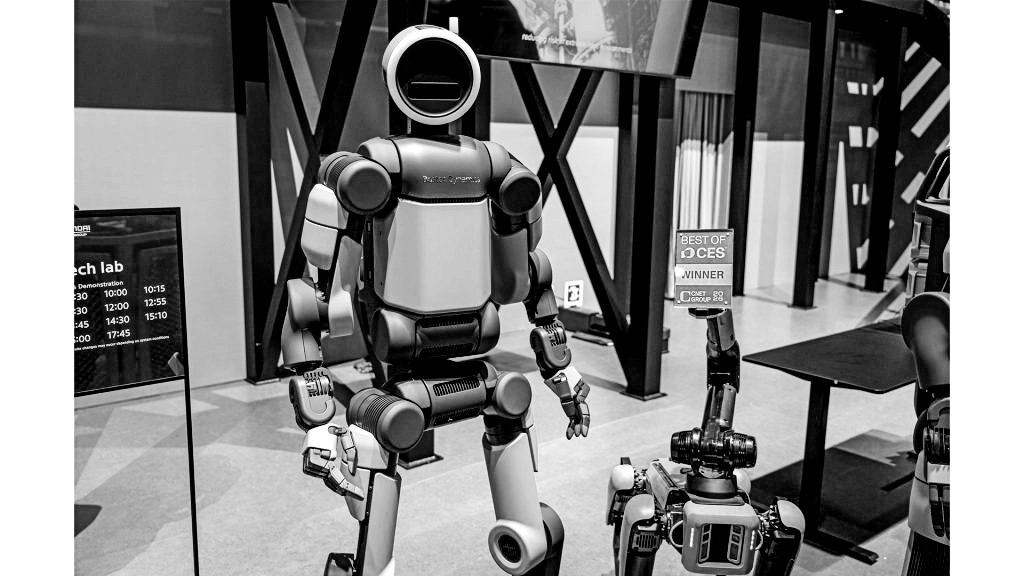
Artificial intelligence is entering a new phase as so-called “physical AI” moves from research laboratories into factories, warehouses and homes. The technology — which enables machines to perceive, reason and act in the physical world — is attracting intense interest from investors, technology giants and industrial companies eager to shape the next wave of automation.
From digital intelligence to physical capability
For much of the past decade, artificial intelligence has focused primarily on digital tasks such as analysing data, generating text or recognising images.
Physical AI represents a significant shift. Instead of operating solely in software environments, these systems interact directly with the physical world through robots, sensors and autonomous machines.

Advances in computer vision, machine learning and real-time data processing are enabling machines to navigate complex environments, manipulate objects and adapt to changing conditions with increasing precision.
This capability is rapidly transforming industries that depend on logistics, manufacturing and transportation.
Major technology companies move aggressively
Technology companies and venture capital investors are racing to secure positions in the emerging sector.
Leading AI developers are expanding their research into robotics, autonomous vehicles and intelligent industrial systems, while start-ups are raising billions of dollars to build next-generation robotic platforms.
Companies developing humanoid robots, warehouse automation systems and intelligent manufacturing equipment have seen surging investor interest.
The rapid development of AI chips, edge computing and advanced sensors has also accelerated the transition from experimental prototypes to commercially viable systems.
Industrial demand drives rapid adoption
One of the most powerful drivers behind physical AI is demand from industry.
Factories increasingly rely on intelligent robotics to improve productivity and address labour shortages, while logistics companies are deploying autonomous systems to manage complex warehouse operations.
Agriculture, construction and healthcare are also beginning to integrate robotic systems capable of performing tasks that previously required human labour.
Unlike traditional industrial robots, which operate within highly controlled environments, physical AI systems are designed to function in unpredictable real-world settings.
This flexibility is considered one of the key technological breakthroughs enabling broader adoption.
A new battleground for global technology leadership
Governments and corporations alike view physical AI as a strategic technology with far-reaching economic implications.
Countries investing heavily in robotics and automation hope to strengthen their manufacturing capabilities and maintain competitiveness in global supply chains.
At the same time, advances in autonomous systems have potential military and security applications, adding a geopolitical dimension to the race for leadership in the field.
The convergence of artificial intelligence, robotics and advanced computing is therefore becoming a major focus of national technology strategies.
The next frontier of artificial intelligence
While generative AI captured global attention in recent years, many experts believe physical AI could ultimately have an even broader economic impact.
By enabling machines to perform complex physical tasks, the technology could reshape labour markets, industrial production and supply chains.
Yet significant challenges remain, including safety standards, regulatory oversight and the integration of machines into human environments.
Even so, the rapid influx of investment and innovation suggests that physical AI is moving quickly from concept to reality.
For companies and investors around the world, the message is increasingly clear: the next era of artificial intelligence will not remain confined to the digital realm — it will operate in the physical world.
Newshub Editorial in North America — March 9, 2026

If you have an account with ChatGPT you get deeper explanations,
background and context related to what you are reading.
Open an account:
Open an account
Recent Comments