
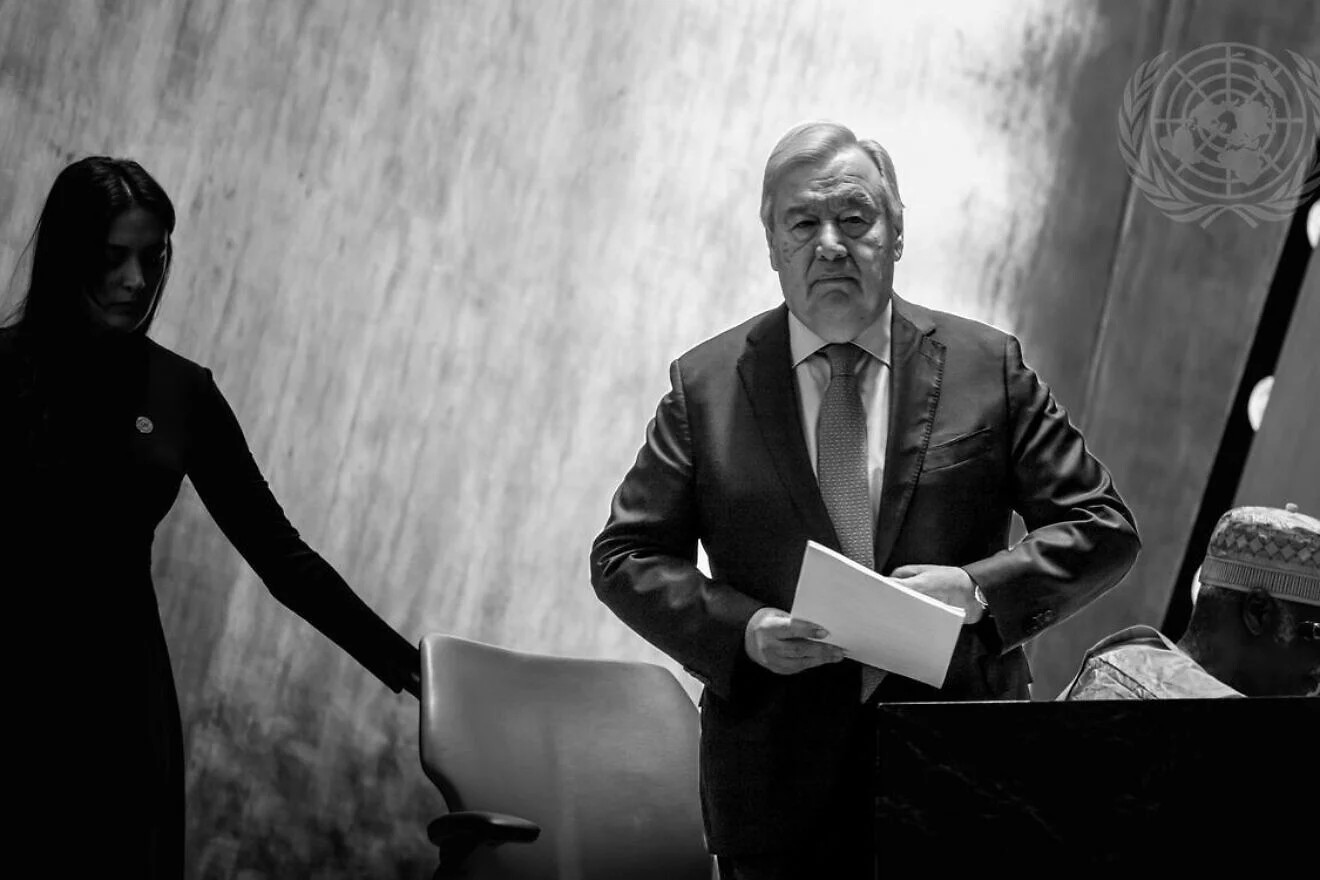
The United Nations secretary general has described Russia’s war in Ukraine as a “stain on our collective conscience” after the UN General Assembly adopted a resolution reaffirming support for Ukraine — a vote notably marked by the United States’ abstention on day 1,463 of the conflict.
A stark warning from the UN
Speaking in New York, António Guterres said the prolonged war continues to exact a devastating human toll, urging member states to recommit to international law and the principles of sovereignty and territorial integrity.

The resolution, passed by the United Nations General Assembly, reiterated support for Ukraine and called for a comprehensive, just and lasting peace in line with the UN Charter. While a majority of nations backed the measure, the decision by the United States to abstain drew immediate attention from diplomats and observers.
Guterres told delegates that the war represents more than a regional crisis. It is, he said, a direct assault on the foundations of the international system, warning that continued violence risks normalising aggression and weakening global norms.
Washington steps back
The US abstention marks a shift in tone from earlier votes in which Washington consistently supported resolutions condemning Russia’s invasion. American officials said the move reflected concerns over language they believe could complicate diplomatic efforts toward a negotiated settlement.
Despite the abstention, US representatives reiterated support for Ukraine’s sovereignty and pledged continued humanitarian and security assistance. However, the vote highlighted growing divisions among Western allies over how best to balance pressure on Moscow with attempts to reopen diplomatic channels.
Several European nations expressed disappointment, arguing that unity at the UN remains critical as the war grinds on with no clear end in sight.
Day 1,463: what we know
Fighting continues along multiple frontlines in eastern and southern Ukraine, with both sides reporting ongoing drone strikes and artillery exchanges. Ukrainian authorities say civilian infrastructure has again been targeted, while Russia claims it is responding to attacks on its own territory.
Humanitarian agencies warn that conditions for displaced civilians are deteriorating, particularly in regions facing power shortages and winter damage to housing and utilities. The UN estimates that millions remain in need of urgent assistance, with food security and medical access among the most pressing challenges.
Diplomatic efforts have so far failed to produce a breakthrough. While some countries are pushing for renewed peace talks, others argue that any settlement must first ensure Russia’s withdrawal from occupied Ukrainian territory.
A conflict reshaping global politics
Nearly four years into the full-scale invasion, the war has become a defining issue for global geopolitics, reshaping alliances, energy markets and defence spending across continents. For Guterres, the General Assembly vote was a reminder that the world still has a collective responsibility to act.
“The longer this war continues,” he said, “the deeper the damage — not only to Ukraine, but to the credibility of the international community itself.”
As day 1,463 closes, the message from the UN leadership is clear: fatigue must not replace principle, and abstention cannot substitute for accountability.
Newshub Editorial in Europe – 25 February 2026

If you have an account with ChatGPT you get deeper explanations,
background and context related to what you are reading.
Open an account:
Open an account
Recent Comments