
Ukraine entered a decisive new chapter in February 2014 when president Viktor Yanukovych was impeached following weeks of nationwide demonstrations that culminated in deadly street clashes and the collapse of his administration, bringing to an end one of the most turbulent periods in the country’s post-Soviet history.
From protests to political rupture
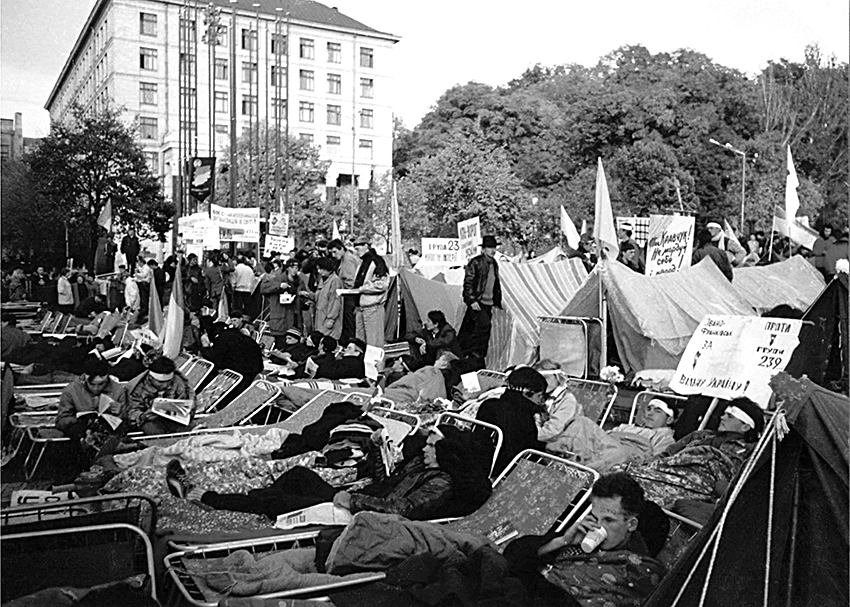
What began as student-led rallies against a stalled EU association agreement rapidly evolved into a broad-based popular uprising. The movement — later known as Euromaidan — drew hundreds of thousands into central Kyiv, transforming Independence Square into a fortified encampment demanding democratic reform, an end to corruption, and closer ties with Europe.
As security forces attempted to disperse demonstrators in late January and early February, violence escalated dramatically. Snipers and riot police clashed with protesters armed largely with makeshift shields and helmets. More than 100 people were killed during the worst days of unrest, shocking the nation and drawing international condemnation.


A parliament steps in
On 22 February 2014, Ukraine’s parliament voted overwhelmingly to remove Yanukovych from office, citing his abandonment of constitutional duties after he fled the capital. Lawmakers scheduled early presidential elections and appointed an interim government to stabilise the country. The decision effectively ended Yanukovych’s presidency and marked a rare instance in the region where sustained civic mobilisation directly overturned an entrenched political leadership.
Yanukovych soon resurfaced in Russia, denying wrongdoing and claiming he remained the legitimate president. Kyiv authorities, meanwhile, launched criminal investigations into the killings of protesters and alleged large-scale corruption during his rule, including the disappearance of vast state funds.
Geopolitical aftershocks
The impeachment reverberated far beyond Ukraine’s borders. Within weeks, Russia annexed Crimea, and armed conflict erupted in eastern Ukraine, plunging the country into a prolonged security crisis. Relations between Ukraine and Moscow deteriorated sharply, while Western governments moved to support Kyiv through financial assistance and political backing.
Domestically, the upheaval accelerated long-delayed reforms. Subsequent administrations pursued anti-corruption measures, decentralisation, and closer integration with European institutions — efforts that, while uneven, reshaped Ukraine’s political landscape and civil society.
A defining moment in modern Ukrainian history
More than a decade on, Yanukovych’s removal stands as a pivotal moment driven not by palace intrigue but by mass participation. For many Ukrainians, the protests represented a collective assertion of sovereignty and democratic choice. For others, they marked the beginning of years of instability and war.
Either way, the events of early 2014 fundamentally altered Ukraine’s trajectory, embedding the power of popular mobilisation into the country’s political DNA and redefining its place on Europe’s eastern frontier.
Newshub Editorial in Europe – 22 February 2026

If you have an account with ChatGPT you get deeper explanations,
background and context related to what you are reading.
Open an account:
Open an accountUkraine entered a decisive new chapter in February 2014 when president Viktor Yanukovych was impeached following weeks of nationwide demonstrations that culminated in deadly street clashes and the collapse of his administration, bringing to an end one of the most turbulent periods in the country’s post-Soviet history.
Recent Comments