
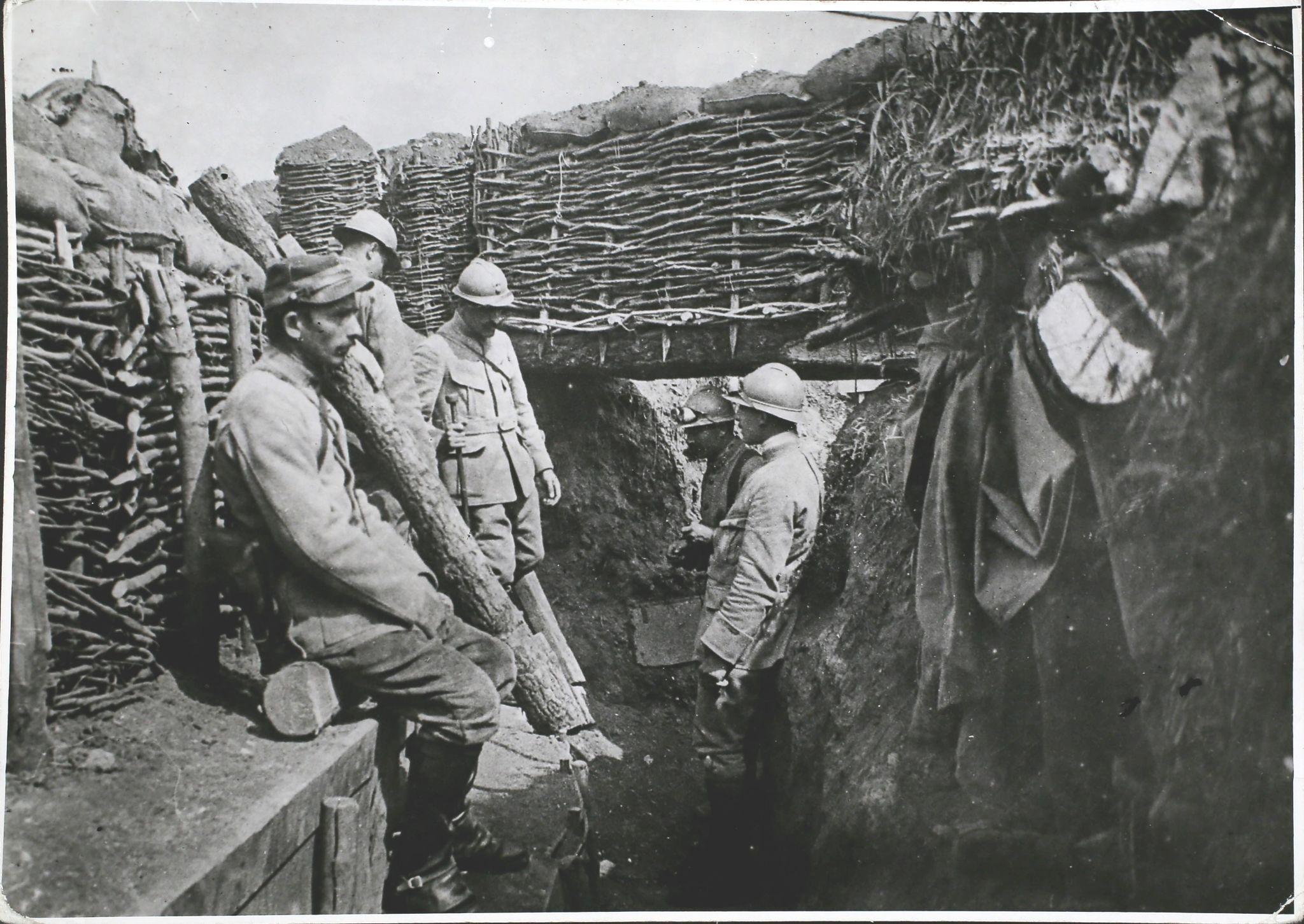
On this day in 1916, the Battle of Verdun began, marking the start of what would become one of the most devastating and symbolic engagements of World War I. Launched by German forces against the fortified French city of Verdun, the offensive opened a ten-month ordeal that reshaped military strategy, national morale, and the human cost of industrial warfare.
A battle designed to break a nation
German chief of staff Erich von Falkenhayn conceived Verdun not primarily as a territorial grab, but as a war of attrition. His objective was to force France to defend a site of deep strategic and emotional importance, then “bleed the French army white” through relentless artillery and repeated infantry assaults.

The opening bombardment on 21 February 1916 unleashed unprecedented firepower. Within hours, entire landscapes were pulverised. Villages vanished. Forests were flattened. Trenches dissolved into mud and shell craters. The German advance initially made rapid gains, including the capture of Fort Douaumont, one of Verdun’s key defensive positions.
‘They shall not pass’
France responded with total commitment. General Philippe Pétain was appointed to organise the defence, famously rallying troops with the phrase Ils ne passeront pas — “They shall not pass.” A continuous supply route, later known as the “Sacred Way,” kept men and materiel flowing into the inferno, ensuring Verdun would be held at almost any cost.
What followed was a grinding stalemate. Gains were measured in metres. Positions changed hands repeatedly. Soldiers endured weeks under constant shelling, surrounded by corpses, choking gas, and collapsing earthworks. By the time major fighting subsided in December, both sides were exhausted, and the front lines stood close to where they had begun.
Human cost on an industrial scale
Verdun came to epitomise the mechanised slaughter of the First World War. Around 300,000 soldiers were killed, with total casualties exceeding 700,000. Few battles better illustrate how artillery, machine guns, and mass mobilisation transformed warfare into a prolonged test of endurance rather than manoeuvre.
Strategically, Verdun failed to deliver Germany the decisive breakthrough it sought. Politically and culturally, however, it became a cornerstone of French national memory — a symbol of resistance, sacrifice, and survival.
A legacy that still resonates
More than a century later, Verdun remains a stark reminder of the consequences of modern war. Its ossuaries and scarred landscapes stand as quiet witnesses to a campaign that consumed lives on an almost unimaginable scale, and to a generation shaped by trench warfare and total mobilisation.
The battle’s opening day marked not just the start of a military operation, but the beginning of one of history’s most harrowing chapters — a confrontation that continues to inform how nations remember conflict, resilience, and the price of strategic ambition.
Newshub Editorial in Europe – 21 February 2026

If you have an account with ChatGPT you get deeper explanations,
background and context related to what you are reading.
Open an account:
Open an account
Recent Comments