
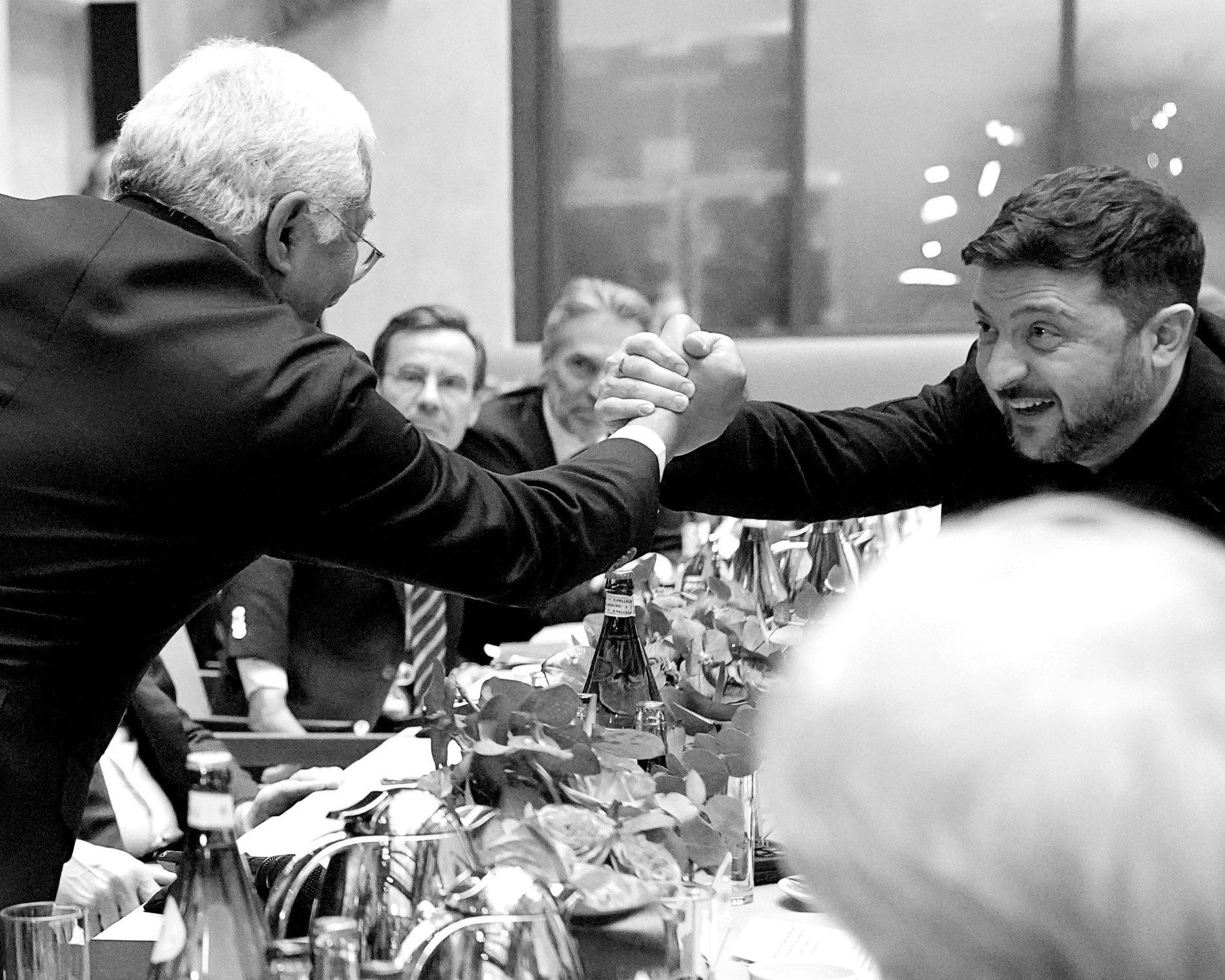
The European Union has signalled renewed urgency to begin formal membership negotiations with Kyiv “as soon as possible”, as European Council president António Costa warned that the bloc cannot afford to lose momentum more than four years into Russia’s full-scale war against Ukraine.
Brussels signals political readiness
Speaking after consultations with EU leaders, Costa stopped short of setting a concrete start date for accession talks but made clear that political alignment is moving in Ukraine’s favour. He stressed that Kyiv has delivered significant reforms under extraordinarily difficult circumstances and that the EU now faces a strategic choice: either translate support into concrete steps or risk weakening credibility with both Ukraine and its own eastern partners.
The message from Brussels reflects growing consensus that enlargement is no longer a distant aspiration but an active geopolitical instrument. For many member states, Ukraine’s future inside the EU is increasingly viewed as central to Europe’s long-term security architecture.

Reform progress under wartime conditions
Ukraine has accelerated judicial reforms, strengthened anti-corruption frameworks and aligned key legislation with EU standards, even as the country continues to defend itself militarily. European officials acknowledge that not all benchmarks have been fully met, but argue that Kyiv’s pace of change under wartime pressure is unprecedented.
Accession talks, if launched, would open structured negotiations across dozens of policy chapters covering governance, competition law, agriculture and financial regulation. While full membership remains years away, starting talks would provide Ukraine with a formal pathway and clearer milestones, reinforcing investor confidence and institutional stability.
Strategic implications for Europe
The push for negotiations comes as Europe reassesses its eastern flank amid continued fighting and persistent uncertainty over Russia’s long-term intentions. Supporters of rapid progress argue that delaying accession talks risks creating a strategic vacuum, leaving Ukraine exposed economically and politically at a critical juncture.
For the EU, enlargement toward Ukraine represents both opportunity and challenge. Integrating a large, war-affected economy will require substantial funding, institutional adaptation and internal compromise among member states. Yet many leaders now see these costs as outweighed by the benefits of anchoring Ukraine firmly within Europe’s democratic and economic framework.
Divisions remain, but direction is clear
Not all member states are equally enthusiastic about rapid enlargement, citing concerns over budgetary impact, agricultural markets and governance standards. Still, Costa’s remarks underline a shift in tone: the debate is moving from whether talks should begin to how quickly they can realistically start.
Diplomats say technical preparations are already under way, with the European Commission refining assessments of Ukraine’s readiness across multiple sectors. Informally, several capitals are pushing for visible progress in the coming months to sustain political momentum and demonstrate commitment.
Day 1,458: a turning point approaches
As the war enters its 1,458th day, Ukraine’s push toward EU membership has become inseparable from its broader struggle for sovereignty and stability. Beginning accession negotiations would not end the conflict, but it would mark a powerful signal that Ukraine’s future lies within Europe.
For Brussels, the challenge now is to convert supportive rhetoric into actionable timelines. Costa’s message is clear: the window for decisive action is open — and Europe cannot afford to let it close.
Newshub Editorial in Europe – 20 February 2026

If you have an account with ChatGPT you get deeper explanations,
background and context related to what you are reading.
Open an account:
Open an account
Recent Comments