
What began as a modest alpine gathering in the early 20th century has grown into one of the world’s most influential sporting events. The Olympic Winter Games now sit at the intersection of elite competition, geopolitics, climate science, and global media — a century-long journey that mirrors the evolution of modern society itself.
The alpine origins of a global institution
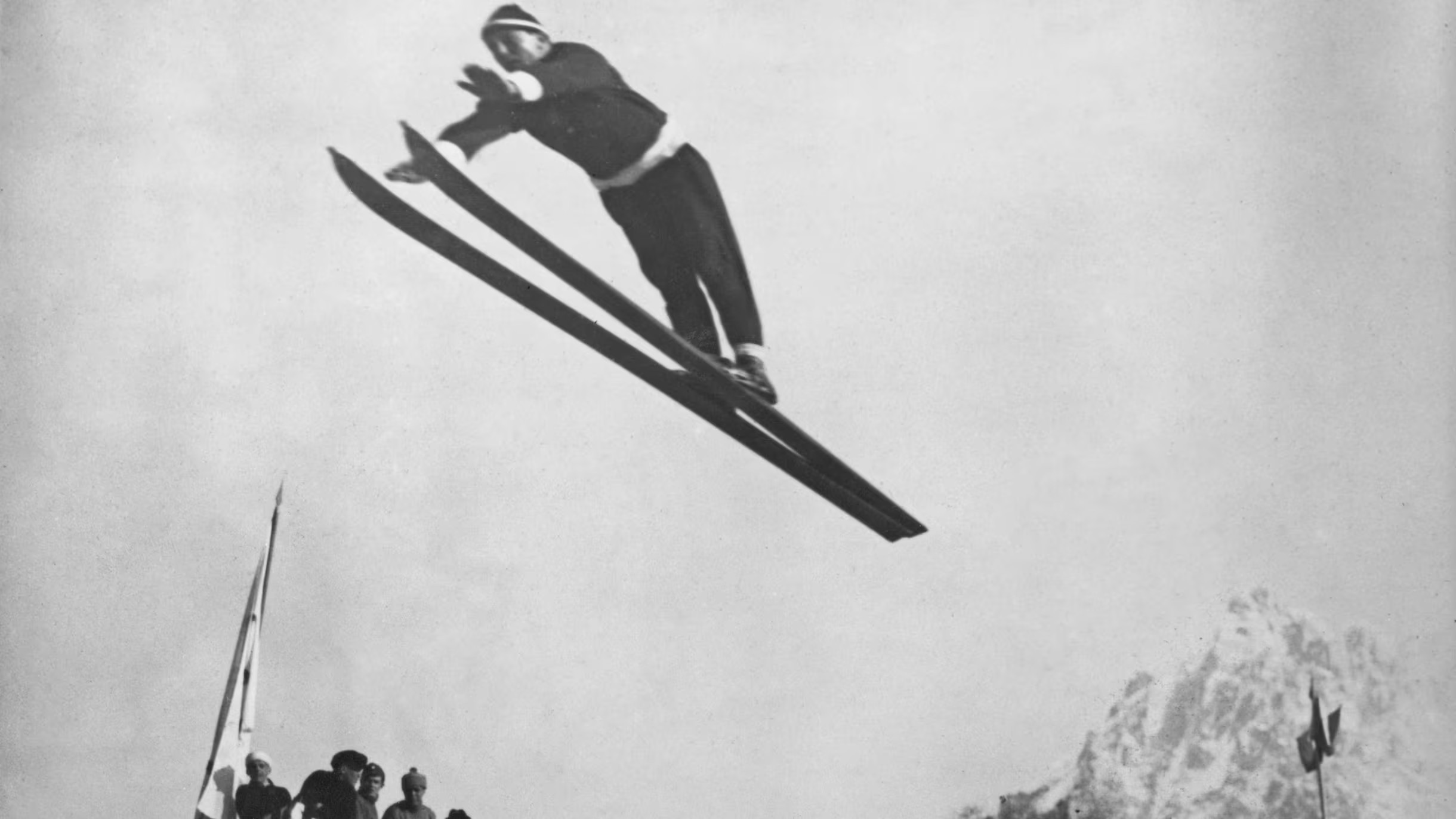
The story starts in 1924 in Chamonix, where athletes from 16 nations assembled for what was officially called “International Winter Sports Week,” organised under the patronage of the International Olympic Committee. Only later would the IOC retroactively recognise the event as the first Olympic Winter Games.
At the time, winter sport was largely a European pursuit, practised in mountain regions and Nordic countries. Disciplines such as cross-country skiing, speed skating, ice hockey, and ski jumping reflected traditions rooted in cold climates and rural life. Yet Chamonix proved there was international appetite for winter competition. The success of the event prompted the IOC to establish a permanent winter counterpart to the Summer Olympics.

These early Games were intimate affairs. Athletes often travelled by train, competitions were held on natural snow and ice, and spectators stood shoulder to shoulder along frozen courses. But even in this embryonic form, the Winter Olympics carried a powerful idea: that sport could unite nations, even in harsh and remote environments.
Expansion, experimentation, and the shock of war
Through the 1920s and 1930s, the Winter Games expanded steadily. New sports were introduced, participation widened beyond Europe, and host cities experimented with increasingly ambitious venues. Ice rinks were refined, ski slopes groomed, and timing systems improved.
This momentum was abruptly halted by the Second World War. The Games scheduled for 1940 and 1944 were cancelled, leaving a six-year gap in Olympic competition. When athletes returned in 1948, the Winter Olympics became a symbol of post-war recovery and international reconciliation. Nations scarred by conflict once again met on neutral ground, using sport as a language of renewal.
Yet the post-war era also marked the beginning of a new chapter: the Cold War.
The Cold War on ice
From the 1950s through the late 1980s, the Winter Olympics became an ideological theatre. Medal tables were scrutinised as indicators of national strength, while victories were celebrated as proof of political systems and social models.
Ice hockey clashes between Eastern Bloc and Western teams carried symbolic weight far beyond the rink. Figure skating and speed skating dynasties emerged, often backed by state-supported training programmes. Athletes became ambassadors, consciously or not, of their governments’ global ambitions.
This period also accelerated professionalism. Training regimes grew more scientific, equipment more specialised, and national sports systems more structured. While the Olympic Charter still emphasised amateurism, the reality was increasingly different: elite winter athletes were effectively full-time professionals, supported by federations, militaries, or state institutions.
Television transforms the Games
The arrival of mass television fundamentally reshaped the Winter Olympics. What had once been regional spectacles became global broadcasts. Alpine descents, biathlon finishes, and skating finals reached living rooms across continents.
Broadcast rights generated unprecedented revenue, attracting corporate sponsors and transforming host cities into international showcases. Camera technology evolved to follow skiers at speed, capture slow-motion jumps, and dramatise finishes. The Games became not just a sporting event, but a media product.
With this shift came commercialisation. Branding appeared on bibs and boards, hospitality suites multiplied, and Olympic villages grew into small cities. The Winter Games now had economic gravity, capable of reshaping entire regions through infrastructure investment.
1994: a structural turning point
A defining change arrived in 1994, when the IOC separated the Winter and Summer Games into alternating two-year cycles. No longer overshadowed by their summer counterpart, the Winter Olympics gained their own spotlight.
This decision amplified media attention, increased sponsorship opportunities, and allowed winter sports to develop distinct identities. Host nations began to see the Games as strategic investments — opportunities to promote tourism, modernise transport networks, and elevate international standing.
It also intensified competition to host. Bidding processes became more elaborate, often involving promises of high-speed rail, new airports, and sprawling resort developments. The Winter Olympics had become a catalyst for large-scale economic transformation.
New sports, younger audiences
As the 21st century approached, the IOC sought to modernise the programme. Snowboarding entered the Games, followed by freestyle skiing disciplines such as slopestyle and halfpipe. These additions brought new audiences and a different cultural energy, blending traditional alpine sport with youth-driven action culture.
This evolution was not without tension. Purists worried about diluting heritage, while younger athletes pushed for creativity and individuality. Over time, however, these newer disciplines became central attractions, helping the Winter Olympics remain relevant in an era of fragmented media and shorter attention spans.
At the same time, athlete preparation became intensely data-driven. GPS tracking, biomechanical analysis, and advanced materials science reshaped training and equipment. Margins of victory narrowed, and records fell as performance ceilings rose.
Asia enters the winter stage
While Europe and North America dominated early editions, Asia’s role grew significantly in the late 20th and early 21st centuries. Japan, South Korea, and later China invested heavily in winter sports infrastructure, seeing the Games as platforms for soft power and technological display.
High-speed rail links connected remote mountain venues to major cities. Purpose-built arenas showcased digital ticketing, facial recognition entry systems, and real-time analytics. These Games illustrated how winter sport could be embedded within broader national development strategies.
Participation from Asian athletes also increased, challenging traditional hierarchies and expanding the geographic footprint of winter competition.
The environmental reckoning
Perhaps the most profound challenge facing the Winter Olympics today is climate change. Rising temperatures threaten natural snowfall reliability, forcing organisers to rely increasingly on artificial snowmaking. Some traditional host regions now struggle to meet climatic criteria for winter events.
This has sparked difficult conversations about sustainability. Building ski runs, bobsleigh tracks, and ice arenas carries significant environmental cost. Critics argue that short-term mega-events can leave long-term ecological scars, while supporters emphasise legacy infrastructure and economic benefits.
In response, organisers have introduced measures such as venue reuse, carbon offset programmes, and compact host concepts. Yet the fundamental question remains unresolved: can a winter sporting event built on snow and ice thrive in a warming world?
The economics of hosting
Alongside environmental concerns, financial scrutiny has intensified. Hosting the Winter Olympics often requires billions in public investment, with mixed returns. Some cities have leveraged the Games to revitalise regions and attract sustained tourism. Others have been left with underused facilities and long-term debt.
This has led to a growing reluctance among potential hosts. Referendums rejecting Olympic bids have become more common, forcing the IOC to rethink its approach. Recent reforms aim to reduce costs by encouraging shared venues, regional hosting models, and greater flexibility in infrastructure requirements.
The goal is to make the Games accessible to a broader range of countries, while preserving their global prestige.
Athletes at the centre
Amid all these structural shifts, the athletes remain the heart of the Winter Olympics. Their stories — of sacrifice, resilience, and fleeting moments of perfection — give meaning to the spectacle.
Modern competitors operate in a world of sponsorship contracts, social media visibility, and intense performance pressure. Mental health has emerged as a central topic, as athletes navigate expectations amplified by constant connectivity and global scrutiny.
Yet the essence of competition endures: a skier attacking a downhill course, a skater chasing fractions of a second, a biathlete steadying breath before the final shot. These moments continue to captivate audiences, linking today’s Games to their humble alpine beginnings.
A mirror of modern history
Over more than a century, the Winter Olympics have reflected the world’s transformations. They have witnessed the rise and fall of empires, the evolution of media, the advance of technology, and the growing urgency of environmental responsibility.
From post-war reconciliation to Cold War rivalry, from analogue broadcasts to digital immersion, each edition captures a snapshot of its era. The Games have served as platforms for diplomacy, protest, and cultural exchange, often carrying meanings far beyond sport.
They also reveal enduring tensions: between commercialisation and idealism, tradition and innovation, global ambition and local impact.
Looking ahead
As future hosts prepare their bids, the Olympic Winter Games stand at a crossroads. Climate realities demand adaptation. Financial pressures call for restraint. Audiences expect innovation without losing authenticity.
Yet the underlying appeal remains powerful. There is something timeless about watching human skill tested against gravity, ice, and altitude — about seeing nations meet peacefully in competition amid winter landscapes.
What began in a small French mountain town has become a global institution, shaped by history and reshaped by necessity. The tracks carved into snow in 1924 now extend across continents, carrying stories of sport, society, and survival.
The Winter Olympics may change form in the decades ahead. But as long as there is ice to skate on and mountains to descend, the spirit that launched them in the Alps will continue to find expression — reminding the world that even in the coldest conditions, shared endeavour can still burn brightly.
Newshub Editorial in Global – 17 February 2026
Recent Comments