
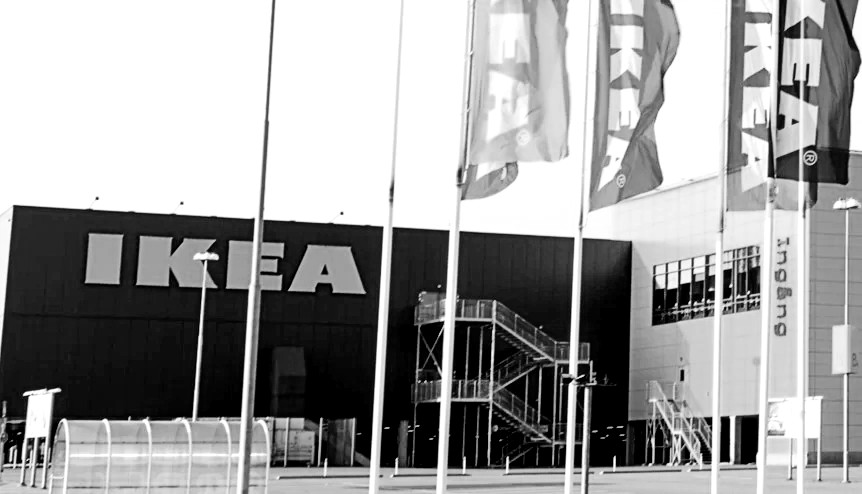
Behind one of the world’s most recognisable retail brands sits a little-known Dutch foundation that quietly controls assets worth tens of billions of euros, making it one of Europe’s most powerful — and least visible — financial entities.
At the centre of this structure is the INGKA Foundation, based in Leiden, Netherlands. While IKEA is globally synonymous with affordable furniture, the foundation that ultimately owns its retail operations functions more like a sovereign-scale investment vehicle than a traditional charity.
A foundation with corporate-scale power


Established in 1982 by IKEA founder Ingvar Kamprad, the INGKA Foundation controls the INGKA Group, which operates IKEA stores in most countries worldwide.
Unlike publicly listed conglomerates, INGKA publishes limited financial detail. However, filings and independent estimates place its asset base well above €60 billion, spanning global retail property, logistics infrastructure, renewable energy, forestry, and long-term financial investments.
The foundation’s structure was originally designed to protect IKEA from hostile takeovers and preserve long-term independence. Over time, it has evolved into one of Europe’s largest private capital pools.
Real estate, energy, and patient capital
INGKA Group is among Europe’s biggest commercial property owners, holding hundreds of large-format retail sites and distribution centres across the continent and beyond. It is also a major investor in renewable energy, owning wind farms and solar parks in multiple countries as part of its strategy to achieve energy independence.
What distinguishes INGKA from conventional family offices or holding companies is its time horizon. Without quarterly earnings pressure or shareholder activism, capital is deployed patiently, often over decades.
This allows the foundation to absorb market volatility while steadily expanding its footprint in infrastructure-heavy sectors that traditional investors often avoid due to long payback periods.
Financial influence without visibility
Despite its scale, INGKA rarely appears in discussions of European financial power, which tend to focus on banks, listed asset managers, or industrial dynasties. Yet its balance sheet rivals mid-sized sovereign wealth funds, and its investment decisions influence property markets, energy development, and employment across multiple countries.
The foundation also controls substantial liquid reserves, enabling it to act opportunistically during downturns — acquiring assets when valuations compress.
In practical terms, INGKA operates as a quiet stabiliser: a capital provider during crises, a long-term landlord in urban development, and a strategic buyer in renewable infrastructure.
A model outside traditional finance
Crucially, INGKA does not behave like a hedge fund or private equity firm. Returns are reinvested into operations and sustainability projects rather than distributed to owners. Governance is handled internally through appointed boards, insulated from market activism.
This hybrid model — part foundation, part multinational holding company — places INGKA in a unique category of European financial actors.
Why it matters
As Europe grapples with energy transition, housing shortages, and capital fragmentation, institutions like INGKA are becoming increasingly influential. They combine scale with stability, offering long-term investment capacity at a time when public budgets are strained and short-term capital dominates markets.
The INGKA Foundation illustrates a broader reality: some of Europe’s most powerful financial players do not trade on exchanges, do not court media attention, and do not answer to shareholders.
They simply operate — quietly shaping the continent’s economic landscape from behind the scenes.
Newshub Editorial in Europe – 14 February 2026

If you have an account with ChatGPT you get deeper explanations,
background and context related to what you are reading.
Open an account:
Open an accountBehind one of the world’s most recognisable retail brands sits a little-known Dutch foundation that quietly controls assets worth tens of billions of euros, making it one of Europe’s most powerful — and least visible — financial entities.
Recent Comments