
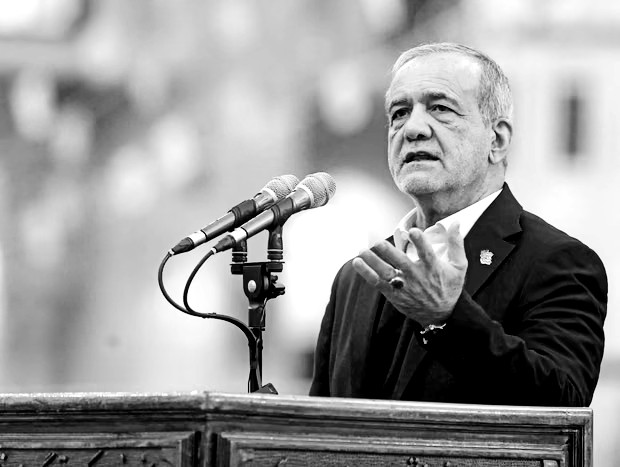
Iran’s president has said Tehran is ready to pursue what he described as “fair” negotiations with the United States, marking a notable shift in tone amid rising regional and diplomatic tension. The statement comes as Washington sharpens its rhetoric, with President Donald Trump warning that “bad things would happen” if no political solution is reached.
Pezeshkian orders diplomatic outreach
Iranian President Masoud Pezeshkian confirmed that he has instructed the country’s foreign minister to actively seek negotiations with the US. The move is framed by Tehran as an attempt to reduce pressure while safeguarding Iran’s national interests. Iranian officials emphasised that any talks must be based on mutual respect and tangible economic relief, rather than symbolic engagement.
A message shaped by economic strain
Iran’s renewed diplomatic posture is closely linked to domestic economic pressures. Years of sanctions have weighed heavily on growth, currency stability, and living standards. By signalling readiness for talks, the Pezeshkian administration appears to be testing whether limited engagement with Washington could ease financial isolation without conceding core political positions.

US response remains conditional
In Washington, the response has been cautious and uncompromising. President Donald Trump reiterated that the US would not tolerate prolonged deadlock, warning that failure to reach an agreement would carry serious consequences. While no formal negotiation framework has been announced, the administration continues to stress that Iran must address concerns related to nuclear activity and regional security before meaningful progress can be made.
A familiar diplomatic pattern
The exchange reflects a recurring pattern in US–Iran relations: signals of openness from Tehran paired with firm public warnings from Washington. Previous negotiation efforts have often stalled over sequencing — whether sanctions relief should precede compliance steps, or vice versa. This structural mistrust continues to complicate even preliminary confidence-building measures.
Regional and market implications
Any movement toward talks is being closely watched across the Middle East and global energy markets. Iran remains a significant oil producer, and even modest progress toward negotiations could influence expectations around supply, sanctions enforcement, and regional stability. Conversely, a breakdown in dialogue would likely reinforce risk premiums tied to the Gulf and broader geopolitical uncertainty.
Limits of optimism
Despite the softer language, Iranian officials have been careful to manage expectations. “Fair” talks, as defined by Tehran, imply negotiations that deliver measurable economic outcomes. From the US perspective, concessions without verifiable changes would be politically untenable. This gap suggests that while dialogue may resume, rapid breakthroughs remain unlikely.
Bottom line
Iran’s signal of readiness for talks represents a tactical opening rather than a strategic shift. With economic pressure mounting in Tehran and political pressure rising in Washington, both sides have incentives to test diplomacy. However, entrenched mistrust and sharply different definitions of a “fair” deal mean that the path to any agreement remains narrow and uncertain.
Newshub Editorial in Asia – 3 February 2026

If you have an account with ChatGPT you get deeper explanations,
background and context related to what you are reading.
Open an account:
Open an account
Recent Comments