
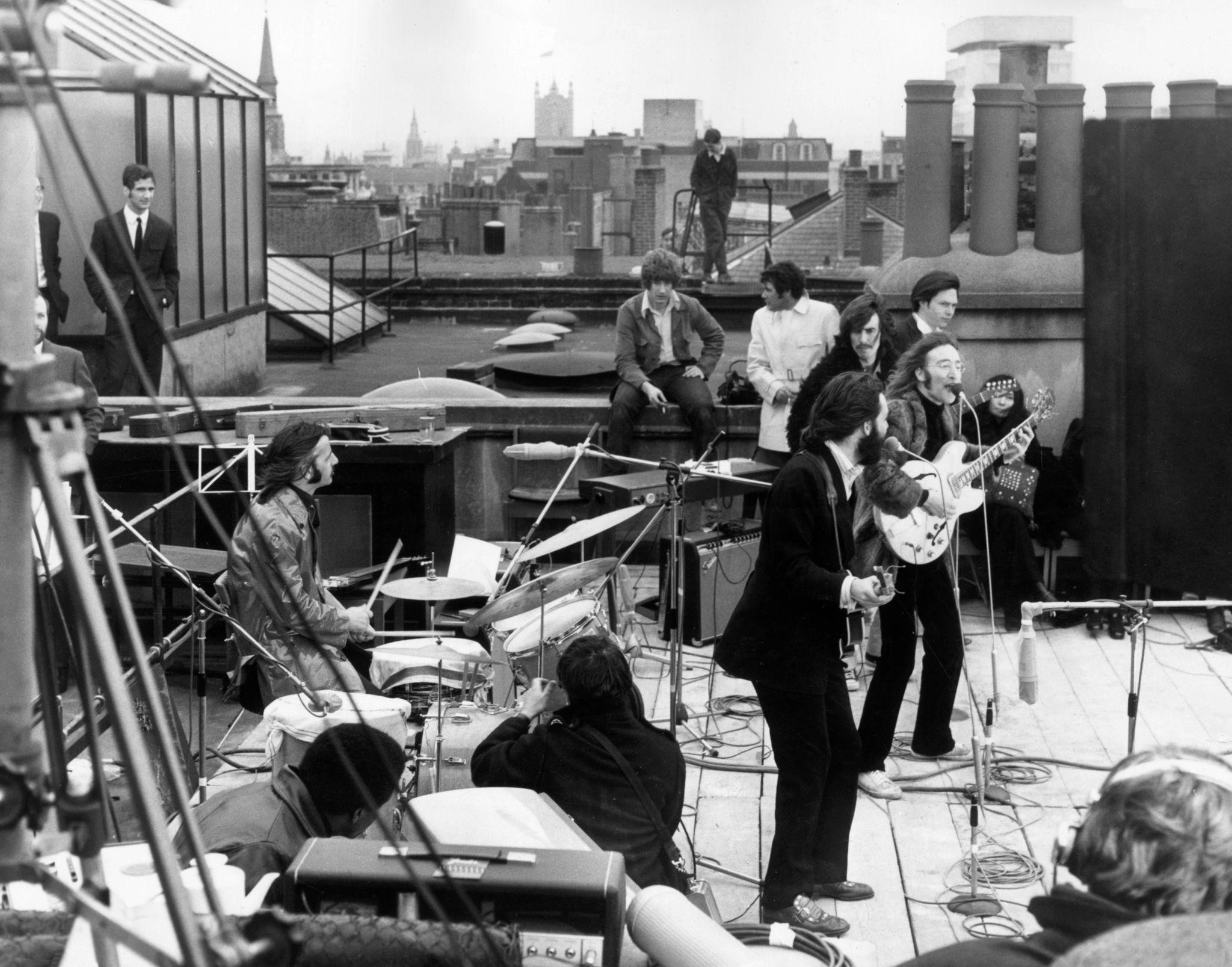
On a cold January lunchtime in 1969, the Beatles stepped onto a London rooftop and unknowingly delivered their last public performance together, bringing one of the most influential chapters in modern music history to a close. What began as an impromptu appearance above the band’s headquarters became a defining cultural moment, symbolising both creative brilliance and imminent dissolution.
An unannounced rooftop concert
The performance took place on 30 January 1969 on the roof of the band’s Apple Corps building at Savile Row. With no prior notice, John Lennon, Paul McCartney, George Harrison and Ringo Starr, joined by keyboardist Billy Preston, launched into a short set as lunchtime crowds gathered below. Office workers leaned out of windows, pedestrians stopped in the street, and the sound of live rock music echoed through central London.

Part of the ‘Get Back’ sessions
The rooftop concert was conceived as part of the band’s “Get Back” project, later released as the album Let It Be. Intended to document a return to live performance after years confined to the studio, the sessions were marked by internal tensions and creative disagreements. Despite the strained atmosphere, the rooftop set revealed a band still capable of tight musicianship, wit and spontaneity.
A brief but historic setlist
The performance lasted around 42 minutes and included multiple takes of songs such as Get Back, Don’t Let Me Down and I’ve Got a Feeling. Lennon’s dry humour and McCartney’s visible joy underscored the moment, even as police eventually arrived to halt the concert following noise complaints. Lennon’s closing quip — thanking the audience and joking about passing an audition — became one of the band’s most quoted final remarks.
The end without a farewell
At the time, neither the band nor the onlookers fully grasped that this would be the Beatles’ final live appearance. There was no farewell tour, no official goodbye concert. Within little more than a year, the group would formally disband. In retrospect, the rooftop performance stands as an accidental yet fitting finale: informal, creative, and defiantly musical.
A lasting cultural legacy
More than five decades later, the rooftop concert remains one of the most iconic moments in popular music history. It has been revisited through films, documentaries and anniversary releases, cementing its status as a symbol of both the Beatles’ enduring influence and the inevitable end of their collaboration. The performance endures not because it was planned as a finale, but because it captured the band exactly as they were — imperfect, inspired, and unforgettable.
Newshub Editorial in Europe – 30 January 2026

If you have an account with ChatGPT you get deeper explanations,
background and context related to what you are reading.
Open an account:
Open an account
Recent Comments