
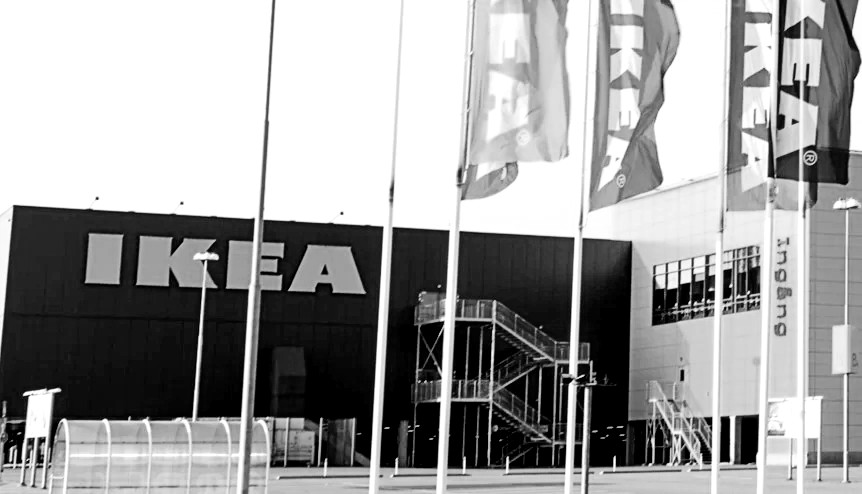
Ingvar Kamprad, the founder of IKEA, was one of the most influential entrepreneurs of the twentieth century. From modest beginnings in rural Sweden, Kamprad built a global company that reshaped how people buy furniture and how companies think about cost, scale, and accessibility. His story is not only about commercial success, but about discipline, frugality, and a deeply held belief that good design should be available to the many, not the few.
From Småland roots to early entrepreneurship
Born in 1926 in Småland, a region known for thrift and hard work, Ingvar Kamprad displayed entrepreneurial instincts from an early age. As a boy, he sold matches, seeds, and small household items to neighbours, reinvesting his profits and refining his sense of margins and logistics. In 1943, at just 17 years old, he founded IKEA, using his initials and the names of the family farm Elmtaryd and the nearby village Agunnaryd.

The flat-pack revolution
Kamprad’s most disruptive insight came from a simple problem: furniture was expensive to produce, transport, and store. By introducing flat-pack furniture that customers assembled themselves, IKEA dramatically reduced costs across the value chain. This was not merely a product innovation, but a systems innovation, integrating design, manufacturing, logistics, and retail into a single cost-efficient model. The approach allowed IKEA to offer modern, functional furniture at prices previously unimaginable.
Frugality as corporate philosophy
Kamprad’s personal frugality became a defining feature of IKEA’s culture. He famously flew economy class, drove modest cars, and avoided luxury. These habits were not eccentricities, but signals. Within IKEA, cost-consciousness was elevated to a virtue, embedded in internal language, store layouts, and decision-making processes. Waste, in Kamprad’s view, was a moral failing as much as a financial one.
Global expansion with local discipline
From its Swedish base, IKEA expanded steadily across Europe, North America, and Asia, adapting to local markets while preserving its core identity. Kamprad insisted on decentralisation and operational autonomy, allowing local teams to understand customers while adhering to strict global cost and design principles. This balance between central control and local execution became a cornerstone of IKEA’s scalability.
Complex legacy and lasting influence
Kamprad’s life was not without controversy, including criticism related to his early political associations and the opaque ownership structures of the IKEA Group. Yet his influence on retail, supply-chain management, and consumer expectations is undeniable. IKEA changed how millions furnish their homes and demonstrated that efficiency, design, and affordability need not be mutually exclusive.
A vision that endures
Ingvar Kamprad died in 2018, but his philosophy continues to shape IKEA’s operations and identity. His core idea, that well-designed everyday products should be affordable for ordinary people, remains central to the brand’s mission. In an era of rising costs and global uncertainty, Kamprad’s disciplined approach to value creation remains as relevant as ever.
Newshub Editorial in Europe – 27 January 2026

If you have an account with ChatGPT you get deeper explanations,
background and context related to what you are reading.
Open an account:
Open an account
Recent Comments