
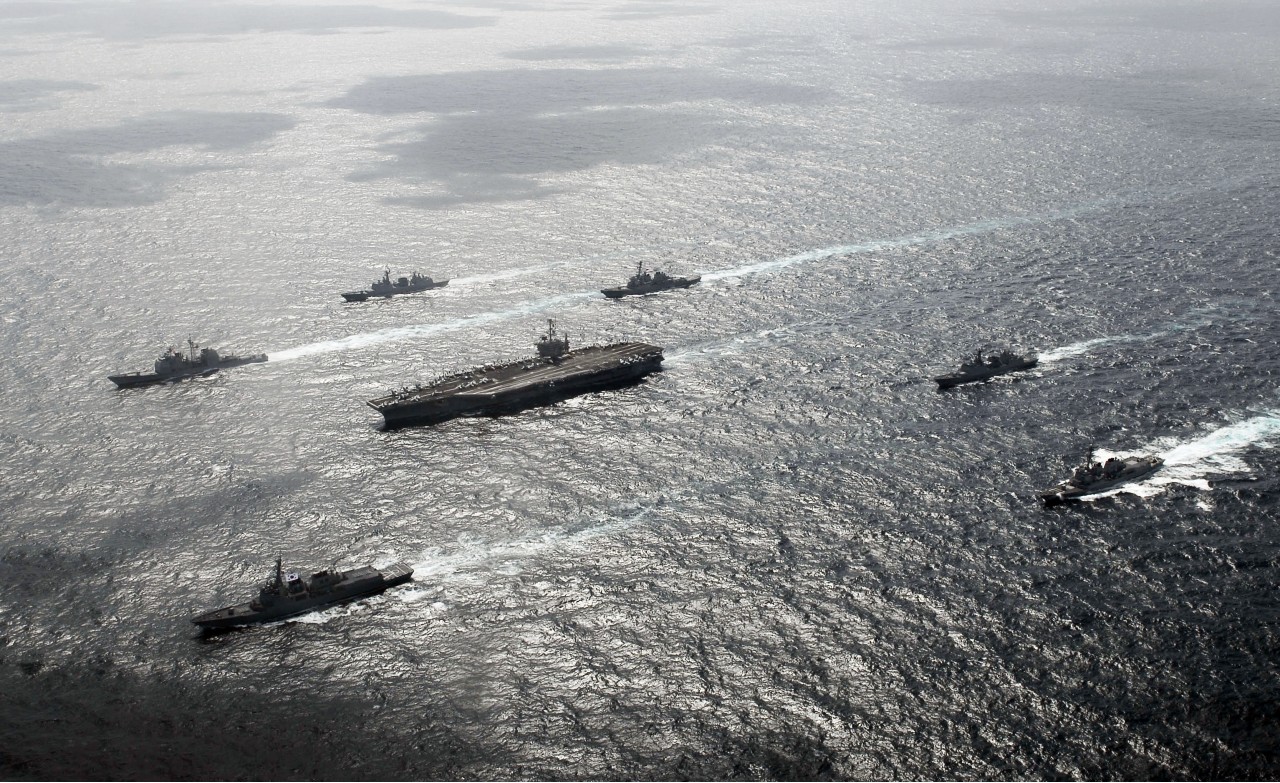
The United States has moved significant naval forces into waters surrounding Iran, a step that sharply raises geopolitical tensions at a time when the Islamic Republic is also grappling with deep internal unrest. The deployment, confirmed by US officials, is being framed as a deterrent measure, but it underscores growing concern in Washington about Iran’s domestic trajectory and regional posture.
Warships positioned as a signal of deterrence
Under the administration of Donald Trump, the US Navy has positioned major surface combatants, including aircraft carrier–led groups and guided-missile destroyers, in the broader Middle East theatre. While officials avoid detailing exact locations, the concentration of naval power close to Iranian waters is intended to demonstrate readiness and reinforce US red lines. Washington maintains that the move is defensive in nature, designed to protect regional shipping lanes, allies, and US personnel rather than to initiate hostilities.
Iran’s internal crisis adds urgency
The military signalling comes as Iran faces one of its most challenging periods in years. Persistent protests driven by economic hardship, inflation, unemployment and political frustration have continued despite heavy crackdowns by security forces. Reports of mass arrests, internet restrictions and forceful suppression have drawn international scrutiny, adding to Iran’s diplomatic isolation. For US policymakers, the convergence of domestic instability and external confrontation increases the risk of unpredictable outcomes.

Tehran’s response and regional messaging
Iranian leaders have reacted sharply to the US naval presence, warning that any direct military action would trigger a strong response. Senior commanders have emphasised Iran’s missile capabilities and asymmetric warfare doctrine, which relies on regional proxies and naval assets capable of disrupting traffic in strategic waterways. Tehran portrays the US deployment as intimidation, while simultaneously using it to rally domestic support and frame internal dissent as foreign-driven.
Economic pressure and strategic calculations
Beyond military considerations, Iran’s economy remains under severe strain from sanctions, currency weakness and energy constraints. The presence of US naval forces reinforces Washington’s broader pressure strategy, signalling that economic isolation is backed by military credibility. Analysts note that this dual pressure limits Tehran’s room for manoeuvre, but also raises the risk that Iranian leaders may escalate rhetorically or tactically to deter further pressure.
Risks of miscalculation
Despite repeated statements from Washington that it does not seek war, the proximity of opposing forces increases the chance of accidental encounters. Naval manoeuvres, air patrols or proxy actions could escalate rapidly if misinterpreted. Regional actors, including Gulf states and international energy markets, are closely watching developments, aware that even limited confrontation could disrupt oil flows and broader economic stability.
What happens next
In the near term, the US naval deployment is likely to remain a tool of deterrence rather than a prelude to direct action. However, Iran’s internal unrest, combined with external pressure, suggests a volatile period ahead. Whether Tehran chooses de-escalation, tighter internal control, or outward defiance will shape the next phase of the standoff. For now, the presence of US warships serves as a stark reminder that Iran’s internal struggles are unfolding under intense international scrutiny.
Newshub Editorial in Asia – 25 January 2026

If you have an account with ChatGPT you get deeper explanations,
background and context related to what you are reading.
Open an account:
Open an account
Recent Comments